
Dr. Rafael Trespalacios: You Don’t Have to Ride the Waves to Suffer from Surfer’s Eye
By Space Coast Daily // December 8, 2022
pterygium is known as Surfer’s Eye
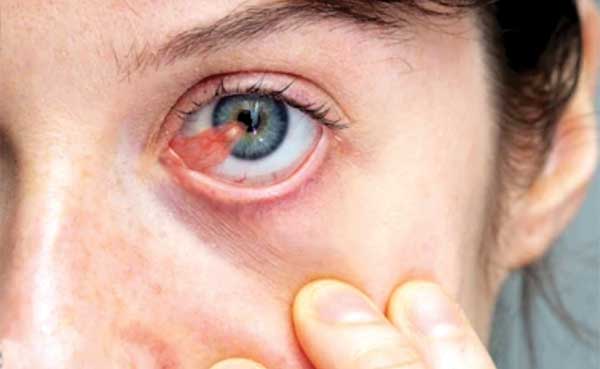
You don’t have to ride the waves to suffer from pterygium, aka Surfer’s Eye.
It happens to anyone who spends considerable time outdoors, whether cycling or gardening, or just lazing about on a lawn chair.
Pronounced “tur-IJ-ee-um,” the condition looks as scary as it sounds. Pink, fleshy tissue grows, usually on the side closest to the nose and heads to the pupils.
It starts on the conjunctiva, which is the clear mucous membrane covering the eyeball and lining the eyelids. Then it starts to grow across the cornea, the clear dome-shaped part of the eye.
“It looks and sometimes even acts like cancer, but it isn’t,” ophthalmologist Dr. Rafael Trespalacios of Tres Vision Group in Melbourne, Merritt Island, and Suntree said.
“If it is not treated in a timely manner, it can be sight-threatening and even result in a corneal transplant. Before it reaches this critical stage, it can also be annoying and can affect your self-image and make you feel self-conscious because your eyes are red all the time.”
Anyone who has endured a speck of dust in the eyes, which is the entire world, knows how frustrating it can be to constantly feel there is something in your eyes.
“That’s what you can expect from Surfer’s Eye,” Dr. Trespalacios said.
Seek help before the vision is permanently affected. Any blurriness or double vision can mean the beginning of these permanent changes.
What causes Surfer’s Eye? Ultraviolet light seems to be the main culprit, but chronic dry eye and irritants such as dust, wind and sand also help. While men ages 20 to 40 and seniors over 80 are primary targets for the condition, it can impact anyone living in a sunny location, particularly if they eschew sunglasses. It affects 12 percent of the population.
“Everyone in Brevard is a target for it,” Dr. Trespalacios added.
Surfer’s Eye may just pop up, but there are often warning signs such as burning sensation and a gritty feel in the eyes, plus itchiness and redness. It often begins as a yellow patch or bump on the conjunctiva near the nose.
It can appear in one eye or both.
Prevention is the best defense. Sunglasses, especially the wraparound variety, help, but they should be worn even on cloudy days since ultraviolet light easily passes through clouds. Brimmed hats add a second level of protection, and artificial tears help keep eyes hydrated.
An ophthalmologist can diagnose Surfer’s Eye with a slit lamp, a special microscope that focuses a narrow line of bright light into the eye. Mild cases are treated with over-the-counter eye drops and ointments and prescription steroids to reduce symptoms.
However, if the growth begins to affect the quality of life because of discomfort, vision changes and appearance, a 10- to 15- minute outpatient procedure can remove the problem.
“We suggest surgery when eyesight is at risk or if the patient is concerned about how it looks,” said Dr. Trespalacios.
During the surgery, the growth is removed and the empty space refilled with amniotic tissue from a donor placenta. This method, along with the use of chemotherapy to poison the wound, significantly lowers the chances of the pterygium recurring.
“Without these techniques, there is an over 90% chance of recurrence. When we incorporate a graft and localized chemotherapy, the incidence of recurrence decreases to less than 10%.”
You may never hang ten aboard a surfboard, but you nevertheless have a higher than one-in-10 chance of developing Surfer’s Eye.
For more information, call 321-984-3200 or visit TresVision.com.

Dr. Rafael Trespalacios completed his bachelor of science in biology and microbiology locally at UCF, when the idea of an affiliated medical school was only a dream. He then attended the University of South Florida School of Medicine and went on to become a board-certified ophthalmologist with distinctions throughout his medical and surgical training.
Dr. Tres never lost sight of his vision of bringing a prestigious eye care facility to Central Florida. With hard work and the support of thousands of happy visually restored patients behind him, he and his team have been able to create TRES VISION Group with locations throughout Central Florida, including Melbourne, Suntree, and Merritt Island.
 Related Story:
HOT OFF THE PRESS! November 28, 2022 Space Coast Daily News – Brevard County’s Best Newspaper















