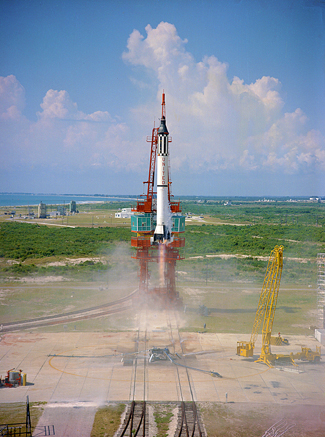
THIS DAY IN HISTORY: America’s First Astronaut Launched Aboard Freedom 7 on May 5, 1961
By Space Coast Daily // May 5, 2026
Freedom 7 celebrates 65 Year Anniversary
ABOVE VIDEO: The flight of “Freedom 7” boosted spirits throughout the country at a time when the U.S. appeared to be faltering in the quest for a viable space program.

BREVARD COUNTY, FLORIDA – On the morning of May 5, 1961, astronaut Alan Shepard crawled into the cramped Mercury capsule, “Freedom 7,” at Launch Complex 5 at Florida’s Cape Canaveral Air Force Station.
The slender, 82-foot-tall Mercury-Redstone rocket rose from the launch pad at 9:34 a.m. EST, sending Shepard on a remarkably successful, 15-minute suborbital flight.
But more than that, it kick-started America’s future as a spacefaring nation.

The flight of “Freedom 7” boosted spirits throughout the country at a time when the U.S. appeared to be faltering in the quest for a viable space program.
Just weeks before, on April 12, 1961, Russian cosmonaut Yuri Gagarin had become the first human in space, orbiting the Earth for 108 minutes in the Vostok 1 spacecraft.
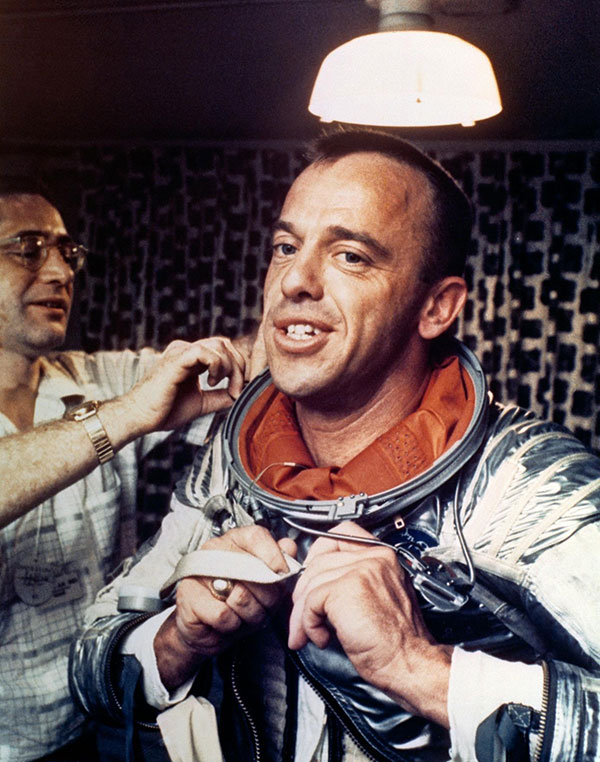
A U.S. Navy test pilot, Shepard was one of the first astronauts selected by NASA. The “Mercury Seven” astronauts — M. Scott Carpenter, Leroy Gordon Cooper, Shepard, John H. Glenn Jr., Virgil I. “Gus” Grissom Jr., Walter M. “Wally” Schirra Jr., and Donald K. “Deke” Slayton — were introduced to the nation in April 1959. NASA kept the identity of the first astronaut to fly a secret until word of Shepard’s command got out just days before the launch.
AMAZING VIEW
After ignition, Shepard reached up to start the mission clock. The vehicle experienced some vibration about a minute and a half into flight when it pierced the area of peak aerodynamic pressure, but Shepard enjoyed a smoother ride as the Redstone pushed skyward.