
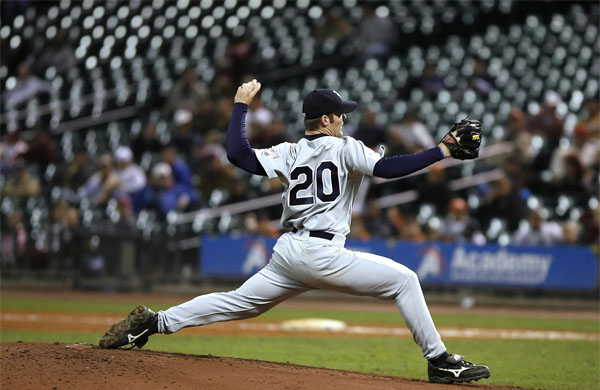
In baseball, the art of pitching lies in the interplay of science. The knowledge to deliver a baseball with speed, accuracy, and deception is built based on a combination of mechanics and know-how.
The breakthroughs of recent sports sciences and technology have greatly enhanced the understanding of pitching which has opened doors of opportunities for pitchers to reconsider their style and techniques of playing thus, making them competitive players in the world of sports. The biomechanics of pitching, various pitching approaches, and how technological innovations are possibly going to change MBL computer picks and how information is conquered.
The Biomechanics of Pitching
Fundamentally, pitching efficiency implies proper utilization of body mechanics that entails the study of movements as well as the forces affecting the body. A pitcher’s delivery can be broken down into several key phases:
- Windup and Stride: The windup is a sequence that includes the pitcher being positioned on the mound and then driving the lead leg toward home plate. During acceleration, the conversion happens that takes the potential energy into kinetic energy which the body utilizes as it moves forward. The stride contributes to building momentum towards clearance and perfect body position for the throw. A pitcher attains a proper hit stride that is generally around 85-90% of his pitcher height for more balance and power.
- Arm Cocking and Acceleration: In the arm crossover action, the thrower’s arm moves back from the median line of the body and the figure of the shoulder rotates over to the medial side creating a whip-like action. In this phase of motion, velocity is generated in a focal rhythm that allows for fast acceleration. During take-off, the acceleration phase follows where the arm is moved forward at a high speed and then the ball is released. The rotation of the hips and torso substantially amplifies this level of force generation.
- Release and Follow-Through: Precision is largely dependent on the release point and it plays a key role while shooting. The perfect form of throwing the ball will be achieved when the arm is fully extended and the wrist snaps forward at the apex of the movement. Moreover, the implementation of this last one is needed due to the purpose of the deceleration of the kinetic energy safely and injury prevention. Having a proper follow-through in place helps the pitcher to retain a balanced stance even in situations when he has to move to avoid the ball.
Pitching Mechanics and Injury Prevention
The effective way to throw a ball is helpful not because it leads you to accomplishment but because it protects you from being hurt. Rotator cuff tears, UCL injuries, and labrum tears are examples of common injuries monitored in pitchers. The knowledge of biomechanics helps one to identify work methods that may cause such neck pain.
- Shoulder and Elbow Health: The shoulder and the elbow are the two joints in the arm that have the greatest chance of suffering an injury in a pitcher’s arm. Preserving such articulations to run within the normal range of motion and to bear their expected load, is critical. Keeping appropriate arm heights is part of this one. “The arm slot” – this is understood as the arm’s relative position to the body during the throwing.
- Core and Lower Body Strength: It is very crucial to have a strong core and lower body because they will be helpful in the creation of powerful and efficient pitching motion. The lower extremities (knees and hips) along with the core region act as the engine of this motion delivering most of the force while the core promotes stability and communicates power from the lower body to the arm.
- Flexibility and Mobility: The core of your movement patterns should be thorough mobility and flexibility in the shoulder, hips, and thoracic spine. Stretching, mobility exercises and proper warm-up techniques contribute to the continuous maintenance of flexibility, and muscle strength, and to preventing injuries.
Pitching Strategies and Techniques
Nevertheless, the quality of pitching goes far beyond the mechanics and requires employing the strategy and wit that can put out the fire in the opposition’s batter’s box. A pitcher, however, needs to have good knowledge of their defense and the player, particularly where they are strong and weak.
Technological Advancements in Pitching
Advancement of technology has brought about changes in the way training and development of the technique of pitchers is done. Instruments that are capable of delivering such measurements include high-speed cameras, motion sensor systems, and data analytics systems which will provide previously unmatched views of how pitches are thrown and how pitchers perform.
The mechanics of pitching is a demanding multi-faced intersection of biomechanics, tactics, and techniques. Being aware of pitch techniques and how they help performance and injury prevention are vital. Tactical pitching includes not just seeing the ins and outs of pitch selections, location, versions, and batters, but also reading a batter as it takes place. Technology advancements have been the source of new tools for purposes of training, injury analyses, and injury prevention, altering the whole way pitchers engage the ballgame. Just like the study of pitching is continuing to evolve, the future seems to be exciting and it promises higher precision and efficiency of the critical part of the game, thus allowing pitchers to perform at the best levels while doing that healthy and being competitive.














