Space Swap to Host Inaugural Sustainable Bikini Fashion Show at Long Doggers in Satellite Beach Saturday
By Space Coast Daily // June 14, 2024
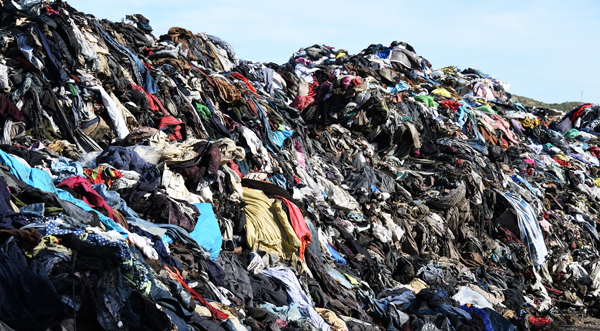
53 million metric tons of discarded clothing are incinerated or go to landfills each year

BREVARD COUNTY • SATELLITE BEACH, FLORIDA – Local designers, community leaders and scientists will converge this Saturday, June 15, on Long Doggers in Satellite Beach to bring the first Sustainable Bikini Fashion Show to Brevard.
Alexandra Komara, president of Space Swap, has partnered with Villon and Long Doggers, with the purpose of educating the Space Coast community on the importance of sustainability in fashion while highlighting local brands who are actively practicing sustainability.
The Sustainable Bikini Fashion Show starts at 5 p.m. at Long Doggers in Satellite Beach and will feature local designers, an environmental sustainability panel consisting of local representation from The City of Cape Canaveral, Sustainable Satellite, FIT Graduate/Biochemist Abbey Gering, Alexandra Komara, local textile recycling company CIRC, as well as 50 models, all who practice sustainability and eco-consciousness.
This show is part of a larger all day event called Locals Only 9.5, which is a Surf Film Festival.
Less Than One Percent of Clothing is Recycled
Since the 2000s, fashion production has doubled and it will likely triple by 2050, according to the American Chemical Society.
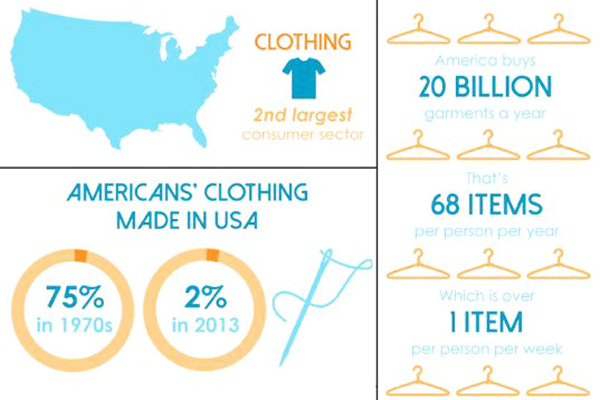
The production of polyester, used for much cheaper fast fashion, as well as athleisure wear, has increased nine-fold in the last 50 years. Because clothing has gotten so cheap, it is easily discarded after being worn only a few times. One survey found that 20 percent of clothing in the U.S. is never worn, in the UK, it is 50 percent.
Online shopping, available day and night, has made impulse buying and returning items easier.
Less than one percent of clothing is recycled to make new clothes. The fibers in clothing are polymers, long chains of chemically linked molecules. Washing and wearing clothing shorten and weaken these polymers, so by the time a garment is discarded, the polymers are too short to turn into a strong new fabric.
In addition, most of today’s textile-to-textile recycling technologies cannot separate out dyes, contaminants, or even a combination of fabrics such as polyester and cotton. As a result, 53 million metric tons of discarded clothing are incinerated or go to landfills each year. In 2017, Burberry burned $37 million worth of unsold bags, clothes and perfume.
If sent to a landfill, clothes made from natural fabrics like cotton and linen may degrade in weeks to months, but synthetic fabrics can take up to 200 years to break down. And as they do, they produce methane, a powerful global warming greenhouse gas.
To feed the fashion industry’s need for wood pulp to make fabrics like rayon, viscose and other fabrics, 70 million tons of trees are cut down each year.
That number is expected to double by 2034, speeding deforestation in some of the world’s endangered forests.
The fashion industry produces 1.2 million metric tons of CO2 each year, according to a MacArthur Foundation study. In 2018, it resulted in more greenhouse gas emissions than the carbon produced by France, Germany, and the UK all together. Polyester, which is actually plastic made from fossil fuels, is used for about 65 percent of all clothing, and consumes 70 million barrels of oil each year.
In addition, the fashion industry uses large amounts of fossil fuel-based plastic for packaging and hangers.
The key to making fashion sustainable is the consumer. If we want the fashion industry to adopt more sustainable practices, then as shoppers, we need to care about how clothing is made and where it comes from and demonstrate these concerns through what we buy. The market will then respond.
Space Swap has already recycled and up cycled nearly 5,000 pounds of textiles here on the Space Coast. We can also reduce waste through how we care for our clothing and how we discard it.
Here are some tips on how to be a responsible consumer:
■ Buy only what you need
■ Buy from sustainable brands with transparent supply chains
■ Look for sustainable certification from the Fairtrade Foundation, Global Organic Textiles Standard, Soil Association, and Fair Wear Foundation
■ Check the Fashion Transparency Index to see how a company ranks in transparency.
■ Learn how to shop for quality and invest in higher-quality clothing
■ Choose natural fibers and single-fiber garments
■ Wear clothing for longer
■ Take care of clothing: wash items less often, and repair them so they last.
■ Upcycle your unwanted clothes into something new
■ Buy secondhand or vintage; sell your old clothes.
■ When discarding, pass clothing on to someone who will wear it, or to a thrift shop
Visit spaceswapculture.org to see their efforts and continued commitment to sustainability.
 Related Story:
DINING OUT: Enjoy Delicious Chihuahua Tacos, Refreshing Drinks at Margarita Island at Merritt Square Mall
CLICK HERE FOR BREVARD COUNTY NEWS