PHOTO OF THE DAY: NASA Pilot Joe Walker Sits in Lunar Landing Research Vehicle 60 Years Ago
By NASA information center // October 31, 2024
picture was taken Oct. 30, 1964
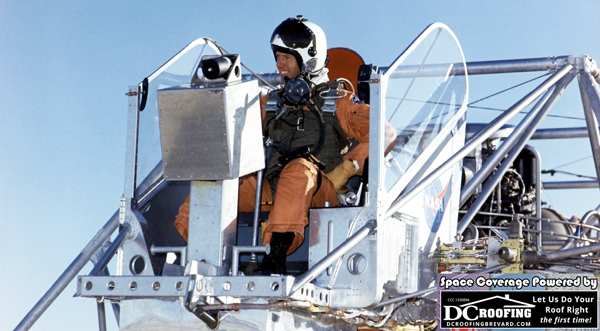
(NASA) – In the above photo, NASA pilot Joe Walker sits in the pilot’s platform of the Lunar Landing Research Vehicle number 1 on Oct. 30, 1964.
The LLRV and its successor the Lunar Landing Training Vehicle (LLTV) provided the training tool to simulate the final 200 feet of the descent to the Moon’s surface.
The LLRVs, humorously referred to as flying bedsteads, were used by NASA’s Flight Research Center, now NASA’s Armstrong Flight Research Center in California, to study and analyze piloting techniques needed to fly and land the Apollo lunar module in the moon’s airless environment.
In the early morning of Oct. 30, 1964, FRC chief pilot Joseph “Joe” A. Walker arrived at Edwards Air Force Base’s (AFB) South Base to attempt the first flight of the LLRV.
Walker, a winner of both the Collier Trophy and the Harmon International Trophy, had flown nearly all experimental aircraft at Edwards including 25 flights in the X-15 rocket plane.
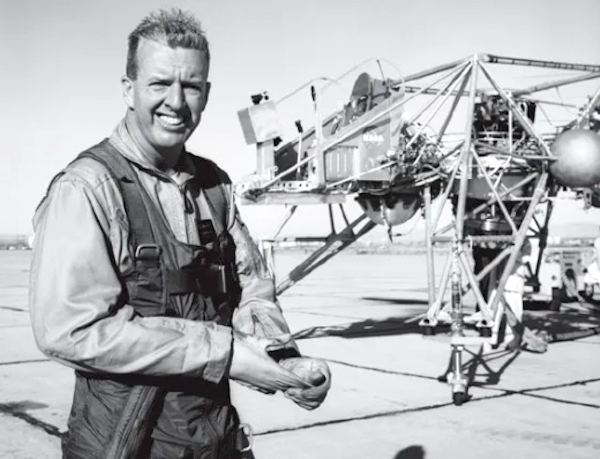
On two of his X-15 flights, Walker earned astronaut wings by flying higher than 62 miles, the unofficial boundary between the Earth’s atmosphere and space.
After strapping into the LLRV’s ejection seat, Walker ran through the preflight checklist before advancing the throttle to begin the first flight. The vehicle rose 10 feet in the air, Walker performed a few small maneuvers and then made a soft landing after having flown for 56 seconds.
He lifted off again, performed some more maneuvers, and landed again after another 56 seconds. On his third flight, the vehicle’s electronics shifted into backup mode and he landed the craft after only 29 seconds. Walker seemed satisfied with how the LLRV handled on its first flights.

CLICK HERE FOR BREVARD COUNTY NEWS