
How to Implement Industrial Gas Detection Best Practices?
By Space Coast Daily // March 29, 2025
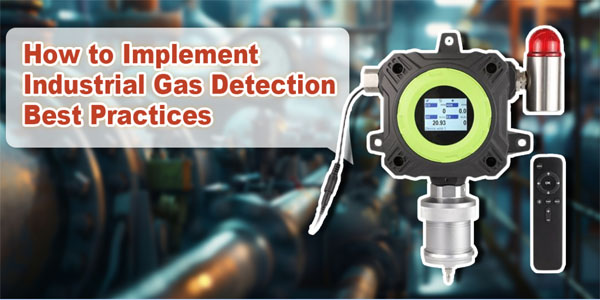
Everyone wants safe surroundings and the environment around them, especially in commercial and residential areas. However, only a few take precautionary steps to ensure safety.
More importantly, safety ought to be our utmost priority when it comes to gas usage. For this purpose, you need to install a great industrial multi-gas detector(CO, H2S, O2, and LEL) in your factories, homes, and any industrial area where gases are used frequently for different purposes.
However, some industrial gas detector best practices need to be implemented. It makes sure the purpose of the gas detector is fulfilled properly and accurately. That’s why we have decided to share a few best practices to precisely implement a gas detector. Let’s follow the footprints of this guide to stay safe and sound.
What Exactly is a Gas Detector?
Let’s first see what a gas detector is.
“Gas detectors are essential safety tools that help to monitor for dangerous gases. These devices are deployed in diverse settings – from industrial workplaces to bustling shopping malls and even beneath the surface in parking garages. Their motto or purpose is very clear: safeguarding lives. As a result, they ensure security of lives, protect commercial and residential property, and minimize environmental harm.”
Moreover, a reliable industrial gas detector acts as a vigilant sentinel. This is because it is constantly assessing the air. Their presence is equally essential in oil refineries, chemical plants, and confined industrial spaces, where hazardous gases pose serious risks to workers and equipment. Ultimately, the proper operation of a gas detector can mean the difference between a safe environment and a catastrophic incident.
To emphasize the importance of industrial gas detection and safety practices, let’s take a look at a recent real-life incident that underscores the risks associated with inadequate gas monitoring and emergency response.
On October 10, 2024, a hydrogen sulfide (H₂S) gas leak occurred at the Pemex refinery in Deer Park, Texas, releasing approximately 13.5 tons (27,000 pounds) of the toxic gas. Tragically, the incident resulted in the deaths of two contract workers and injuries to thirteen others. The gas leak lasted for about an hour, prompting local authorities to issue a home quarantine order to residents of Deer Park and Pasadena because of the danger of the gas in the air. Following the incident, the U.S. Chemical Safety Board (CSB) initiated a formal investigation focusing on Pemex’s maintenance procedures, gas detection systems, and emergency response preparedness.
The case highlights the critical role of industrial gas detection systems in preventing such disasters. It is such a sad thing to see. That’s why proper calibration, employee training, and real-time gas monitoring can significantly reduce the likelihood of toxic gas leaks and shorten emergency response times. It serves as a reminder that ignoring gas detection best practices can lead to deadly consequences.
In simple words, industrial gas detectors are a real differentiator between life and death.
Best Practices to Implement Industrial Gas Detection:
Indeed, by implementing advanced gas detection technologies (e.g., using multi-gas gas detectors that can detect several different industrial gases), real-time analytics, and proactive safety measures, the industry can reduce risk, ensure compliance with safety regulations, and protect lives and assets. Now, we are going to answer how to implement industrial gas detection through best practices. Experts in installing gas detection tools suggest the following:
Calibration Precision:
You should not compromise on calibration when it comes to keeping your industrial gas detectors accurate. And using the right calibration gas is non-negotiable. Let’s understand calibration by taking an example of tuning a musical instrument. If you’re off-key, the whole performance suffers.
More specifically, you ought to stick to the recommended calibration gas concentration of the manufacturer. They don’t just pull those numbers out of thin air! After all, those concentrations are carefully chosen to guarantee your gas monitor responds correctly to the gases it’s designed to monitor.
But, what if you use a concentration that’s too high or too low? It can throw off the readings of the sensor. As a result, it starts giving you unreliable data and analytics.
And here is a big one: never, ever, ever use expired calibration gas.
Seriously, it’s similar to using old milk in your tea or coffee—it just won’t work right. So, what do we have learned here? Taking care of calibration. Plus, we have found that calibration gases have a shelf life. Their composition changes after a certain time, just like expiry dates work on medicines, leading to inaccurate readings.
So…using expired gas is a big risk that you can’t afford to take. Always try to double-check those expiration dates, and keep your calibration gas stock fresh. It’s a small step that makes a huge difference in keeping your workplace and properties safe.
Train Your Workforce:
You know, having the best multi-gas detectors and software is a perfect safety measure. But, it is only half the battle. If your team or workers don’t know how to use an industrial gas detector, you’re still leaving yourself exposed to hazardous circumstances. That’s why continuous education is another best way towards a safety program.
You can take this safety measure as investing in your people—they’re your priority and the only line of defense. Here, we’re talking about not just handing out a manual but making sure everyone knows the following:
- How to properly use the connected safety equipment?
- How to dig into and interpret the data and information that those devices are giving them.
- How to react immediately and correctly when an alert goes off?
So, you open yourself up to potential gas threats slipping through the cracks and data logging errors that can corrupt important information. So, how do you give the necessary training to your people? Well, you can start with instructor-led training sessions and certifications. GasDog, a gas monitor and software provider, can provide you with these training sessions.
After all, they’re the experts. Then, add up manager-led instruction. It can be focused on the nitty-gritty of equipment handling and troubleshooting. And one more thing – don’t forget to test their knowledge! Written or oral exams on common gas hazards are a great way to implement what they’ve learned.
Take Decisions Using Data Analytics Tools:
Did you know getting any kind of data from a gas monitor was a real headache three decades before? Just imagine how you could create an incident report to make decisions without any solid numbers! Thank God, those days are gone. Now, we’ve advanced data analytics tools. This software is incredibly easy to use. You can analyze and interpret all that information within a few clicks.
In industrial settings, it’s pivotal to consider the specific gas detection needs of your site. For example, in oil and gas refineries, you can use industrial gas detectors to detect hydrocarbons, hydrogen sulfide, and carbon monoxide. In chemical plants, you need to detect toxic gases like chlorine, ammonia, and phosgene. Choosing the right industrial gas detector for your site requires careful consideration of these factors. You can also look for detectors with advanced features like sensor arrays, wireless connectivity, and real-time data analytics. These features can help you identify potential gas hazards and do something before it’s too late.
So, how is this data helpful?
You can practically foresee the future when it comes to potential hazards with the help of the right software. I am talking about collecting the precise information that you need the most. Then, automating the whole process with the help of any reliable cloud-based systems. In addition to that, you can use historical and real-time data to spot patterns. At the same time, it helps you to predict prevent and future gas-relevant incidents before they even happen.
Plus, you can do something about equipment maintenance and replacements with automated alerts. It will keep your industrial gas detectors in top position. In this way, you get a complete, bird’s-eye view of safety across your entire site/area. Thanks to constant and comprehensive data sourcing! Now, companies and businesses are seeing and analyzing real results, like knowing their equipment is tested and working, and getting replacements quickly. It’s about reliability.
We hope you liked reading this guide. What do you think are the other safety practices to implement a gas detector? Share your views in the comments section.













