
How Retrograde Intrarenal Surgery Treats Kidney Stones?
By Space Coast Daily // April 13, 2025
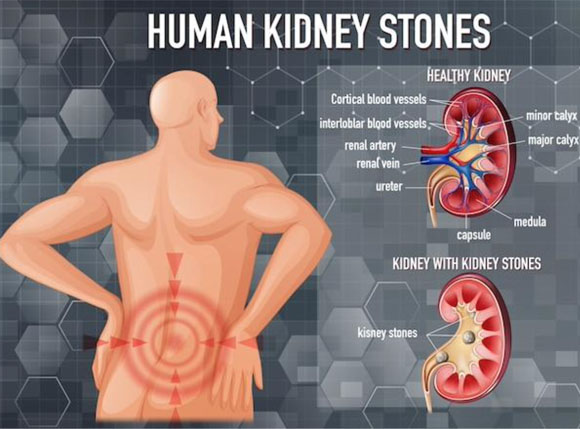
Kidney stones can be treated with medical expulsion, extracorporeal shock wave lithotripsy (ESWL), percutaneous nephrolithotomy (PCNL), and retrograde intrarenal surgery (RIRS). RIRS, with its minimal invasiveness and quick recovery, is widely used for stones under 2 cm.
In RIRS, innovations in devices like guide wires and ureteral access sheaths have greatly improved the procedure. New guide wires offer better maneuverability and visibility, helping doctors establish a more precise surgical path. Advanced ureteral access sheaths, such as the Well Lead Medical’s ClearPetra® Ureteral Access Sheath for RIRS, reduce surgery time, improve stone clearance, and lower postoperative complications. These advancements have significantly boosted RIRS’s effectiveness and safety.
(Copyright photo from https://www.freepik.com/free-vector/comparison-healthy-kidney-kidney-with-stones_10064115.htm)
When Retrograde Intrarenal Surgery Is Applicable
Retrograde Intrarenal Surgery is a minimally invasive procedure suitable for many renal stone patients, especially those unfit for more invasive surgeries due to comorbidities or anatomical factors. This kidney stone lithotripsy is particularly indicated in the following situations:
- Renal stones less than 2 cm in diameter.
- Non-opaque stones.
- Stones >3 cm (may require two or more sessions).
- Lower pole stones that are poorly accessible by other modalities.
- Calyceal diverticular stones.
- Residual or recurrent stones post-treatment.
- Patients with bleeding diathesis or on anticoagulant therapy.
- Anatomically complex kidney conditions (horseshoe kidney).
- Stone management in transplanted kidneys.
- Stone disease in pediatric patients.
- Patients with significant comorbidities or obesity.
- Medullary sponge kidney with recurrent stones.
Procedure of Retrograde Intrarenal Surgery
Before surgery, patients undergo a preoperative evaluation and antibiotic prophylaxis to reduce infection risks. General anesthesia is the preferred method for Retrograde Intrarenal Surgery.
The lithotripsy procedure begins with inserting a cystoscope or semi-rigid ureteroscope into the bladder. A guide wire, ureteral stent, or dilator may be used to facilitate ureteral access. In conventional techniques, the guide wire is advanced into the ureter under fluoroscopic guidance once the ureteral orifice is identified. If necessary, a second guide wire (safety wire) can be placed via a cystoscope or dual-lumen catheter to enhance stability. During the procedure, a urethral catheter may be inserted to ensure continuous bladder drainage[1].
Intrarenal pressure is controlled using irrigation devices or periodic manual washing to stop postoperative infections and ensure safety. After stone visualization, a holmium or thulium laser fiber is used for stone fragmentation or dusting procedures, based on the stone’s characteristics.
Large laser fibers may reduce ureteroscope maneuverability, making precise navigation more challenging. To protect the mucosa and prevent excessive kidney distension, careful mucosal protection and pressure control during Retrograde Intrarenal Surgery are important. The final verification check is if any fragments are left after complete fragmentation, and healthcare providers commonly place a ureteral stent before healing to ensure drainage remains unblocked.
Instruments Essential for RIRS
The following instruments are commonly used during Retrograde Intrarenal Surgery:
- Ureteroscope
- Ureteral Access Sheath
- Guide wire
- Lithotripter
- Stone Basket
- Irrigation Pump
- Contrast Agent
- Other auxiliary instruments, such as cystoscopes, urethral dilators, catheters, and forceps, are used selectively based on surgical needs.

Role of Ureteral Access Sheath in RIRS Surgery
Role of Ureteral Access Sheath in Retrograde Intrarenal Surgery
Ureteral access sheath (UAS) plays a pivotal role in the success of RIRS procedures. This device creates a protective conduit in the urinary tract, enabling repeated access to the kidney with minimal trauma to the ureter. The UAS reduces intrarenal pressure through efficient irrigation drainage. This is crucial because high intra-renal pressure above 30 mmHg may cause Oyelo-sinus,-tubular and venous backflow. Low intrarenal pressure enabled by the UAS helps protect against renal damage and infection.
Advancements in UAS Technology: ClearPetra® Ureteral Access Sheath
The technological progress in the UAS field led to the creation of Well Lead Medical’s ClearPetra® Ureteral Access Sheath for RIRS. The innovative sheath technology combines the oblique side port at a 45° angle, which links with suction to form a vortex at its distal end. The sheath design enables the effective evacuation of stone fragments, blood, and debris while performing Retrograde Intrarenal Surgery.
- Low Intra-luminal Pressure and Temperature: A vortex is created by continuous irrigation and aspiration, which effectively evacuates the irrigated fluid and maintains consistently low intra-renal pressure and temperature.
- High Stone Clearance: Efficiently removes fragments, even from difficult areas like the lower pole.
- Reduced Retropulsion: Stone fragments will aggregate at the distal end of the ClearPetra® sheath instead of scattering.
- Improved Visibility: Continuous flushing and suction clear blood and debris, ensuring a clear view.
- Effective for Larger Stones: Enhanced efficiency makes it suitable for treating larger stones.
- Fewer Tools Needed: The sheath’s suction system eliminates the need for additional instruments like baskets and forceps.
These advanced designs make Well Lead Medical’s ClearPetra® Ureteral Access Sheath an invaluable tool for urologists performing Retrograde Intrarenal Surgery, improving the safety and effectiveness of the procedure.
Conclusion
Retrograde Intrarenal Surgery offers a minimally invasive approach to treat kidney stones with remarkable success rates. By leveraging equipment innovations—like ureteroscopes, powerful lithotripsy tools, and reliable ureteral access sheaths—RIRS continues to revolutionize patient outcomes.
Healthcare providers are encouraged to explore and implement the latest technologies, like Well Lead Medical’s ClearPetra® Ureteral Access Sheath, to elevate the quality of their surgical procedures. For patients suffering from kidney stones, RIRS is a promising solution, offering relief with better precision and safety.
By taking these steps, hospitals and providers can deliver not just effective treatment but also a better quality of life for their patients.
Reference:
[1] Retrograde intrarenal surgery for renal stones – Part 1. Available at: https://pmc.ncbi.nlm.nih.gov/articles/PMC5503427/ (Accessed: 12 February 2025)













