
Merritt Island Stormwater Treatment Area Played Big Role in Aquatic Restoration Technologies
By Space Coast Daily // April 18, 2025
At the heart of the success lies Beemats’ patented Floating Treatment Wetland system

BREVARD COUNTY • MERRITT ISLAND, FLORIDA — Tucked between the Indian and Banana Rivers on Merritt Island, lies a unique 6.68-acre stormwater treatment area shaped like an arrowhead.
Though small in size, this salt-influenced pond has played a significant role in advancing aquatic restoration technologies, thanks to a year-long experiment conducted by Beemats in 2016–2017.
The study aimed to determine the effectiveness of vertical water circulation on nutrient uptake in plants grown on floating wetlands. These floating wetlands, covering 16,727 square feet—or about 5% of the pond’s surface—were installed at both ends of the pond.
The southern end featured a Solar Bee 10,000 water circulator, while the northern end remained untouched as a control site. At the end of the 12 months, all plant biomass was harvested and analyzed by ENCO Labs in Orlando.
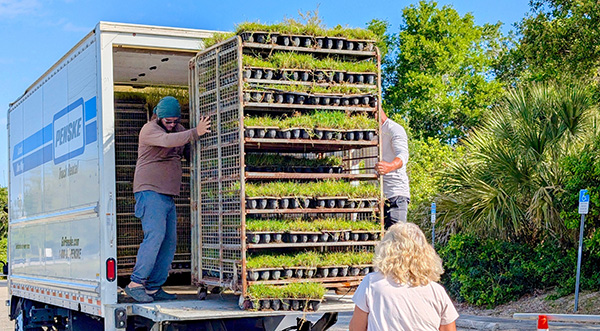
The results were striking. The plants growing around the Solar Bee circulator produced 30% more biomass compared to those in the control section. Even more compelling was their nutrient uptake: 2.3 times more nitrogen and three times more phosphorus.
This experiment underscored the effectiveness of Beemats’ system when paired with water movement technologies.
In early 2018, the Solar Bee was relocated to another stormwater pond at Wickham Park in Brevard County. Meanwhile, the floating wetlands at the Merritt Ridge Pond were restructured into 33 islands, each measuring 512 square feet.
Over the next six years, these floating islands achieved an impressive average annual nutrient harvest rate of 222.13 grams of nitrogen and 35.17 grams of phosphorus per square meter.
Altogether, this equates to preventing over 4,565 pounds of nitrogen and more than 723 pounds of phosphorus from entering the nearby estuaries—critical ecosystems vulnerable to nutrient pollution.
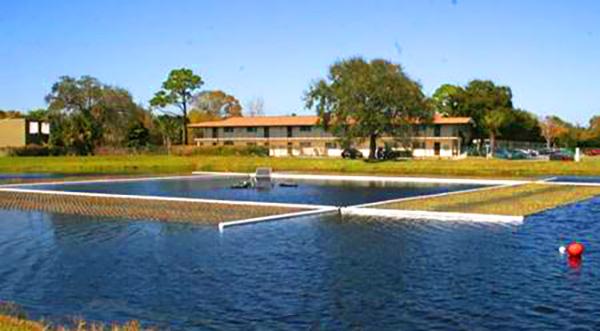
At the heart of this success lies Beemats’ patented Floating Treatment Wetland system. These engineered islands are constructed using closed-cell, cross-linked polyethylene foam.
Plants are embedded in reusable polypropylene or biodegradable Danimer plastic pots, designed to allow roots to grow freely into the water column. These roots serve a dual function—absorbing nutrients directly from the water and creating habitats for a vibrant community of microscopic aquatic life that further enhances nutrient bioavailability.
Each floating island is reinforced with stainless steel grommets embedded in durable Permalon plastic, providing anchor points and allowing for the creation of custom island shapes and sizes. This design not only supports plant growth but also addresses the instability caused by fluctuating water levels that often hinder the effectiveness of traditional littoral shelves.
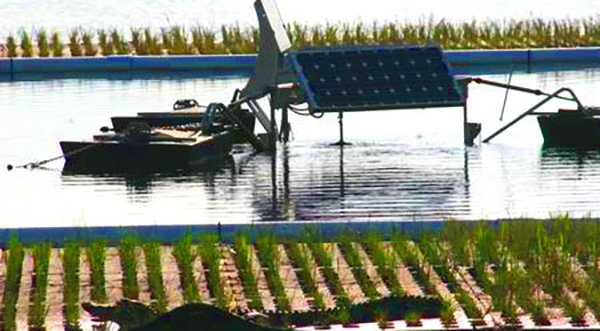
Beemats emphasizes that the key to nutrient removal lies in the harvesting of plant biomass. By removing mature plants before they decompose, the nutrients stored in their tissues are permanently removed from the water system. The rapid regrowth of plants on the mats ensures a continuous cycle of nutrient uptake, making Beemats a sustainable and scalable solution for stormwater management.
With over two decades of research and field testing behind it, Beemats continues to refine and expand its floating wetland systems. As Florida and other regions face increasing challenges from nutrient pollution and eutrophication, innovations like these offer a glimpse into a future where nature-based solutions lead the way in water quality restoration.
 Related Story:
HOT OFF THE PRESS! April 14, 2025 Space Coast Daily News – Brevard County’s Best Newspaper















