Coverage of the launch can be seen on Space Coast Daily TV
ABOVE VIDEO:ULA’s Atlas V rocket will deliver another batch of satellites into low Earth orbit for Amazon Leo, the broadband constellation. Amazon Leo’s mission is to provide fast, reliable internet to customers around the world, including those in unserved and underserved communities, using a network of more than 3,000 LEO satellites.
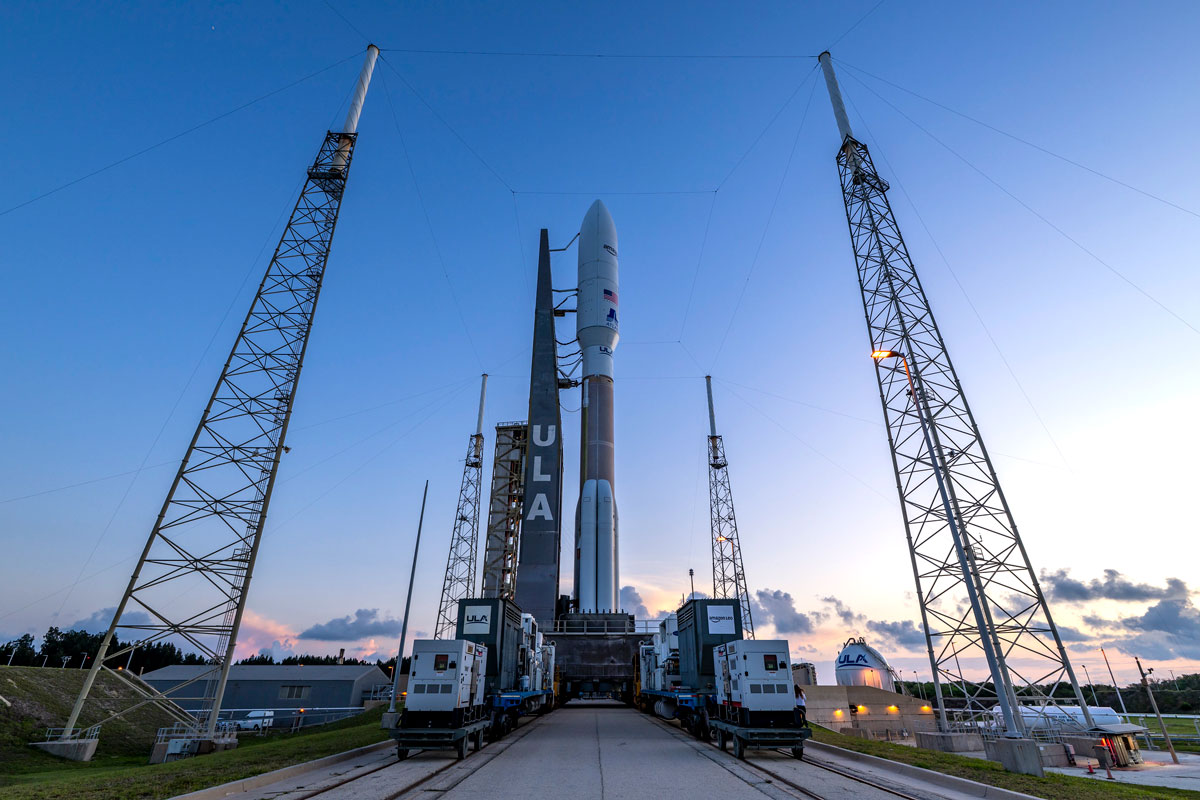
BREVARD COUNTY • CAPE CANAVERAL, FLORIDA – An Atlas V 551 rocket is targeted to launch Monday, April 27, during a window from 8:52 to 9:21 p.m. EDT from Space Launch Complex-41 at Cape Canaveral Space Force Station.
The mission remains pending final range approval.
The launch will carry the next group of satellites for Amazon’s low Earth orbit broadband constellation, known as Amazon LEO, designed to deliver fast, reliable internet service worldwide. The system aims to reach unserved and underserved communities by deploying a network of more than 3,000 satellites in orbit.
Configured with five side-mounted solid rocket boosters and a medium-length payload fairing, the Atlas V 551 is one of the most powerful variants of the Atlas V fleet, providing the performance needed to deliver multiple satellites into orbit during a single mission.
This flight marks ULA’s sixth mission supporting Amazon’s LEO deployment and represents a significant step in what has become the largest commercial launch agreement in history.
Under the partnership, Amazon has secured launches on eight Atlas V rockets and 38 Vulcan rockets to build out its constellation.
The ongoing collaboration between United Launch Alliance and Amazon highlights a growing shift in the commercial space industry, where private companies are playing an increasingly prominent role in global communications infrastructure.
If successful, the mission will continue steady progress toward Amazon’s goal of establishing a global broadband network capable of competing with other satellite internet providers while expanding connectivity to remote regions around the world.