
Commander Joshua Wallace – Adaptability Is Mandatory For Effective Police Leadership
By Space Coast Daily // December 12, 2025
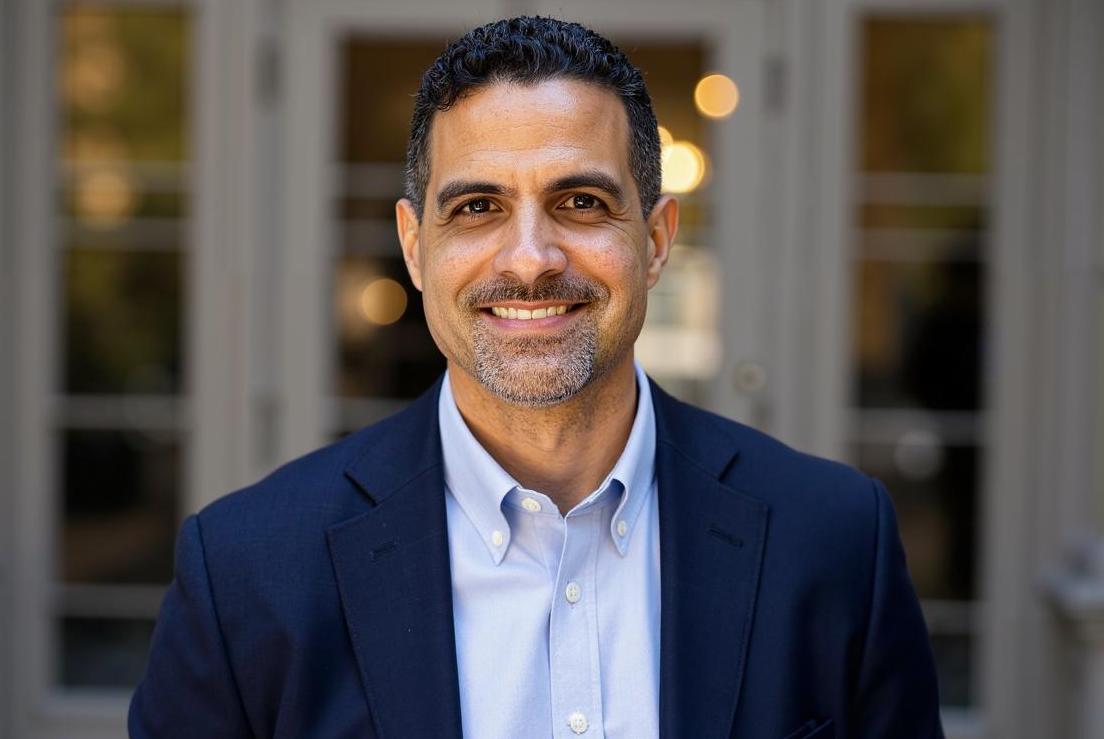
The role of a law enforcement officer is a challenging one, for many reasons. The responsibilities of a leader—a commanding officer—in those positions are even more so, as the basic requirements of any leadership position are supplemented by the weight of other people’s lives and livelihoods. As the world changes, so do people, and so does crime. New technologies, trends, and political movements lead to criminal networks evolving and changing more rapidly every year, and the police have to be able to keep up. Police leadership can only succeed systemically if those officers train themselves to be aware and adaptable.
Few understand this better than Commander Joshua Wallace, a veteran law enforcement leader with over 25 years of firsthand experience serving in the Chicago Police Department (CPD). He currently oversees the Criminal Networks Group within CPD’s Counterterrorism Bureau, where he directs high-level investigations and coordinates closely with federal, state, and local partners to address complex public safety challenges. He’s well known for his commitment to transparency, resilience, and integrity, balancing challenges while maintaining his focus on public service for diverse communities.
Today, with more than two decades of experience under his belt, Commander Joshua Wallace looks out at police leadership across the country and sees people unprepared. Law enforcement needs to prepare for a new crime paradigm that’s already beginning to take shape, and police leadership needs to manage the transition (and inevitable public scrutiny) with the adaptability it requires. Whether those preparations look like building out mentorships, establishing cross-agency collaborations, or setting up clear structures for both operations and the public, there is much work to be done.
“Future leaders need three core competencies: technological fluency, disciplined transparency, and emotional steadiness,” says Wallace. “Future policing will demand leaders who can integrate technology, legitimacy, and human judgment without losing the mission in the noise. These qualities are the baseline, not the aspiration.”
New Threats And Challenges
Joshua Wallace has been on the force for decades, and his perspective on crime and criminal networks evolved with every passing year. Criminal networks were not—or were no longer—fixed structures and organizations, with territories, leaders, and predictable patterns. As he spent time in the force, he learned that modern crime is more fluid, more flexible, and more quick to act than he’d imagined. Technology shaped the environment then, changing the rules of the game and forcing Wallace and his team to catch up.
That same paradigm shift is happening again, right now, as encrypted apps, social platforms, and gaming channels become the new hotbeds for recruitment, organization, and coordination. The digital ecosystem of modern criminal networks is evolving fast, with vehicular crews using cars as mobile platforms, fraud-driven networks funding a variety of illicit operations, and crews brought together and shaped by online culture instead of neighborhood identities or shared living conditions. This is all before drones, counter-surveillance, and AI masking and misinformation are thrown into the mix. As far as Commander Wallace can tell, these trends are only accelerating.
“Law enforcement needs to be ready for networks that evolve in real time,” he says. “Intelligence has to be faster. Partnerships have to be tighter. Digital awareness has to be standard. The traditional separation between cyber and street work has to collapse. That shift in mindset is what carried me through my career, and it is what the future demands.”
Building Adaptability From The Ground Up
The only way to keep up is to be adaptable, and adaptability comes from one place: structure. Joshua Wallace has made a career out of building intelligence strategies around systems that can shift quickly without losing discipline. Doing this successfully requires three things: clarity, speed, and a willingness to reset without hesitation. The first step is to get clarity through data visibility and real-time awareness of the current state of things; information must be up-to-date and move continuously to be useful. After that, it’s process-based.
“I keep the mission tight,” Commander Wallace says. “When the objective is clear, adjustments become tactical, not philosophical. Analysts track patterns, operators test assumptions, and supervisors recalibrate based on what the data proves, not what they hope. Fast-changing threats demand constant validation. If the pattern breaks, the strategy breaks with it and gets rebuilt immediately.”
A critical consideration for building and maintaining adaptable systems and adaptable leadership is putting ego aside. When a plan doesn’t work, when old strategies fall behind or prove ineffective, teams need to be able to change tact—which means leaders need to be willing to let the old way of doing things go. Successful teams in modern environments are able to challenge conclusions, question their own assessments, and call out tangents and drift as soon as they see it. If they can’t do that, otherwise detectable blind spots could metastasize and cause catastrophic operational failures.
As a result of these things, Joshua Wallace has isolated a trio of traits that current and future police leaders must cultivate to find success. First among their number is technological fluency, which is non-negotiable. Leaders that can’t understand digital evidence, data integration, algorithmic risk tools, or encrypted communication platforms won’t be able to make informed decisions without relying blindly on specialists. Technology has become the language shaping both crime and accountability, and leaders incapable of speaking that language will fall irrevocably behind.
The next requirement is disciplined transparency. Public scrutiny is a constant factor in the life of modern police officers, and being able to establish a factual, direct, and consistent standard of communication is critical. Police leaders in the current day must explain decisions, acknowledge limitations, correct inaccuracies immediately, and demonstrate that the organization’s integrity remains strong even under pressure. Balancing transparency and discipline is the only way to avoid distrust and confusion.
The last of these traits is emotional steadiness and human judgement. In regards to such leadership, Wallace says, “The profession sits at the intersection of conflict, expectation, and rapid judgment. Leaders must stay even when everyone else is elevated. They must absorb pressure without passing it down the chain. They must maintain credibility when the environment is volatile. When the leader is stable, the organization is stable. When the leader fractures, everything underneath follows.”














