
Honest DFY Vending Reviews: Calculating the Real ROI of Hot Wheels and Collectible Machines
By Space Coast Daily // March 5, 2026
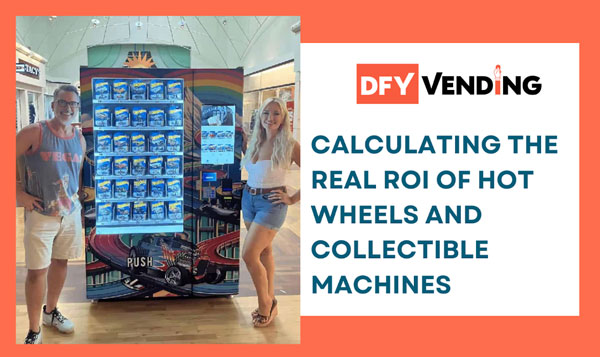
When researching automated retail opportunities, many potential investors find themselves reading honest DFY Vending reviews to determine if the passive income claims match the reality of the daily operations. These testimonials often highlight a professional onboarding process and a unique product niche that sets the company apart from traditional snack and soda routes. For the aspiring entrepreneur, the allure of “done-for-you” services is powerful, promising a turnkey solution to wealth building without the need for a forty-hour weekly commitment. However, as with any business venture involving physical assets and retail locations, the Return on Investment (ROI) is subject to a variety of market forces, ranging from foot traffic quality to the specific psychology of the collector market.
The DFY Vending Value Proposition
DFY Vending specializes in a specific subset of the vending industry: collectibles. Unlike traditional machines that sell perishable goods with low margins, DFY focuses on high-demand items like Hot Wheels cars and other collectible toys. Their business model is built on the premise that they handle the heavy lifting, including sourcing the machines, securing high-traffic locations, and providing the initial inventory.
The company’s marketing materials often suggest a highly lucrative outcome, with claims that a well-placed machine can generate $1,600 or more in monthly net profit. For someone looking for a side hustle, this figure is incredibly enticing. It represents a “set it and forget it” income stream that could theoretically replace a part-time job or significantly accelerate retirement savings. To understand the feasibility of these numbers, one must break down the mechanics of the collectible toy niche.
The Hot Wheels Niche: High Demand vs. Low Margin
The choice of Hot Wheels as a primary product is strategic. Mattel’s die-cast cars have a massive, multi-generational following. There are “treasure hunters” who spend hours scouring retail pegs for rare variants, and children who view the machines as an instant-gratification toy store. Because the brand is globally recognized, the “trust barrier” for the consumer is low. They know exactly what they are getting for their money.
However, the financial math of a Hot Wheels machine is tighter than it appears. A standard Hot Wheels car typically retails at big-box stores for a very low price point. To make a vending machine profitable, the operator must mark these items up significantly. While a collector might pay $5 or $10 for a specific or convenient find, the volume required to reach a $1,600 net profit is substantial. If a machine nets $2 profit per car, it would need to sell 800 cars a month to reach that goal. That is nearly 27 sales every single day, which is a high bar for a single unit in most environments.
The Reality Gap: Gross Revenue vs. Net Profit
Independent user reports and market data often paint a more conservative picture than the best-case scenarios presented in sales brochures. Many operators report gross revenues in the range of $500 to $1,000 per month. It is vital to distinguish between “gross revenue” (the total money collected) and “net profit” (what stays in your pocket after expenses).
From that $1,000 gross, several costs must be deducted:
- Cost of Goods Sold (COGS): The price paid for the toys.
- Location Rent (Commissions): Malls and high-traffic venues typically take 15% to 30% of the gross.
- Credit Card Processing Fees: Most modern machines use cashless systems that take a percentage of every sale.
- Maintenance and Travel: Gas and time spent restocking and cleaning the glass.
When these factors are applied to a $1,000 gross revenue stream, the net profit often settles between $300 and $500. While this is still a respectable passive return on a single asset, it is a far cry from the $1,600 net profit figure often used to sell the dream.
The Location Paradox: Malls and High Rents
In vending, location is everything. DFY Vending prides itself on securing “premium” placements, often within large shopping malls. On the surface, this makes sense because malls provide a concentrated stream of families and shoppers. However, the “premium” nature of these locations comes with a heavy price tag.
Mall management companies are notorious for demanding high monthly minimums or aggressive percentage splits. If a machine is placed in a secondary corridor or near a dying department store, the foot traffic may not justify the rent. An operator might find themselves in a situation where they are selling plenty of product, but the mall is taking the lion’s share of the profit. Success in this niche requires a delicate balance between high visibility and sustainable overhead.
The Problem of Stale Inventory
Another challenge unique to the collectible niche is the “stale inventory” trap. Unlike a Snickers bar, which people will buy repeatedly, a collectible toy machine relies on novelty. If a machine sits in a mall where the same 200 locals walk by every day, they will quickly buy the items they want and then stop looking.
If the operator does not rotate the stock or introduce “chase” items (rare cars that drive repeat visits), the sales velocity will inevitably drop. This turns a “passive” side hustle into a job that requires constant curation and sourcing. To maintain a high ROI, the operator must stay attuned to what is trending in the collector community, ensuring the machine remains a destination rather than just a piece of furniture.
Analyzing the Long-Term ROI
To calculate the real ROI of a DFY Vending investment, one must look at the “payback period.” If a machine setup costs several thousand dollars, and the net profit is $400 a month, it may take 18 to 24 months to recoup the initial capital. After that point, the machine becomes a true cash-flow engine.
For the aspiring entrepreneur, the question is whether they have the patience for this timeline. The business is a marathon, not a sprint. The “done-for-you” aspect significantly reduces the barrier to entry, but it does not eliminate the inherent risks of retail.
Conclusion: Is it a Viable Side Hustle?
The collectible vending niche is a legitimate and creative way to generate semi-passive income. It taps into a passionate fan base and utilizes a business model that has existed for decades. However, the gap between “marketing claims” and “operational reality” is where many new entrepreneurs get frustrated.
If you go into the venture expecting $500 in steady monthly profit per machine while understanding the need for inventory rotation and location management, you are likely to be satisfied. If you enter expecting $1,600 in net profit with zero effort, the reality of mall rents and COGS may provide a harsh wake-up call. Ultimately, DFY Vending offers a structured path into an interesting market, but the true ROI depends on the operator’s ability to manage the machine as a real business rather than a magic ATM. Success in the collectible world requires a sharp eye for trends and a realistic understanding of the numbers behind the glass.














