
How to Start a Clothing Brand From Home: The Complete Guide to Building a Small Fashion Business
By Space Coast Daily // March 13, 2026
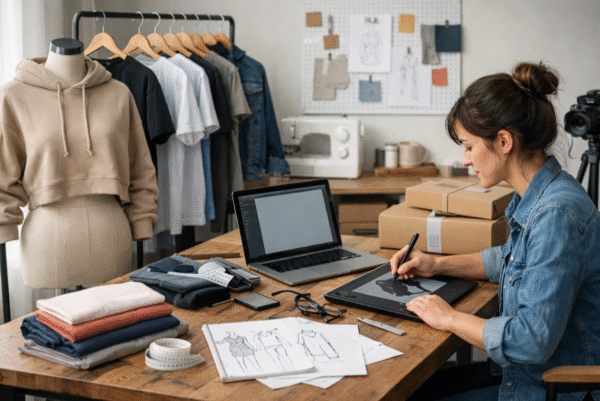
You’ve got a vision. Maybe it’s been sitting in a sketchbook for months, or it hit you last week when you couldn’t find clothes that fit your style, your body, or your budget. Either way, you’re not alone. Knowing how to start a small clothing business from home is one of the most searched questions in fashion right now – and the honest truth is, it’s more achievable than most people think.
Most people get stuck before they even start. They don’t know which products will actually sell, how to price without losing money, or how to build a brand that stands out without blowing their savings. Following trends without wasting money, balancing comfort and style, and figuring out what works in real life is a real challenge. This guide cuts through the noise and gives you a clear, practical path forward.
Step 1: Pick Your Niche Before Anything Else
Trying to sell to everyone is the fastest way to sell to no one. The most important decision you’ll make early on is choosing exactly who you’re making clothes for.
A niche fashion brand has a clear advantage over a general one: specificity sells. When your brand speaks directly to one type of person – their style, their values, their lifestyle – they feel seen. That feeling is what turns browsers into buyers.
Strong niche ideas for home-based founders include streetwear, sustainable fashion basics, athleisure, plus-size clothing, gender-neutral pieces, vintage-inspired styles, and custom graphic tees through print-on-demand (POD). Each targets a real person with a real wardrobe gap that mainstream brands leave wide open.
Use Google Trends, Pinterest Trends, and TikTok search to validate your direction. They’re free and show you what real people actually want right now.
Step 2: Choose a Business Model That Fits Your Budget
Your business model determines how much money you need upfront, how much risk you carry, and how fast you can launch. Here’s a quick comparison:
| Business Model | Upfront Cost | Risk Level | Best For |
| Print-on-demand (POD) | $0 – $500 | Very Low | Custom tees, hoodies, graphic apparel |
| White label / Private label | $500 – $2,000 | Medium | Branded basics |
| Made-to-order / Handmade | $200 – $1,500 | Medium | Artisan and premium products |
| Manufacturing partner | $5,000+ | High | Full custom collections |
For most home-based founders, POD is the lowest-risk starting point. Platforms like Printful, Printify, and Teemill handle printing and shipping. You design the product, they fulfil the order. No inventory, no minimum order quantities (MOQs), no upfront stock costs.
Step 3: Know Your Startup Costs
The cost to start a clothing brand from home ranges from near $0 with print-on-demand to over $20,000 for full custom manufacturing. Most home-based founders start between $200 and $2,000. The main cost areas are design tools, samples, your website, initial marketing, and packaging.
A tiered breakdown:
| Cost Category | POD ($) | Small Batch ($) | Full Manufacturing ($) |
| Design tools | $0 – $55/month | $0 – $55/month | $0 – $55/month |
| Garment samples | $0 | $150 – $500 | $500 – $2,000 |
| Website / Shopify | $29 – $79/month | $29 – $79/month | $79+/month |
| Initial inventory | $0 | $500 – $2,000 | $5,000 – $15,000 |
| Marketing (launch) | $0 – $200 | $200 – $500 | $500 – $2,000 |
| Packaging | $50 – $150 | $150 – $500 | $500 – $2,000 |
| Total Range | $0 – $500 | $500 – $3,000 | $5,000 – $20,000+ |
A bootstrap clothing brand can launch on a POD model for under $200. For small batch production, set a clothing brand budget in writing before any money moves. Include a cash flow projection in your business plan – running out of cash mid-production is one of the most avoidable problems new brands face.
Step 4: Build a Brand Identity That Actually Connects
Your brand identity is how people feel about your label before they’ve ever tried it on. It’s your name, your look, your story, and your promise – all working together.
A strong clothing brand name is short, memorable, and available across Instagram, TikTok, and domain search. Check the USPTO trademark database before committing. Tools like Shopify’s Name Generator help when you’re stuck.
Your visual identity has four core elements: logo, color palette, typography, and photography style. Even a one-page brand style guide keeps everything consistent across your website, social media, and packaging.
Your brand mission statement answers three things: why you started, who you’re making clothes for, and what you promise them. Research shows 67% of millennials buy from brands with a clear identity. Place your story on your About page, in your Instagram bio, and on your packaging inserts.
Step 5: Set Up a Proper Home Workspace
This step gets skipped in almost every clothing brand guide. It shouldn’t.
A productive home office for your clothing brand needs one thing above all: a dedicated, business-only zone. Even a corner of a spare room works well. The goal is a space where you design, store fabric, photograph products, and pack orders without your work life and home life bleeding into each other.
Basic equipment to have in your home studio:
- Garment rack and mannequin for fitting and display
- Good overhead lighting – natural light or a daylight LED setup
- Clear storage bins with labels for fabrics and trims
- A ring light and neutral backdrop for product photography at home
Natural window light and a clean white wall produce images good enough for any ecommerce store. A modern smartphone shoots well enough. Edit for free with Snapseed or Canva. Flat lay shots work for accessories and detail images. On-model photography sells the fit and lifestyle of a garment – and typically converts better for full outfit products.
Step 6: Launch Your Online Store and Start Selling
Your ecommerce clothing business is your 24/7 sales floor. Choosing the right platform from the start matters.
| Platform | Best For |
| Shopify | Scaling clothing brands with full control |
| Etsy | Handmade, niche, or vintage-first brands |
| WooCommerce | Budget-conscious WordPress users |
| TikTok Shop | Viral-potential products for Gen Z audiences |
Start with one platform, build it properly, and expand later. Every product page needs quality photos, a clear size guide, fabric content information, and care instructions. Add customer reviews and user-generated content (UGC) as social proof – real buyers in your clothing convert better than studio shots.
Step 7: Market From Home Without a Big Budget
The best product in the world doesn’t sell itself. Fortunately, home-based fashion marketing doesn’t need a big budget to work.
Instagram and TikTok are your two strongest free channels. Post product drops, behind-the-scenes content, and styling tips consistently. TikTok rewards authenticity – “how it’s made” content and real styling videos outperform polished ads for most small brands. Pinterest drives long-term passive traffic through outfit boards and product pins.
Build your email list from day one. Offer 10% off a first order to encourage sign-ups. A simple welcome sequence that tells your brand story and nudges the reader toward their first purchase runs on autopilot and consistently delivers strong return on investment for small clothing brands.
For offline reach, pop-up shops and fashion market stalls give you direct customer feedback that online channels can’t replicate. Bring a display garment rack, branded signage, a card reader, and branded bags that carry your name through the event all day.
Common Mistakes to Avoid
These are the mistakes that cost home-based clothing brand founders the most time and money:
- Skipping the fashion tech pack before sampling
- Paying production deposits before approving garment samples
- Underpricing products – low price signals low quality
- No cash flow projection in the business plan
- Ignoring US clothing label laws (FTC care labels and fiber content labeling are legal requirements)
- Trying to sell to everyone instead of a defined niche
- Launching too many products at once – start with three to five hero pieces
Ready to Take the Next Step?
If this guide has made the path clearer, the next move is straightforward. Start with your niche, pick a business model that fits your budget, and give yourself a realistic launch timeline.
For everything you need on how to start a clothing brand – from writing your business plan to finding manufacturers, setting up your Shopify store, and marketing your first collection – our full step-by-step guide covers every detail.
The brand you’ve been thinking about doesn’t build itself. But with the right steps in the right order, it’s a lot closer than it looks.















