sightings to the Florida Fish and Wildlife Conservation Commission and to never attempt to capture or approach the animal
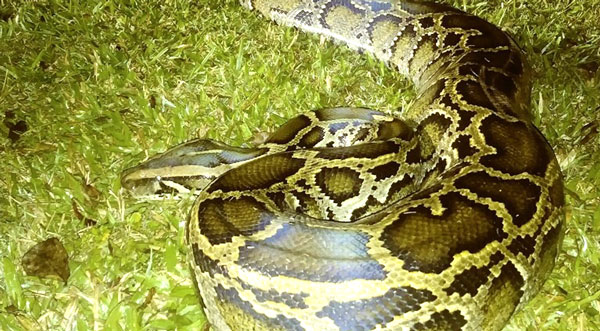
Wildlife experts are raising concerns as invasive Burmese python populations continue to expand beyond South Florida, with increasing evidence suggesting the large snakes are gradually moving north toward Brevard County.
BREVARD COUNTY, FLORIDA – Wildlife experts are raising concerns as invasive Burmese python populations continue to expand beyond South Florida, with increasing evidence suggesting the large snakes are gradually moving north toward Brevard County.
The species, native to Southeast Asia, became established in Florida primarily through the exotic pet trade and is now heavily concentrated in and around Everglades National Park.
Over the past two decades, the population has grown significantly, posing a serious threat to native wildlife.
Biologists report that Burmese pythons can travel long distances and adapt to a variety of habitats, including wetlands, forests, and suburban areas.
Warmer temperatures and interconnected waterways have contributed to their gradual spread into Brevard County regions.
While confirmed sightings in Brevard County remain limited, experts say the northward movement is expected and consistent with ongoing tracking data and environmental conditions.
The presence of these large constrictors has been linked to dramatic declines in native mammal populations in South Florida, as they prey on a wide range of animals, including raccoons, birds, and deer.
State wildlife officials encourage residents to remain aware but not alarmed.
Burmese pythons are generally not aggressive toward humans, though they can become dangerous if threatened or handled.
Residents are urged to report any sightings to the Florida Fish and Wildlife Conservation Commission and to never attempt to capture or approach the animal.
Efforts to control the population remain ongoing, including removal programs and public awareness campaigns, as officials work to limit the spread of one of Florida’s most impactful invasive species.