
Brevard Homeowners’ 2026 Hurricane Hardening Guide: How HVHZ-Style Impact Windows Are Reaching the Space Coast
By Steve Mardini // May 9, 2026
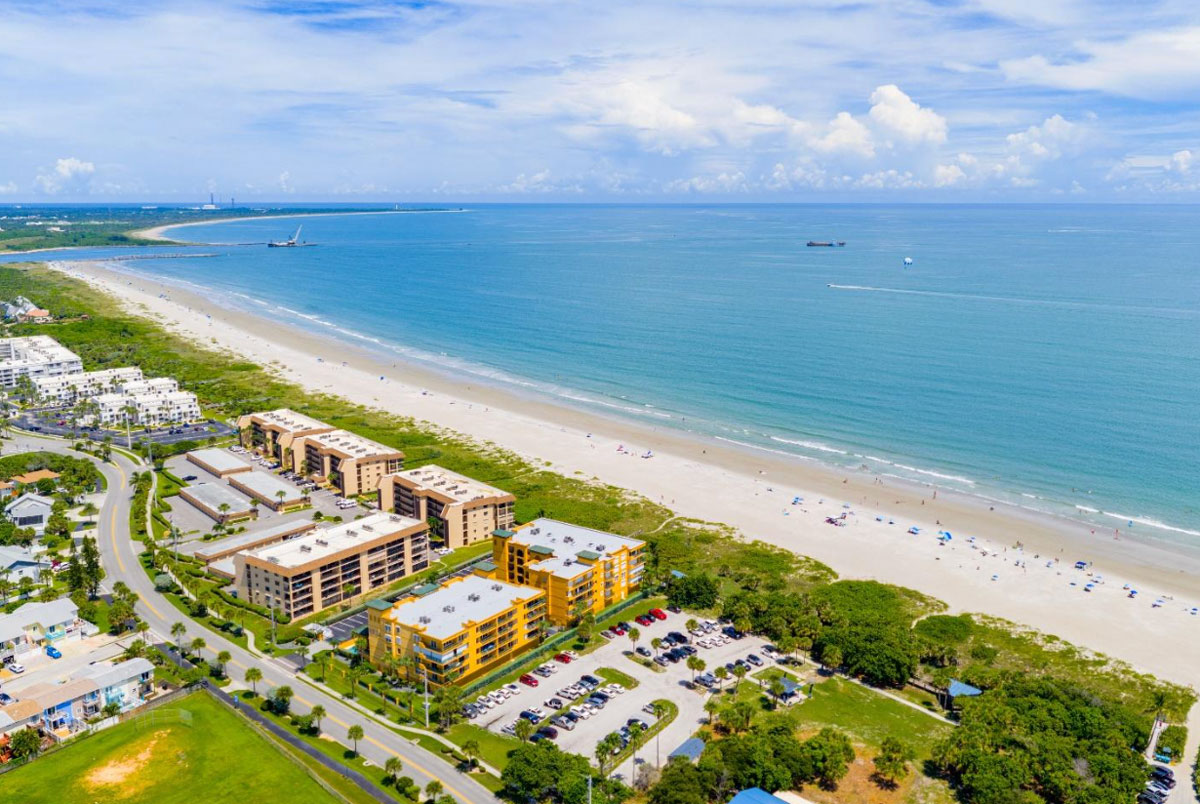 The 2026 Atlantic hurricane season opens June 1, and Brevard County homeowners are walking into it with a different calculation than they had two years ago. Hurricane Milton’s eye crossed near Titusville and Kennedy Space Center in October 2024 with peak Cat 3 winds, and Helene weeks earlier pushed water and wind across central Florida from a different angle. Insurance carriers noticed. Building inspectors noticed. The state legislature noticed. The result is a slow but real shift in what counts as “good enough” hurricane protection on the Space Coast, and the protection standard the rest of the state borrows from is the High Velocity Hurricane Zone in Miami-Dade and Broward.
This is a practical guide for homeowners between Cocoa Beach and Palm Bay who want to know what HVHZ-grade impact protection actually means, why a code that applies only to two counties matters for the rest of us, and how the 2026 wind mitigation math has shifted enough to make the question worth asking.
What HVHZ Actually Means and Why It Sets the Floor
The High Velocity Hurricane Zone is a designation in the Florida Building Code that applies to only Miami-Dade County and Broward County. Inside HVHZ, every glazed opening on a new home has to either carry impact-rated glass or be covered by approved shutters. The design wind speed is 175 mph in Miami-Dade and 170 mph in Broward, both expressed as 3-second gusts at Risk Category II.
The testing protocol is what separates HVHZ from everywhere else. HVHZ products are tested against TAS 201 large-missile impact, a 9-pound 2×4 of Southern Yellow Pine fired at the glass at 50 feet per second. Outside HVHZ, the equivalent ASTM E1886 test uses a 4.5-pound 2×4 at the same speed. The post-impact tear tolerance under HVHZ TAS 203 is no tear longer than 5 inches and wider than one-sixteenth of an inch. The standard non-HVHZ allowance is 5 inches by 3 inches, which is 48 times more permissive on tear width. A laminated glass package that passes ASTM E1886 can fail TAS 203 cleanly.
That gap is the reason HVHZ products are accepted statewide and in most U.S. jurisdictions, while products approved under the lighter standard are not accepted in HVHZ. In practical terms, when a Brevard homeowner buys an HVHZ-stamped product, they are buying the most demanding impact-glazing standard in the world for windborne debris scenarios.
Where Brevard County Sits on the Wind Map
Brevard is not in HVHZ. The relevant county-level regulation is the Wind-Borne Debris Region, which captures any address within 1 mile of the coast where the design wind speed is 130 mph or higher, plus any address anywhere in the state where the design wind speed reaches 140 mph or higher.
For the Space Coast that splits the county along familiar lines:
• Barrier island and direct coastal exposure (Cape Canaveral, Cocoa Beach, Satellite Beach, Indialantic, Melbourne Beach, Sebastian Inlet area). Design wind speeds run 140 to 160 mph for direct Atlantic exposure on south Brevard and 130 to 150 mph along the rest of the barrier island. WBDR is triggered. Impact windows or approved shutters are required by code on new construction.
• Mainland Brevard (Palm Bay, Viera, Rockledge, Merritt Island west sections, West Melbourne, Titusville). Design wind speeds run 130 to 140 mph but most addresses sit beyond the 1-mile coastal trigger and fall short of the 140-mph statewide trigger. WBDR is not mandatory. Impact protection becomes a homeowner choice rather than a code requirement.
That distinction matters at permit time but matters less at insurance renewal time, which is the part the wind map does not show.
What the 2026 Code Update Is About to Change
The 9th Edition of the Florida Building Code is scheduled to take effect December 31, 2026. The proposals on the table at the Florida Building Commission would tighten things in two ways that affect the Space Coast directly.
The first is a Wind-Borne Debris Region expansion. Two of the modification proposals would drop the coastal-only restriction on the 1-mile, 130-mph trigger, which means addresses near large inland water bodies would also qualify. Lake Washington in Melbourne and the St. Johns River corridor west of I-95 have been mentioned in code-comment records. Whether the language survives the final draft is open, but the direction of travel is clear.
The second is a tightening of energy performance, with proposed solar heat gain coefficient (SHGC) at 0.25 for replacement windows. That number comes out of energy code rather than wind code, but it pushes builders and homeowners toward the same Low-E impact glass packages that are already standard on HVHZ products.
Either change pulls Brevard’s effective standard closer to what Miami-Dade and Broward have been doing since 1994, even without an HVHZ designation.
The 25% Rule Catches Mainland Homeowners by Surprise
The single Florida Building Code provision that catches the most Space Coast homeowners off guard is Section 707.4, the so-called 25% rule. The rule says that if a pre-FBC home in the WBDR replaces glazed openings whose total area exceeds 25% of the existing glazed area within any 12-month period, every replacement opening on that project has to meet current new-construction impact standards. The HVHZ version of the rule, with a slightly different starting date, applies the same 25% threshold to pre-September 1994 homes.
Most Brevard homeowners think of impact windows as an all-or-nothing decision. The 25% rule says otherwise. A Cocoa Beach 1960s condo owner who replaces a kitchen window, a master bedroom window, and one slider in the same year can easily clear 25% of total glazed area on a small unit, and the moment they do, every replacement on that permit has to be impact-rated. Cape Canaveral, Cocoa Beach, and Satellite Beach barrier-island stock built before the 1994 code reform is full of homes where the 25% threshold trips on what feels like a routine repair.
The fix on the front end is straightforward: plan the project as a single permitted scope with impact units from the beginning, rather than discover the rule on the second visit from the inspector.
The Insurance Math Looks the Same on the Mainland
The reason mainland Brevard homeowners are upgrading to impact products even when WBDR does not mandate it is that the insurance discount is structurally identical to what coastal owners get.
The Florida Office of Insurance Regulation administers wind mitigation discounts through the OIR-B1-1802 form, which was substantially updated effective April 1, 2026. Opening protection credit is the largest single category on the form, worth roughly 22 to 25% off the wind portion of the homeowners premium when every glazed opening on the home is impact-rated or covered by approved shutters.
Two facts about that credit drive most of the financial decision:
1. The credit follows an all-or-nothing rule. A single unprotected opening earns the homeowner zero opening protection credit on the entire home. Half a house of impact windows produces no insurance discount at all. This is the math that pushes partial upgrades into full retrofits.
2. The carrier does not care which county you live in for credit purposes. A Palm Bay owner who installs impact products gets the same percentage opening protection credit as a Cocoa Beach owner who is required by code to install them. The base premium against which the percentage is applied is also higher in Brevard than in any year before 2022, because the statewide premium-base reset that came out of SB 2A’s reforms has not unwound.
My Safe Florida Home program data published by the Florida Department of Financial Services shows that 49% of program recipients reported insurance discounts averaging $981 per year after completing wind mitigation improvements. The state appropriated $280 million for the FY 2025-2026 cycle and has proposed more than $600 million for FY 2026-2027 to clear the existing applicant backlog. Eligible Brevard homeowners can apply for free wind mitigation inspections and matching grants of up to $10,000 toward qualifying improvements through My Safe Florida Home.
The cleanest way to estimate the picture for a specific Brevard address is to start from the wind mitigation form, identify which opening protection credit applies today, price an upgrade that closes the all-or-nothing rule, and compare the annual premium delta against the financed monthly payment. That is the same calculation that has driven impact window adoption in HVHZ counties for two decades, and it now produces similar answers along the Space Coast.
Practical Rule of Thumb for Cocoa Beach to Palm Bay
The honest summary of where Brevard County stands in 2026:
• If the home is on the barrier island, impact-rated glazing is the path of least resistance for code, insurance, and resale value. Buying to the HVHZ TAS 201 / TAS 203 standard rather than the lighter ASTM E1886 / ASTM E1996 standard adds a modest premium and produces a product specification that will not be invalidated by the 9th Edition code update.
• If the home is on the mainland and outside the 1-mile coastal trigger, impact protection is a homeowner choice rather than a code requirement. The numbers that drive the choice are the OIR-B1-1802 wind mitigation credit, the My Safe Florida Home matching grant, and the premium base that has not returned to pre-2022 levels.
• If the home was built before the 1994 reforms or the 2002 first-edition FBC and any glazing replacement is on the table, the 25% rule should be the first thing the homeowner asks about. It changes the project scope before it changes the budget.
A Brevard homeowner pricing a 12-to-15-opening project should expect total cost in roughly the same band as comparable Miami-Dade impact window projects, with adjustments for product tier, frame material, and the lighter permit overhead north of the HVHZ line. A homeowner deciding whether to buy HVHZ-grade product or non-HVHZ product on an inland mainland home should weigh the modest cost difference against the durability and resale narrative of an HVHZ-stamped install. For most Space Coast addresses that decision pencils out the same way it does in Pompano: buy once, install once, qualify for the wind mitigation credit, and stop worrying about the 25% rule on every future repair.
The full county-level breakdown of design wind speeds, permit pathways, and product-tier pricing for impact windows on the Space Coast is the reference homeowners can pull before requesting their first quote, alongside an explainer on how HVHZ certification works and what TAS testing actually proves about a window.
Hurricane season opens in three weeks. The decision worth making before June 1 is not which storm to worry about; it is whether the home’s openings are tested against a standard that takes the storm seriously.















