The Orlando Esports Pipeline: How Competitive UIs Are Shaping Florida’s iGaming Scene
By Space Coast Daily // July 8, 2026
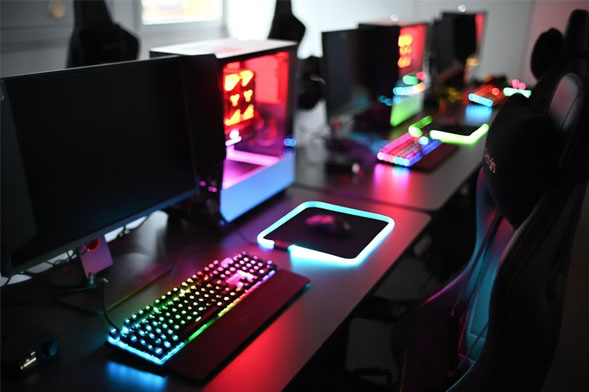
Orlando has a massive and constantly growing eSports scene. You’ve got the Esports Series Championship (ESC) hosted at Full Sail University, CEO Gaming, which is Orlando’s premier fighting game organization that hosts one of the largest annual FGC gatherings in the country, and standard ‘grassroots play’ where weekly events, such as the local Super Smash Bros tournaments, take place at venues like the Boardwalk Bowl Entertainment Center.
A lot is going on, and now the question of whether competitive user interfaces (UI) are redefining Florida’s iGaming scene connects the eSports pipeline to its influence on other gaming niches, like the iGaming platforms you can find on this website. Both use competitive UIs, so let’s explore.
The Orlando eSports Pipeline
Orlando has an authentic collegiate esports infrastructure story.
Full Sail University’s Orlando Health Fortress is the largest collegiate esports arena in the US. It has flexible seating, a 500-person capacity (not as big as some eSports arenas, yes, but it’s a college facility), a 10-million-pixel LED wall, and a concert-level PA system. If you ever see it, it’s so cool.
Through the facility, Orlando has a credible pipeline venue for collegiate competition and broadcasting, but it also specializes in production training and esports event operations. Most recently, Full Sail hosted the NACE 2025 Grand Finals from April 24 to 27, 2025.
The event invited 8 top North American collegiate esports teams to the Orlando Health Fortress and Full Sail Live. This proves that the arena isn’t for small gaming meetups; it’s for national-level collegiate esports events.
Other competitions
The NACE Spring 2026 Grand Finals returned to Full Sail from April 23 to 26, 2026. The event was massive. 48 varsity teams from North America competed in:
• League of Legends
• Valorant
• Call of Duty: Black Ops 7
• Overwatch
• Rocket League
• Super Smash Bros Ultimate
We’ll link a YouTube vlog of the weekend here.
It proves that high school/college players, varsity programs, casters, event producers, sponsors, and hardware partners are part of the Orlando-based ecosystem.
And after Central Florida Public Media reported that the CEO event had outgrown Daytona, the event returned to the Sunshine State for another massive event that attracted around 6,000 visitors/competitors over three days. The event was described as a multi-million-dollar production, and CEO 2025’s Sunday finals reportedly reached at least 200,000 Twitch viewers at some point, with 2,000 people watching in person.
Competitive UIs and the Link Between eSports and iGaming
Competitive UIs are about refining speed and decision-making under pressure. In eSports, this is exactly what’s happening. The interface must help players read information instantly, and the information they’re reading influences their next move. They’re analyzing:
• Cooldowns
• Maps
• Health bars
• Inventory
• Timing
• Score states
• Match momentum
• Opponent positioning
And they’re doing it all through the rapid relay of information from UIs. If it weren’t for them, the games wouldn’t be as watchable and analytical as they are.
The NACE 2026 game list gives us a clear way to explain different UI demands. League of Legends and Valorant rely heavily on map awareness, ability timers, economy data, and teamfight clarity. Rocket League is about speed, boost information, and camera control. Fighting games like Smash and Street Fighter need precise health, meter, round, and frame-readability cues.
All of them require different UI demands, and the UIs are now so advanced that they’re effortlessly keeping up with it.
Competitive UIs train users to expect fast feedback loops, and that’s exactly what’s happening in iGaming. Platforms are now becoming so much more advanced in the era of live betting, live player dashboards, rewards, and personalized experiences. The link between the two is so strong, even if the feedback loops and data requirements are slightly different.
Connect Orlando eSports to Florida iGaming
Esports is creating a younger, interface-native audience, and so is iGaming. According to The Unit, Gen Z betting product research from 2026 argues that younger users expect speed, clarity, personalization, content-led entry points, and trust/transparency in betting products. And as we’ve already discussed, competitive game UIs are delivering it, especially for live online casino games.
Sportsbook UX trends (sportsbooks fall under the iGaming category) for 2026 mirror esports UI patterns. Altenar identifies adaptive design, microbetting, personalization, mobile-first design, and social/community layers as major sportsbook UX trends. We can link it to eSports with live stats, fast decisions, team/player tracking, personalized dashboards, and community-driven engagement.
Competitive UIs have already shaped Florida’s eSports and iGaming scene. Now, it’s a question of how it will continue to drive innovation and improve player experiences. The technology is so advanced that it’ll be interesting to see how it continues to improve gaming outcomes across both niches.