What Airbag Defects Can Make Crash Injuries More Severe?
By Space Coast Daily // September 8, 2026
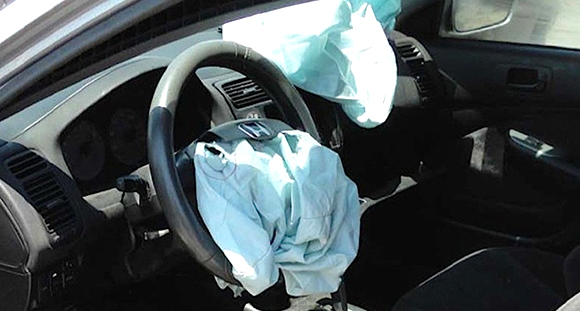
Airbags are designed to supplement seat belts by reducing the chance that an occupant’s head or upper body will strike the steering wheel, dashboard, door, or other hard interior surface during a crash. NHTSA explains that frontal and side airbags are generally designed to deploy in moderate to severe collisions. When the system works correctly, deployment happens extremely quickly and is coordinated with the type and severity of the impact.
A crash injury can become more complicated when the restraint system does not perform as designed. Someone speaking with a Chicago accident attorney may need to examine whether the injuries resulted entirely from the collision or whether an airbag malfunction added another source of harm. Vehicle data, airbag-control information, recall history, repair records, photographs, and the actual airbag components can all become relevant when a defect is suspected.
An Airbag Fails to Deploy When Protection Is Needed
A non-deployment can leave an occupant without the supplemental protection the system was intended to provide. Instead of contacting an inflated cushion, the person’s head or chest may strike the steering wheel, dashboard, window, or another part of the vehicle. NHTSA notes that airbags are designed to reduce the chance of these interior impacts.
At the same time, a failure to deploy does not automatically prove a defect. NHTSA explains that deployment depends on crash severity, impact direction, sensor locations, and the vehicle manufacturer’s airbag strategy. Some crashes are not severe enough or occur in a direction that does not call for a particular airbag. When a serious crash produces no deployment, investigators may need to determine whether the system correctly recognized the event or malfunctioned.
Deployment Is Too Slow or Incomplete
An airbag must inflate rapidly enough to create protection before the occupant moves into the vehicle interior. NHTSA states that a typical airbag inflates in less than one-twentieth of a second. If an inflator or another component causes the bag to inflate too slowly or only partially, the occupant may reach the steering wheel or dashboard before the cushion provides its intended protection.
NHTSA has specifically warned that some substandard replacement inflators can deploy partially or too slowly. The agency explains that this type of malfunction can fail to protect an occupant’s head from contacting the steering wheel or dashboard. That type of evidence can become significant because the airbag may appear to have deployed while still failing to perform as expected.
Inflators Can Rupture and Send Metal Fragments Into the Cabin
Some of the most dangerous airbag defects involve the inflator rather than the fabric cushion. The Takata recalls demonstrated how degraded propellant could create excessive pressure inside an inflator during deployment. NHTSA explains that affected inflators can rupture, allowing sharp metal fragments to pass through the airbag and strike occupants.
A rupturing inflator can therefore transform a protective device into an additional source of trauma. Injuries may involve the face, neck, chest, or eyes rather than only forces created by the crash itself. NHTSA has also identified dangerous replacement inflators that rupture during collisions and eject metal fragments, showing that inflator failures are not limited to the older Takata issue.
Defective Sensors Can Affect Whether and How the Airbag Deploys
Modern frontal airbags rely on electronic systems rather than deploying identically in every collision. NHTSA explains that advanced systems can use crash-severity sensors, seat-position sensors, belt-use information, and occupant-detection technology to determine whether an airbag deploys and, in some designs, how much inflation force is used.
A defect involving those inputs can potentially affect the system’s decision-making. For example, a malfunctioning occupant-detection system could incorrectly classify a front-seat passenger, while problems involving crash sensing could raise questions about whether the system recognized the impact correctly. Because non-deployment can also be intentional and proper, determining whether a sensor actually failed requires analysis of the specific vehicle and crash rather than assumptions based only on whether an airbag opened.
Incorrect or Unintended Deployment Can Cause Additional Injury
Airbags deploy with considerable speed because they must inflate before an occupant moves far forward or sideways during a collision. NHTSA cautions that serious or even fatal injuries can occur when someone is extremely close to the airbag at the beginning of deployment. This is one reason NHTSA recommends proper seating position and adequate distance from frontal airbags.
Airbag-related injury does not by itself establish that the system was defective. However, deployment when crash conditions did not call for it, deployment with an inappropriate inflation level, or a malfunction affecting timing may require closer investigation. Advanced systems are specifically designed to use sensor information when deciding whether, when, and how much to deploy, so the system’s electronic and mechanical performance may need to be examined together.
Counterfeit or Substandard Replacement Airbags Can Create New Risks
A vehicle that has already been in a collision may contain replacement airbag components rather than the original equipment. NHTSA warns that counterfeit airbags have been found in vehicles repaired after previous crashes and that these components can malfunction through non-deployment or by ejecting metal shrapnel during deployment.
Substandard replacement inflators have created similar concerns. NHTSA advises used-vehicle owners to investigate prior crash and airbag deployment history because defective replacement parts may have been installed during earlier repairs. Identifying who supplied and installed a replacement component can therefore become important when an airbag failure contributes to injuries in a later collision.
Airbag Evidence Can Change the Investigation After a Crash
When an airbag appears to have malfunctioned, preserving the vehicle can be particularly valuable. Investigators may need access to the deployed bag, inflator, steering-wheel or dashboard module, sensors, control unit, warning lights, diagnostic information, and repair history. A recall search using the vehicle identification number can also reveal whether the vehicle was subject to an unresolved safety campaign.
The central question is whether the crash alone explains the injuries or whether a restraint-system problem made them worse. Failed deployment, slow inflation, inflator rupture, sensor problems, inappropriate deployment, and defective replacement components can each raise different technical issues. Separating those possibilities requires examining how the airbag was designed to function and what actually happened during the collision.