Beyond Metal: Why PEEK is the Future of Aerospace
By Space Coast Daily // December 19, 2025
The aerospace industry operates under a strict mandate: maximize performance while minimizing weight. In this demanding environment, PEEK (Polyether Ether Ketone) has graduated from being an alternative material to a primary engineering solution. By offering the strength of metal with the versatility of thermoplastics, high-performance PEEK series allow engineers to solve complex challenges related to fuel efficiency, corrosion, and tribology.
1. The Engineering Edge: From Granule to Part
PEEK is a semi-crystalline thermoplastic known for its robust mechanical properties. However, for aerospace and advanced UAV (Unmanned Aerial Vehicle) applications, the quality of the raw material is paramount.
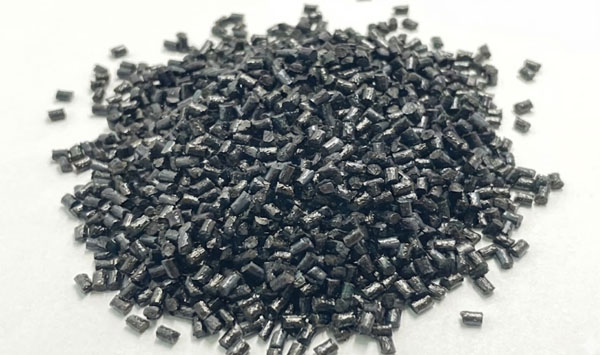
Engineers frequently utilize composite grades—reinforced with Carbon Fiber (CF-PEEK) or modified for Electro-Static Discharge (ESD) safety—to achieve stiffness and tensile strength that rival aluminum.
Figure 1: High-performance Carbon Fiber Reinforced PEEK granules. The consistency of the raw material ensures that the final molded parts meet strict aerospace structural standards.
2. Critical Advantages by the Numbers
Why are engineers switching from Aluminum 6061 to PEEK? The answer lies in the data.
- Weight Reduction: Weight is the enemy of flight. PEEK has a specific gravity of approximately 1.3 g/cm³, compared to 2.7 g/cm³ for aluminum. Replacing metal brackets with PEEK components can reduce part weight by up to 50%.
- Corrosion Immunity: Unlike metals, PEEK is chemically inert to jet fuel, hydraulic fluids (Skydrol), and de-icing agents.
Table 1: Technical Comparison – CF-PEEK vs. Aerospace Metals
| Feature | CF-PEEK (Composite) | Aluminum (6061) | Titanium (Ti-6Al-4V) |
| Density | ~1.3 g/cm³ (Lightest) | ~2.7 g/cm³ | ~4.5 g/cm³ |
| Corrosion Resistance | Immune | Susceptible | Excellent |
| Lubrication Needs | Self-lubricating | Requires Grease | Requires Grease |
| Specific Strength | High | Medium | High |
| Processing | Injection Molding | Machining | Machining |
3. Strategic Applications in UAVs & Aircraft
The transition to PEEK is most visible in dynamic and structural components where reliability is non-negotiable.
- Commercial Drones (UAVs): Manufacturers are increasingly using PEEK for lightweight structural arms and propeller mounts. By switching to carbon-reinforced PEEK, airframes become significantly lighter, directly translating to extended flight times and battery efficiency.
- Aerospace Actuators: In flight control surfaces (such as flaps and ailerons), precision motion is critical. Specialized wear-resistant PEEK gears are replacing metal gears to enable smoother operation, reduce noise, and eliminate the need for heavy liquid lubrication systems.
Figure 2: A precision-machined PEEK gear component for aerospace actuators. Unlike metal gears, this part offers self-lubricating properties and significant vibration dampening, essential for stabilizing drone camera gimbals and flight control systems.

4. Conclusion
As the industry shifts towards sustainability and smarter manufacturing, PEEK stands out as the strategic material of choice. Whether through injection molding or advanced CNC machining, PEEK delivers the consistent, high-purity solutions required to power the next generation of flight.