
Tineco’s New FLOOR ONE S9 Artist Models: A Quick Guide and Brand Comparison (2025)
By Space Coast Daily // December 22, 2025
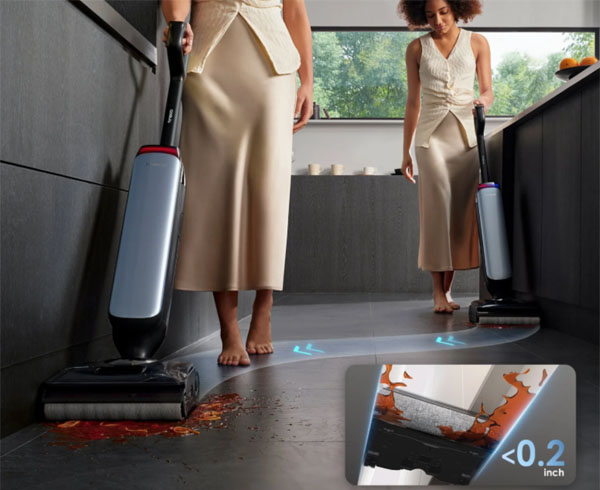
Dinner ends and the floor tells the truth. A few grains of rice near the table. A sticky patch by the stove. Fine dust that clings to the edges like it pays rent. Add pet hair, rainwater tracks, and that one spot under the cabinet toe-kick, and mopping starts to feel like a repeat chore.
That’s why wet-dry vacuum machines keep showing up in real homes. They promise a faster loop: pick up dry mess, wash the floor, then move on. The catch sits in the details. Tanks need emptying. Rollers need drying. Hair can turn into a knot if the brush design can’t cope.
This guide breaks down how these machines work, who gets real value from them, and how Tineco’s new S9 Artist models compare with Dreame, Dyson, and Shark—without the hype.
What a Wet-Dry Vacuum Actually Does in Plain English
A wet and dry vacuum cleans sealed hard floors in one pass. It pulls in crumbs and grit, scrubs with a damp roller, then sucks up dirty water so it doesn’t sit on the floor. Most models use two tanks—clean water stays separate from dirty water—so the roller keeps getting fed with fresh water instead of smearing yesterday’s mess around.
If the category feels messy to shop, skimming a basic floor cleaner category page can help sort “floor washing” machines from standard vacuums before digging into features.
What it replaces and what it doesn’t
In a typical routine, a wet-dry vacuum can replace:
- A quick sweep plus a light mop on sealed hard floors
- Several rounds of paper towels after small spills
- The “clean it twice” habit when dust and sticky spots show up together
It usually does not replace:
- Deep scrubbing grout or textured tile when grime builds up
- True disinfecting when the home needs it
- Carpet cleaning the way a dedicated carpet tool does
The trade-offs people forget
These machines save time on the floor, then ask for time at the sink. Empty the dirty tank, rinse it, clear the roller area, let it dry. Skip that step and the machine can smell funky fast. Storage also matters. If the unit feels bulky in a small kitchen, people stop grabbing it. Simple as that.
Is a Wet-Dry Vacuum Worth it in Real Homes?
A wet-dry vacuum makes sense in homes where mess shows up in layers. Dry bits first (crumbs, grit, pet hair), then the sticky layer (juice, sauce splatters, muddy paw prints). One tool handles both, so the floor stops feeling like a never-ending loop.
The “worth it” part also depends on habits. A person who already mops on schedule might not notice a big shift. A person who keeps delaying mopping until sticky spots turn into scrubbing sessions usually feels the difference right away.
When it Feels Worth It
A wet and dry vacuum tends to earn its keep in homes with:
- Busy kitchens where spills happen often
- Pets that shed or track in dirt
- Lots of sealed hard flooring (tile, vinyl plank, sealed wood)
- Kids who snack while walking like it’s a talent show
When it Can Feel Like Extra Work
A wet-dry vacuum can annoy more than it helps if:
- Most flooring is carpet or thick rugs
- Storage stays tight
- Nobody wants to deal with tanks and rollers after cleaning
A Quick “Worth It” Checklist
- Floor type: mostly sealed hard floors
- Mess frequency: sticky spots more than once a week
- Hair level: pets or long hair in the home
- Upkeep tolerance: okay with quick rinsing and drying
- Layout: lots of low spaces under furniture
If that sounds like the household, browsing a category like Tineco wet dry vacuum can help narrow the search to machines built for this exact job.
What’s New in Tineco’s FLOOR ONE S9 Artist Launch
Tineco’s S9 Artist launch splits into two ideas. One model focuses on wet cleaning, reach under furniture, and hair handling. The other adds steam for stuck-on mess that usually takes extra scrubbing.
Both aim at everyday floor reality: crumbs plus grime, not just one or the other. The differences show up in how they deal with sticky buildup, how low they can go, and how the post-clean cleanup works.
S9 Artist Pro—Reach, Hair Control, and Roller Drying
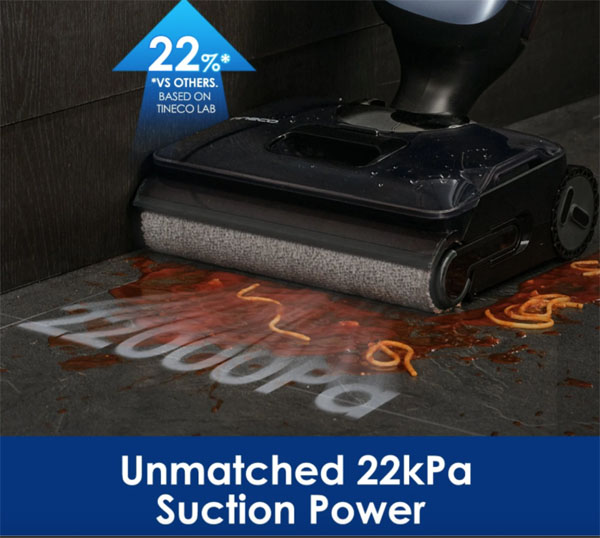
The S9 Artist Pro lists 22kPa suction and up to a 75-minute runtime (real time can vary with settings and floor type).
It also lists a 180° lay-flat design and a compressed height of 12.85 cm for low-clearance cleaning under furniture.
For upkeep, it includes a “Flashdry” self-cleaning setup that uses heated water, then 85°C hot air to dry parts of the machine.
It also lists a DualBlock anti-tangle design aimed at reducing hair wrap at the roller area.
If someone wants to read the model details under the exact search-style phrase, the S9 Artist Pro appears here as best wet dry vacuum.
S9 Artist Steam—Steam for Sticky, Dried-on Spots
The Steam version adds a “HyperSteam” system listed at 320°F internal heater output, with a stated minimum 210°F outlet temperature.
That heat can help on dried splashes near the stove, sugary drips, and footprints that leave a tacky film after they dry.
It also lists 22kPa suction and up to 75 minutes runtime, plus HEPA filtration.
Steam still needs basic caution: some floor finishes don’t like heat and moisture on repeat, so checking the flooring maker’s guidance keeps the floor safe.
Tineco vs Dreame, Dyson, and Shark—What Changes Day to Day
Brands chase the same outcome—less time on floors—but they take different routes. Some lean hard into floor washing. Some treat wet cleaning as an add-on. Some build simpler “grab-and-go” combos.
The comparisons that matter come from real moments: hair wrap, dried splashes, low clearance, and cleanup time after the floor looks good.
Dreame—Similar “Floor Washer” Concept, Different Wash-and-Dry Approach
Dreame’s H14 Pro lists a 180° lie-flat design, 18,000Pa suction, a 140°F (60°C) brush wash, and 5-minute sealed hot air drying, along with app control.
On paper, that sits in the same practical lane as Tineco’s S9 Artist Pro—low reach and a focus on roller cleaning and drying—while the stated numbers and the wash/dry details differ.
Dyson—One Dedicated Wet Cleaner, Plus a Vacuum with a Wet Head
Dyson’s WashG1 is a dedicated wet floor cleaner for hard floors. Dyson describes it as picking up wet and dry debris and separating solid debris from dirty liquid for easier disposal. Dyson also notes it uses counter-rotating rollers instead of vacuum suction.
Dyson also sells the V15s Detect Submarine as a vacuum that includes a wet roller head, lists up to 60 minutes runtime, and highlights HEPA filtration. A key reality check: Dyson’s own guidance around wet cleaning sits inside the wet roller head system.
Shark—Simple 3-in-1 Messaging and Easy Maintenance Focus
Shark’s HydroVac is marketed as a 3-in-1 device, and Shark highlights a self-cleaning antimicrobial brushroll and an odor neutralizer feature on product pages. Listings also commonly describe a continuous self-cleaning system that helps reduce redepositing dirt and helps with brushroll odors.
In daily life, Shark often appeals to people who want fewer knobs and fewer steps—clean the floor, do quick tank care, park it.
Choosing the Right Wet-Dry Vacuum Without Getting Tricked by Specs
Spec sheets look tidy. Real floors look… lived-in. The best pick usually comes down to boring stuff: how fast daily mess gets handled, and how painless the cleanup feels after.
To keep it simple, focus on the parts that change the routine and ignore the buzzwords.
What Matters More than Big Numbers
- Edge and corner cleaning: that dusty line by baseboards should shrink, not survive
- Under-furniture reach: lay-flat designs help with crumbs under benches and low cabinets
- Hair handling: long hair and pet fur can wreck rollers without anti-tangle help
- Tank setup: small tanks mean more refills and dumps
- Roller drying: faster drying cuts down damp smells
- Noise and weight: if it feels heavy or loud, it gets used less
Where Steam Fits
Steam helps most on sticky or dried mess that clings to sealed hard floors. Think sauce dots by the stove, juice drips that dried tacky, and footprints that leave a dull film. It won’t erase old grout stains or fix textured tile buildup without extra work.
For the Steam model reference under the same phrase people search online, that page sits here as best wet dry vacuum.
FAQ
This part clears up the stuff that surprises people after the first week.
How often does a wet-dry vacuum need cleaning?
After most uses, empty the dirty-water tank, rinse it, clear the roller area, and let parts dry fully. That routine helps prevent odors and keeps pickup steady.
Can a wet-dry vacuum replace a regular vacuum?
On sealed hard floors, it can handle most daily mess. Carpets and thick rugs still need a regular vacuum or a carpet-specific cleaner.
Does steam help, or does it just add heat?
Steam can help loosen dried-on, sticky film so the roller does less pushing and scrubbing. It won’t solve old grout stains or heavy buildup on textured tile by itself.
Is steam safe for wood floors?
Steam usually works best on sealed wood only, and only when the flooring maker allows steam. Floors with older finishes or unknown sealants can react badly to repeated heat and moisture.
How do these machines handle pet hair and long hair?
Hair causes trouble when it wraps around rollers and clumps at the intake. Anti-tangle designs can reduce the hassle, but heavy-shed homes still need occasional manual clearing.
6) How does Tineco S9 Artist’s 75-minute runtime compare to Dreame H14 Pro (60 mins) and Shark HydroVac Max (45 mins) for large U.S. homes?
Runtime directly impacts how much of your home you can clean in one pass:
- Tineco S9 Artist: 75 minutes (Eco Mode) covers 2,500+ sq. ft.—enough for a 4-bedroom suburban home (common in Florida, Texas, or California) without recharging.
- Dreame H14 Pro: 60 minutes tops out at 2,000 sq. ft.—great for 3-bedroom homes but may require a mid-clean charge for larger spaces.
- Shark HydroVac Max: 45 minutes only covers 1,500 sq. ft.—best for apartments or small condos (e.g., NYC, Boston).
For U.S. families with open-concept kitchens/living rooms (a top home trend), Tineco’s extra runtime eliminates the frustration of pausing to recharge mid-job.
7) Is the Tineco S9 Artist safe for sealed hardwood floors, a staple in U.S. older homes?
Yes—with two key safeguards:
- The “Delicate” mode reduces water flow and suction to avoid over-wetting (critical for sealed hardwood, which hates excess moisture).
- The FlashDry system dries the floor in 3–5 minutes, preventing warping or water spots (unlike Shark HydroVac, which leaves floors damp for 8–10 minutes).
Always confirm your flooring manufacturer’s guidelines, but Tineco’s low-moisture design is trusted for most sealed hardwood brands (e.g., Bruce, Pergo) popular in U.S. homes.
8) How much do replacement parts cost in the U.S., and how often do they need swapping?
Consumable costs align with U.S. market expectations, with Tineco parts lasting longer than competitors:
| Part | Tineco S9 Artist | Dreame H14 Pro | Shark HydroVac Max |
| HEPA Filter | $28–$35 (6–12 months) | $25–$30 (4–8 months) | $22–$28 (3–6 months) |
| DualBlock Anti-Tangle Brush | $40–$45 (12–18 months) | $35–$40 (8–12 months) | $30–$35 (6–9 months) |
| Battery (replacement) | $89–$129 (3–4 years) | $79–$99 (2–3 years) | $69–$89 (2 years) |
Tineco’s longer part lifespans offset slightly higher upfront costs, especially for pet owners or frequent users.
9) How heavy is the Tineco S9 Artist, and is it easy to carry up stairs in multi-level U.S. homes?
The S9 Artist weighs 10.6 lbs (4.8 kg)—lighter than Dyson WashG1 (11.5 lbs) and Shark HydroVac Max (12.1 lbs). Key for stairs:
- Its ergonomic handle distributes weight evenly, so carrying it between 2–3 floors feels manageable.
- Cordless design means no tripping over power cords while navigating staircases.
Most U.S. users report using it for spot-cleaning upstairs bathrooms or bedrooms without strain, though a stick vacuum is still better for regular stair cleaning.
10) Can I use tap water with Tineco, or do I need to buy the official cleaning solution?
Tap water works for light cleaning (dust, crumbs), but Tineco’s pH-neutral cleaning solution ($12–$15/bottle) is recommended for:
- Sticky messes (syrup, BBQ sauce) and kitchen grease—common in U.S. households.
- Hard water regions (e.g., Southwest, Midwest) to prevent mineral buildup in the machine’s tubes and roller.
One bottle lasts 6–8 months with weekly use, and it’s safe for all sealed floors. Avoid homemade solutions (vinegar, baking soda)—they can damage internal parts and void the warranty.
11) How loud is the Tineco S9 Artist, and is it safe to use around babies or skittish pets?
Noise levels are family-friendly:
- Eco Mode: 68–72 decibels (similar to a quiet conversation).
- Max/Steam Mode: 75–78 decibels (louder but not overwhelming).
This is quieter than Shark HydroVac Max (78–82 dB) and Dyson WashG1 (79–83 dB), making it safe for naptime or pets that fear loud noises—critical for U.S. families with young kids or furry friends.
12) How long does it take to fully charge the Tineco S9 Artist, and how to extend battery life?
- Charging Time: 3 hours for a full charge (faster than Dreame H14 Pro’s 4 hours).
- Battery Maintenance Tips:
- Avoid storing it fully charged if unused for >2 weeks (keep at 50% to prevent degradation).
- Charge in a cool, dry place (not humid garages or hot attics—common in U.S. climates).
- Use Eco Mode for daily cleaning (preserves battery vs. Max/Steam Mode).
Tineco’s lithium-ion pouch battery retains 80% of its capacity after 500 charges (3–4 years of regular use), outperforming Shark’s 70% retention.
13) How does Tineco’s DualBlock anti-tangle design hold up against heavy pet shedding (e.g., golden retrievers, long-haired cats)?
Per Tineco U.S. lab tests and user reviews, the DualBlock system captures 99% of pet hair without tangling—even for long-haired breeds. Key advantages over competitors:
- Two scrapers (comb + straight) prevent hair from wrapping around the roller, unlike Shark’s basic anti-hair wrap (which still tangles with thick fur).
- The FlashDry self-cleaning cycle flushes hair from the roller with heated water, so you never have to pick out clumps by hand.
U.S. pet owners consistently rank it among the top wet-dry vacuums for hair handling, per Amazon and Consumer Reports reviews.
14) What’s Tineco’s U.S. warranty and customer support like, compared to competitors?
- Warranty: 2-year standard warranty (extendable to 3 years free by registering on Tineco’s U.S. website within 30 days). It covers parts, labor, and the battery—matching Dyson and exceeding Shark’s 1-year standard warranty.
- Support: U.S.-based customer service (phone, chat, email) is available 9 AM–6 PM EST, with service centers in Los Angeles, New York, and Dallas. Repairs typically take 5–7 business days, faster than Dreame (10–14 days for U.S. service).
This peace of mind is key for U.S. buyers, as wet-dry vacuums are long-term investments.
15) Can the Tineco S9 Artist Steam clean grout lines in U.S. tile kitchens/bathrooms?
It improves grout cleanliness but isn’t a deep grout cleaner:
- The 210°F steam loosens surface grime and light stains in grout lines, making them look fresher.
- For deeply stained or moldy grout (common in U.S. bathrooms), pair it with a grout brush for targeted scrubbing—Tineco’s steam softens the grime, reducing elbow grease.
Conclusion
A wet-dry vacuum can make life easier in a home where floors never stay “done.” Crumbs show up after meals. Hair collects in the same corners. Sticky spots keep returning near the stove. In that routine, one tool that vacuums and washes in the same pass can cut down repeat cleaning and keep the floor from sliding into that grimy, dull look.
The trade-off stays simple: these machines save time on the floor, then demand basic care after. Empty the dirty tank, rinse parts, let the roller dry. Skip that step and even a solid machine turns annoying fast.
Tineco’s S9 Artist models focus on practical pain points like low reach, hair handling, and roller cleaning/drying, with the Steam version adding high-heat steam for stuck-on mess. Dreame, Dyson, and Shark offer different approaches too, from lie-flat floor washers to dedicated wet cleaners to simpler 3-in-1 combos.














