Health First Initiative Offers Free Navigation, Education and Resources for Expectant Moms Facing Challenges
By Space Coast Daily // March 5, 2026
Launched in December, the MOM program is grounded in preventive care and aims to close critical gaps in maternal and infant care
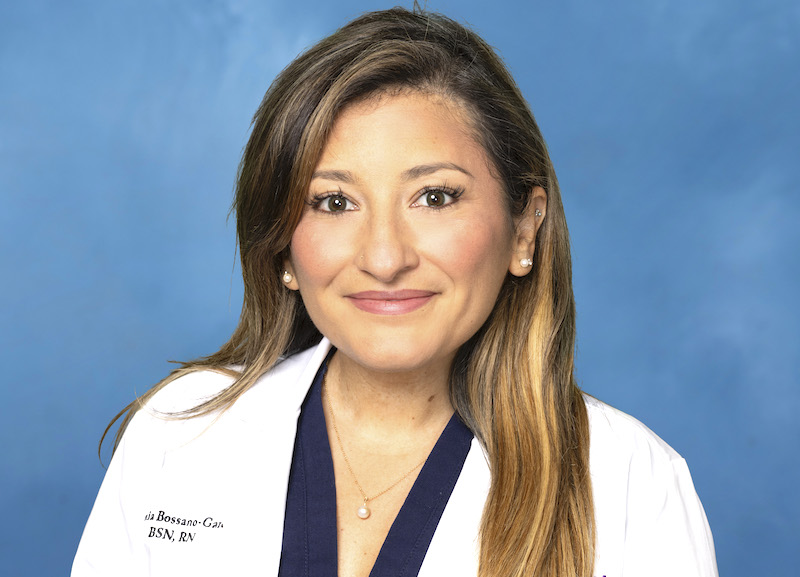
BREVARD COUNTY, FLORIDA – Yesenia Bossano Garcia is the resource pregnant women never knew they needed.
“I want to be that person who’s like their best friend, someone they can talk to,” said Bossano Garcia, BSN, RN, who is based at Health First’s Holmes Regional Medical Center.
As an OB nurse navigator, Bossano Garcia leads a new Health First program, Maternity On to Motherhood, or MOM. It is designed for expectant moms in Brevard who are navigating pregnancy challenges – such as health risks, language barriers, or care gaps.
Launched in late December, the MOM program is grounded in preventive care and aims to close critical gaps in maternal and infant care. Bossano Garcia also visits patients by appointment at Viera Hospital.
The service is free for pregnant women in Brevard who are planning to deliver at a Health First hospital. Prenatal and breastfeeding classes are open to the community, as are “Lunch and Learns,” a program Bossano Garcia plans to launch later this year.
“I would help them choose a pediatrician, set up appointments, or if there’s any kind of miscommunication,” Bossano Garcia explained. “I would be able to be that middleman to speak to someone and help them get in contact with their clinic.”
To shape services, she interviewed patients at Viera Hospital and Holmes Regional Medical Center, asking them what would have helped them during their pregnancies.
“The main thing that they said was (a need for) more prenatal education – more prenatal classes and also assistance with helping find a pediatrician,” Bossano Garcia said.
The program is expanding access to prenatal and breastfeeding classes, offered twice a month at both Holmes Regional and Viera as a four‑week series.
“That will help not only get the parents ready for delivery, but get them more educated and give them what they want, what they’re asking for,” she said, adding, “It will also help with our C‑section rates.” The World Health Organization’s research revealed that when population C‑section rates exceed 10%, maternal or newborn mortality is not reduced.
Another focus is pre‑eclampsia. According to the Preeclampsia Foundation, the condition involves persistent high blood pressure developing during pregnancy or the postpartum period and can lead to kidney or liver trouble, fluid in the lungs, or seizures and/or visual disturbances.
“Most moms don’t realize preeclampsia can still be an issue up to six weeks after delivery,” Bossano Garcia said. MOM will provide blood pressure monitoring and education so moms can identify problems early.

Bridging language barriers
Across the Space Coast, there are about 5,400 births each year, according to the Florida Department of Health. One challenge is connecting Spanish‑speaking households to care.
About 1 in 8 babies born in Brevard join a Spanish‑speaking household (about 630–660 annual births), per the U.S. Census Bureau. A statistic shared by Latinx Voces cites the U.S. Department of Health and Human Services (2022): Hispanic mothers are 90% more likely to have late or no prenatal care than non‑Hispanic white mothers; language and access barriers remain the pain points.
“I speak Spanish,” Bossano Garcia said. “So that is also another opportunity for us to help our Spanish‑speaking population and let them know that they have someone who they can turn to if they have any questions, or they need help with Medicaid, trying to apply for Medicaid, or navigate the Medicaid system.”
Spanish‑language prenatal and breastfeeding classes will be launched to close the care gap.
“Spanish‑speaking moms know they have someone to turn to,” Bossano Garcia says. “It’s about building trust and making sure every family feels welcome.”
Removing access hurdles
Transportation barriers can derail care. Clinics are busy, and missed visits (often due to a lack of a ride) can result in dismissal from the clinic. MOM is working to secure transportation vouchers to keep moms on track. Recently, Bossano Garcia helped a patient get an OB appointment by coordinating with the Florida Department of Health.
Finding the right pediatrician is another hurdle. “I’ve contacted all of them, and I’ve been able to help parents get in with pediatricians that meet what they’re looking for,” she explained.
Local capacity has tightened since the closure of Orlando Health‑Rockledge, limiting time for prenatal education.
“If they have more questions, I can be that person that they contact directly so I can answer their questions, like what are next steps? Where do they go to get labs? Or what to look forward to in their next appointment,” Bossano Garcia said.
Supporting mental health and NICU families
NAMI reports postpartum depression affects up to 1 in 7 mothers, with higher rates of underdiagnosis in Hispanic and underserved communities. MOM integrates routine screening and connects patients to resources.
“Screening should happen during pregnancy, not just postpartum,” Bossano Garcia emphasized.
For families with babies in the NICU (neonatal intensive care unit), MOM coordinates between lactation consultants and pediatricians to ease transitions home.
“Our neonatologists want appointments set before discharge, so babies don’t fall through the cracks,” Bossano Garcia explained.
Mission in action
Health First’s mission of improving community wellness drives this work. By breaking down barriers, fostering equity, and empowering moms‑to‑be with knowledge and support, better outcomes are the goal.
Whether Bossano Garcia is helping with Medicaid, finding a pediatrician or offering reassurance, MOM is here to help – at no expense to the patient.
“I just want to support the community, especially because Brevard is growing and so many families are new here,” Bossano Garcia said. “I want every mom to leave the hospital knowing Health First did a good job from beginning to end.”
Expectant mothers in Brevard can learn more about the MOM program by visiting hf.org/mom and enrolling online.