Health First Hosts Community Lunch and Learn to Discuss Prevention, Procedures and Support for Heart Health
By Space Coast Daily // March 1, 2026
Helping Patients Enjoy More Sunrises and Sunsets on the Space Coast
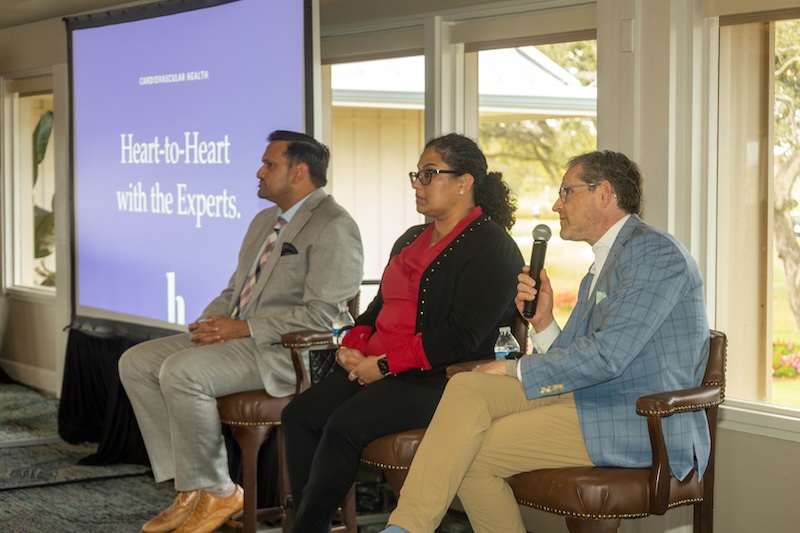
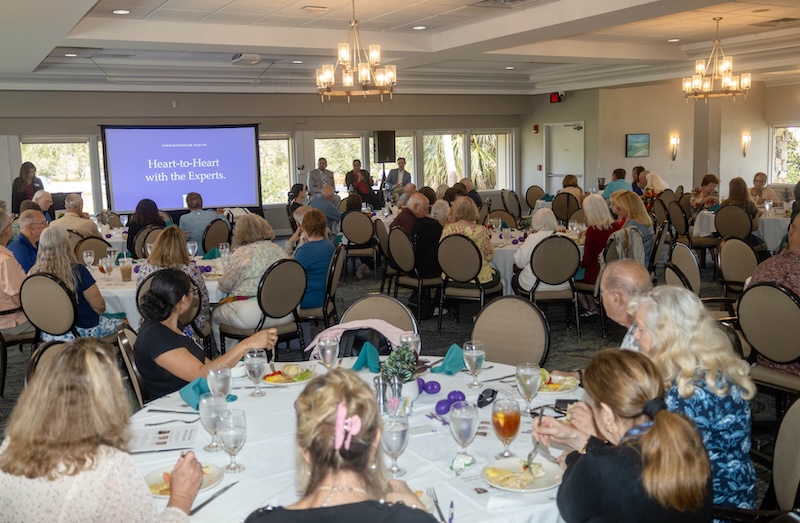
BREVARD COUNTY, FLORIDA — At the elegant Suntree Country Club, community members gathered for a well-attended lunch-and-learn centered on one vital topic: heart health.
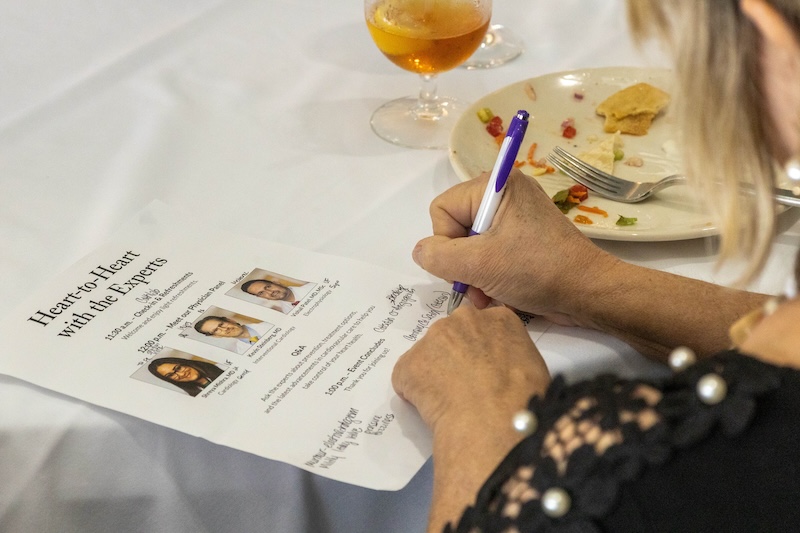
The “Heart-to-Heart with the Experts” event, presented by Health First, created space for something many patients rarely experience in a traditional office visit: an unhurried hour of open dialogue with leading cardiology specialists.
There were no rushed appointments. No white coat barriers. Just conversation.
Three physicians representing different specialties in cardiology sat together to speak with attendees about everything from prevention to advanced procedures like CT scans, cardiac catheterization, bypass surgery and hybrid treatment approaches.
Health First general cardiologist Shreya Mishra, MD, emphasized that heart care begins long before someone lands in the hospital.
When asked where someone should start if they have not been thinking much about their heart health, Mishra gave a simple answer: start with your primary care doctor.
“The best place to start for everyone is with their primary care doctors,” she said in an interview prior to the event. “They can always screen with EKGs and lab work, such as cholesterol panels.”
From there, she said, patients who are experiencing symptoms can be seen in general cardiology. Mishra explained that she “risk stratifies” people in her clinic, using testing to evaluate individual symptoms and risk factors. That may include an echocardiogram or possibly a stress test, depending on the patient’s symptoms.
She also highlighted risk factors that many people overlook. Beyond age and obesity, sedentary lifestyles, diabetes, smoking history and heavy alcohol use significantly increase heart risk.
“Being sedentary is a risk factor,” she said. “Obesity, having diabetes, if patients have a smoking history or are currently smoking. Heavy alcohol intake is a risk factor.”
Her message was clear: prevention is powerful, and small daily habits matter.
For patients already diagnosed with heart disease, the discussion turned to modern treatment approaches.
Interventional cardiologist Kevin Steinberg, MD, of Health First, explained the role of cardiac catheterization procedures performed in the cath lab. These minimally invasive procedures allow doctors to open blocked arteries during a heart attack, often preventing permanent damage.
He explained that interventional cardiology is one part of a broader team, with his focus on cardiac catheterizations and peripheral arterial disease, while colleagues specialize in arrhythmias, pacemakers, and preventive cardiology.
In some cases, patients with severe coronary artery disease may require bypass surgery. Others may benefit from hybrid approaches — combining minimally invasive catheter procedures with surgical techniques.
Advances in CT imaging now allow physicians to detect blockages earlier and plan treatments more precisely than ever before.
“You can walk into the emergency room, see someone in the midst of a heart attack who may not survive, fix the problem, and then see them in the office three months later doing great and saying thank you,” he said in an interview prior to the event. “It’s a special feeling to be able to provide that kind of care.”
Health First Cardiac electrophysiologist Vishal Patel, MD, MSc, focused on arrhythmias — abnormal heart rhythms that can lead to stroke, heart failure, or reduced quality of life.
He said informal community events help break down communication barriers.
“When you have a white coat on, it sometimes creates boundaries,” Patel explained prior to the event. “In this setting, more uninhibited questions come out. Sometimes that’s what we need to get to the bottom of things.”
He also mentioned before the event that he encourages patients to manage stress, eat whole foods, limit processed items and trans fats, and incorporate regular exercise. Even caffeine consumption, he noted, should be moderate. One to two cups of coffee per day is reasonable, but excessive intake may trigger arrhythmias.
One of Patel’s passions is technology. Wearable devices such as smartwatches can now detect irregular rhythms and even generate simple ECG readings.
“If you have something as simple as a smartwatch that can help you detect irregular rhythms, you’re able to take care of your health,” he said. “When you give that information to your doctor, we can do so much with it.”
The most powerful moment of the evening came not from a physician, but from a patient.
During the Q&A session, a woman shared her experience attending cardiac rehabilitation after a heart event.
While the monitored exercise and medical supervision were important, she said the biggest takeaway was something more personal.
She was able to meet others who were “in the same boat.”
Cardiac rehab gave her community people who understood the fear, the recovery process, and the lifestyle changes required. That shared experience helped her heal emotionally as well as physically.
Her comment drew nods throughout the room, underscoring a theme repeated by all three doctors: heart health is not just about procedures and prescriptions. It is about support, awareness, and partnership.
The physicians repeatedly expressed gratitude to their patients and to the opportunity to make a difference.
“I always feel super grateful when my patients come to me,” Mishra said in an interview prior to the event. “Their gratitude just gives me more gratitude to be able to do what I do.”
Patel echoed that sentiment in an interview. “It’s the number one driver of us waking up every day,” he said. “So people can have more sunrises and sunsets and feel good and be with their families.”
At its core, the Heart-to-Heart event was not just an educational seminar. It was a reminder that behind every CT scan, every catheterization, every bypass or hybrid procedure, there is a human story and a team of physicians committed to helping their community live longer, healthier lives.