Who Is William Morris?
By Space Coast Daily // April 21, 2026
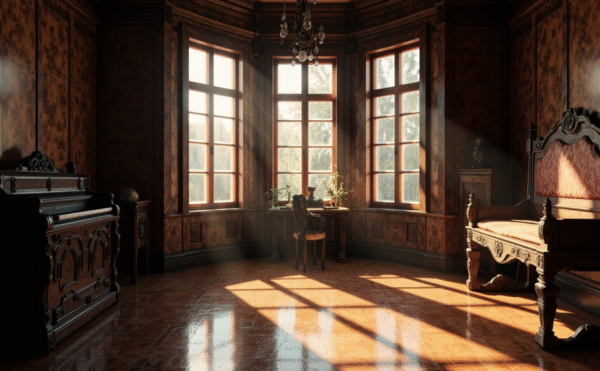
William Morris (1834–1896) stands as one of the most influential figures in the history of British design and craftsmanship. He fundamentally changed how people thought about decorative arts during the Victorian era. William Morris Wallpaper continues to inspire interior designers, artists, and homeowners more than a century after his death. Let’s look at the legacy of this remarkable man who brought beauty and handcrafted excellence back into everyday life.
Early Life and Formative Years
William Morris entered the world on March 24, 1834, in Walthamstow, a town on the outskirts of London. His family enjoyed comfortable middle-class circumstances, which allowed the young Morris to pursue his creative interests from an early age. He demonstrated a passion for medieval literature and architecture, spending countless hours absorbed in romantic tales of knights and ancient mythology. This early fascination with the medieval period would shape his artistic vision throughout his entire career.
Morris attended Oxford University in 1852, where he studied theology and met several future collaborators who would join him in founding the Arts and Crafts Movement. His time at Oxford solidified his belief that art should not be separated from everyday life. After graduating, Morris trained as an architect and began exploring design concepts that would eventually revolutionize British homes and interiors with the well known William Morris Wallpaper. The death of his first wife, Jane Burden, decades later marked a turning point in his later years, though their relationship had been complicated.
The Birth of the Arts and Crafts Movement
The Arts and Crafts Movement emerged from Morris’s deep dissatisfaction with the Industrial Revolution’s effects on design and manufacturing. Victorian factory production had created an artificial divide between fine art and applied crafts, producing decorative objects that prioritized speed and profit over quality and beauty. Morris believed this approach stripped objects of their soul and disconnected craftspeople from their work. He proposed a radical alternative where skilled artisans would once again create beautiful, functional items by hand.
In 1861, Morris founded his own decorative arts firm, Morris, Marshall, Faulkner & Co., later renamed Morris & Co. This company brought together painters, sculptors, and craftspeople who believed in the unity of all arts. Their slogan, “Fine Art Fancy Goods,” captured the revolutionary idea that beautiful objects belonged in ordinary homes, not just museums and wealthy estates. The company created everything from stained glass windows to furniture, tapestries, and wallpapers.
William Morris & Co: A Design Revolution
Morris & Co operated from Morris’s home, first at Red House in Bexleyheath and later at Kelmscott Manor in Gloucestershire. The company embodied Morris’s philosophy that decoration should be joyful and meaningful, drawing inspiration directly from the natural world. Every pattern his designers created aimed to capture the vitality and organic rhythm of living things. This approach stood in stark contrast to the rigid, machine-like ornamentation that dominated Victorian interiors.
The firm employed traditional techniques like hand-block printing, which allowed for greater detail and authenticity in their textile and wallpaper productions. Morris personally supervised every design, ensuring that each piece met his exacting standards for beauty and quality. He famously declared that he had “nothing to do with the designs of furniture, wallpapers, etc., except to try and make them as little vulgar and as interesting as I can.” This dedication to excellence meant that Morris & Co products took longer to produce and cost more than mass-manufactured alternatives, but customers recognized the superior craftsmanship.
The Famous Wallpaper Designs
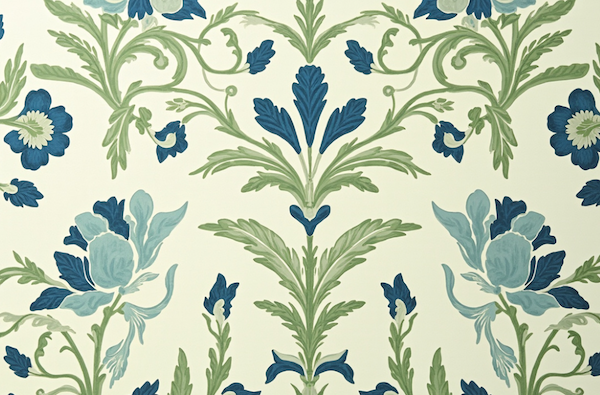
William Morris created over fifty wallpaper designs throughout his career, each one showcasing his mastery of pattern, color, and natural imagery. These wallpapers became the cornerstone of his design legacy, transforming ordinary Victorian rooms into sanctuaries of organic beauty.
Strawberry Thief (1883) remains perhaps his most iconic design. This exquisite pattern depicts thrushes stealing strawberries from a garden, rendered in rich blues, greens, and warm reds. The design demonstrates Morris’s exceptional ability to balance naturalistic detail with harmonious pattern composition. Visitors to his home at Merton Abbey could see this design and others printed on site using historic wood blocks. Each repeat of Strawberry Thief required skilled printing to achieve its remarkable depth and color layering.
Willow Boughs (1875) presents a gentler, more flowing interpretation of nature with its graceful willow branches and leaves in alternating green and brown tones. This pattern proved remarkably versatile, suiting both formal sitting rooms and informal family spaces. The design’s success lies in its combination of scientific observation of plant growth with a deeply felt appreciation for natural forms.
Acanthus (1875) draws its inspiration from the classical scrolling leaves of the acanthus plant, a motif used in Greek and Roman architecture for millennia. Morris reimagined this ancient symbol, creating a pattern that felt both scholarly and lushly organic. The design works beautifully in dining rooms and libraries, lending spaces an air of cultivated refinement.
Golden Pheasant (1880) and Marigold (1875) round out Morris’s most celebrated works, each demonstrating his skill at creating patterns that feel simultaneously modern and timeless. These designs continue to influence textile and wallpaper production worldwide, remaining in continuous production through licensed reproductions.
Legacy and Enduring Popularity
William Morris’s influence touches every subsequent movement in decorative arts and interior design. His insistence on quality materials and craftsmanship anticipated the modern maker movement by more than a century. Contemporary artists and designers frequently cite Morris as a foundational influence, and his principles continue to guide sustainable design practices that prioritize environmental responsibility over disposable consumption.
Museums across Britain, particularly the Victoria and Albert Museum in London, maintain extensive collections of Morris’s work. The National Trust has preserved several Morris-designed interiors at historic properties, allowing visitors to experience his vision in authentic period settings. These spaces demonstrate how thoroughly Morris reimagined domestic environments, replacing heavy Victorian excess with patterns that encouraged calm contemplation and natural connection.
The Arts and Crafts Movement Morris helped spawn influenced German Art Nouveau and the subsequent international arts reform movements of the early twentieth century. Designers like Charles Rennie Mackintosh and Frank Lloyd Wright acknowledged Morris’s profound impact on their work. His published essays and lectures shaped design education for generations, emphasizing the unity of art and social purpose.
Frequently Asked Questions
What Were William Morris’s Most Famous Wallpaper Designs?
Strawberry Thief, Willow Boughs, Acanthus, Marigold, and Golden Pheasant rank among his most celebrated wallpaper patterns. These designs continue in production today through licensed reproductions.
How Did William Morris Influence Modern Design?
Morris pioneered the idea that beautiful, handcrafted objects should be accessible to everyone, not just the wealthy. His emphasis on quality materials, traditional craftsmanship, and nature-inspired design influenced the Arts and Crafts Movement, Art Nouveau, and continues to inspire contemporary sustainable design practices.
When Was William Morris Active?
Morris was most active between 1861 and his death in 1896. During this period, he founded Morris & Co., designed over fifty wallpapers, created numerous textile patterns, wrote poetry and novels, and championed socialist political causes.
What Was the Arts and Crafts Movement?
The Arts and Crafts Movement was a late nineteenth-century reform effort that responded to industrialization’s negative effects on design and craftsmanship. It championed handmade production, honest materials, and the integration of art into everyday objects and environments.
Why Are William Morris Designs Still Popular Today?
Morris’s patterns remain popular because they capture timeless aesthetic principles: harmonious composition, respect for natural forms, and rich but balanced colors. His designs work equally well in traditional and contemporary interiors, providing versatile elegance that transcends specific decorating trends.
Where Can I See William Morris’s Original Work?
Major collections exist at the Victoria and Albert Museum in London, the William Morris Gallery in Walthamstow, and various National Trust properties including Standen and the Red House. These venues preserve original wallpapers, textiles, and furniture designed by Morris and his collaborators.