
How to Choose Laser Cutting Equipment for Sheet Metal and Build a More Efficient Fabrication Shop?
By Space Coast Daily // May 31, 2026
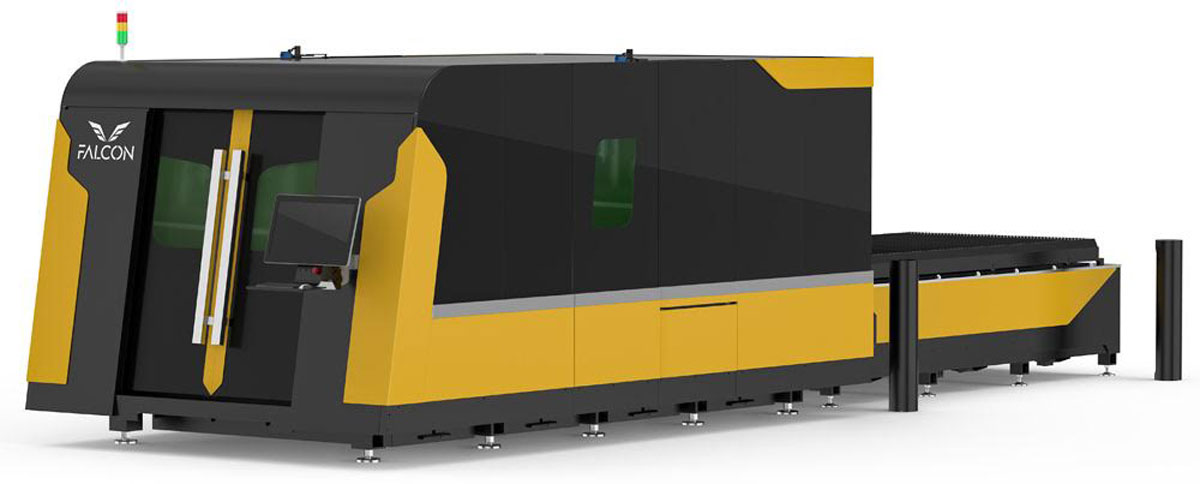 A good equipment decision usually starts with the way your fabrication shop operates day to day. A modern laser system does more than cut material. It affects order flow, part quality, operator workload, finishing time, and the ability to scale production without adding unnecessary manual steps.
Start with your production process, not with the machine catalog
Before comparing machines, it is worth looking closely at the work your shop handles most often. Materials, sheet sizes, thickness ranges, order volumes, and quality expectations all influence which features will actually matter in daily production.
This helps separate attractive specifications from functions that can make a real difference on the shop floor. The right machine should support your process, not force your team to adapt production around equipment that does not match real parts, deadlines, or capacity needs.
Match laser power to the materials and thicknesses you process most often
Laser power should be selected around the type and thickness of sheet metal that appears most often in production. Too little power can limit capacity, while an oversized configuration may not be justified by the actual workload.
In the FALCON and TEKIO sheet metal cutting lines, the available power range extends from 2,000 W to 24,000 W. That makes proper selection especially important, because the best choice depends not only on maximum cutting capability, but also on how the machine will be used every day.
Look at cutting quality and repeatability, not just power
Cutting quality depends on more than laser power alone. Head technology, autofocus, cutting algorithms, stable settings, and repeatable machine behavior all play an important role.
For many metalworking shops, the real question is whether the machine can maintain consistent edges and dimensions across many parts, not only during a single demonstration cut. Repeatability becomes especially important when a company handles recurring orders, tight tolerances, or production schedules where rework can quickly affect margins.
Compare machine lines based on how your shop actually works
A professional line and a more cost-effective line can both make sense, but they serve different production needs. FALCON S Masterline is designed as a professional solution for sheet metal cutting, while TEKIO S Compactline is positioned as a more cost-effective option.
The right choice depends on capacity needs, integration expectations, planned workload, and the level of automation your shop is ready to use. For some companies, a more advanced configuration will support growth and higher production volumes. For others, a compact and value-focused solution may be the better fit.
Think about automation, ERP integration, and future production growth
A machine chosen only for today can quickly become a limitation. If your company plans to grow, increase order volume, or organize production more tightly, automation and integration options become much more important.
The FALCON sheet metal cutting lineup can support integration with production lines and ERP systems, which may be relevant for shops that want cutting to become part of a wider production system. This kind of approach can help reduce manual coordination, improve production visibility, and make it easier to manage more complex workflows over time.
Look at how much finishing work the machine can help reduce
One of the practical goals of laser sheet metal cutting is to reduce the amount of manual correction needed after the part leaves the machine. Clean edges, stable parameters, and repeatable cutting can shorten finishing work and lower the risk of delays.
This matters especially when a shop handles recurring parts, tight deadlines, or orders where every additional manual operation increases cost. In many cases, the value of a machine is not only in how fast it cuts, but also in how much work it helps remove from the rest of the process.
Test the machine on your own parts before making the investment
A technical description is useful, but it cannot replace a test on real material. Testing your own parts helps verify edge quality, speed, operator workflow, and whether the proposed configuration matches daily production.
Fanuci & Falcon Global provides consulting, machine presentations, and equipment selection based on the customer’s process. This gives companies a more practical way to evaluate the investment before making a final decision.
Do not overlook service, parts availability, and operator training
A laser cutting machine should be evaluated together with the support that follows the purchase. Service access, remote diagnostics, parts availability, installation, and operator training all influence downtime risk and the speed of implementation.
For a metalworking company, these elements can be just as important as cutting parameters. Even a strong machine needs to remain available, properly maintained, and correctly used by the team that works with it every day.
Plan financing and implementation early
A laser cutting investment includes more than the machine itself. Financing, delivery, installation, team preparation, and the first production launch should be planned before the machine reaches the facility.
The purchasing process becomes safer when the shop knows who will operate the machine, which parts will be tested first, and how production will be organized around the new equipment. This helps shorten the path from purchase decision to stable daily use.
Choose a sheet metal laser cutting setup with expert support and a clear next step
The best setup is the one that fits your material range, production rhythm, quality goals, and future plans. Instead of choosing only by power or price, it is worth comparing the complete path from consultation and testing to implementation and service.
For shops that want to improve cutting capacity, reduce manual work, and prepare for future growth, expert support can make the investment process more predictable. To explore the FALCON sheet metal cutting lineup and check whether it fits your production needs, see the sheet metal laser cutting machine page.













