Health First provides network of support to help associates and providers navigate emotional realities of caring for others
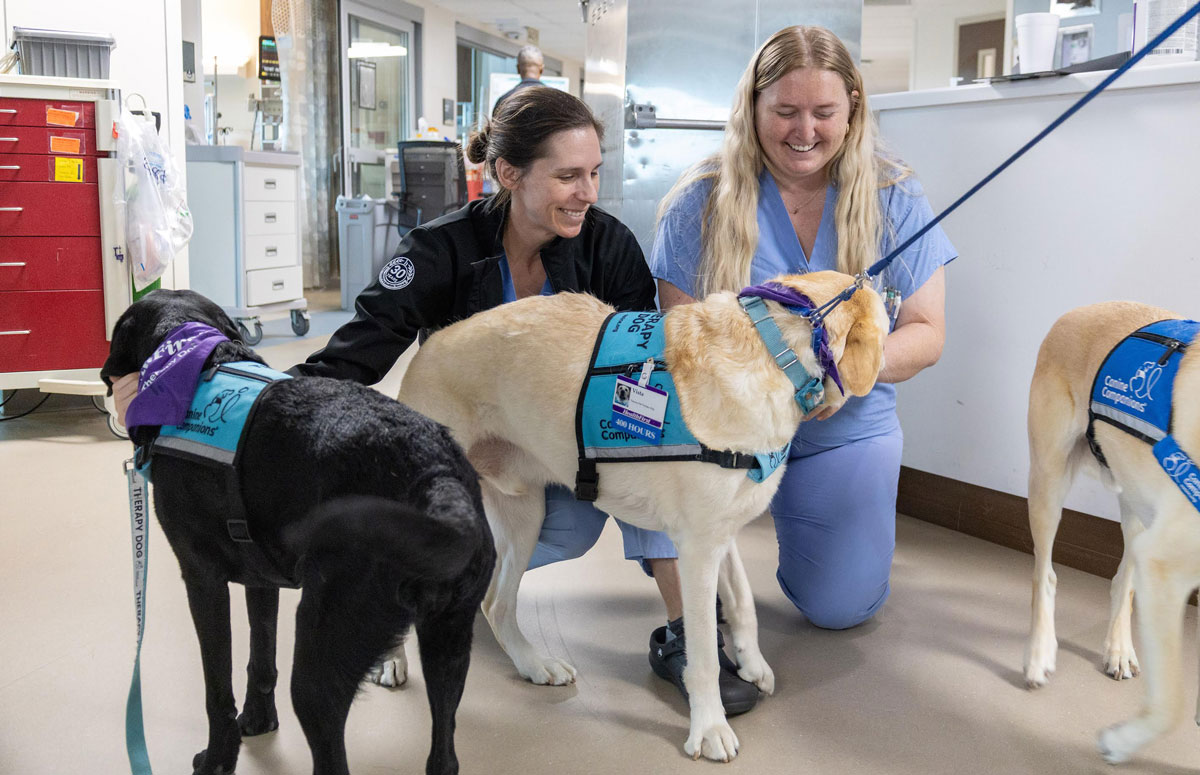
Health First associates and providers spend a few moments with therapy dogs during a visit at Holmes Regional Medical Center. The visits offer caregivers a brief respite from the emotional demands of hospital life, giving them time to decompress, recharge, and reset before returning to patient care.
BREVARD COUNTY, FLORIDA – In hospitals, caregivers are often the steady presence during some of life’s hardest moments.
They walk into trauma rooms, sit beside grieving families, comfort frightened patients, and move from heartbreak to hope often within the span of minutes.
But behind every badge is also a human being carrying the emotional weight of those moments.
At Health First, supporting associates and providers means recognizing that the people who care for others also need to take care of themselves.
For Courtney Sheridan, vice president of human resources operations at Health First, one of the biggest challenges healthcare workers face is the tendency to believe they should be able to carry everything on their own.
“We’re all caregivers,” Sheridan said. “In the business, I also think we tend to rely upon our own skills. And we tend to think like, ‘I’ll be OK. I can handle this. I can care for myself.’”
That mindset can make it difficult for associates and providers to ask for help, even when they are emotionally exhausted. Sheridan said there is still a stigma surrounding the use of Employee Assistance Program services, often known as EAP, because many people immediately associate it with counseling, but EAP offers much more than that.
“It really guides you ultimately to the resource that will help you,” Sheridan said.
The program provides associates and providers with access to counseling, wellness tools, mindfulness resources, financial and legal services, childcare guidance, and other support designed to help them navigate both personal and professional challenges.
“That’s why I really love the fact that we created Team Lavender during COVID,” she said.
“I think that there was more of an openness to say I’m willing to talk to my peer.”
Team Lavender was created during one of the most emotionally difficult periods healthcare workers have faced.
The peer support program provides comfort during times of crisis, particularly after traumatic events affecting associates, providers, or patients.
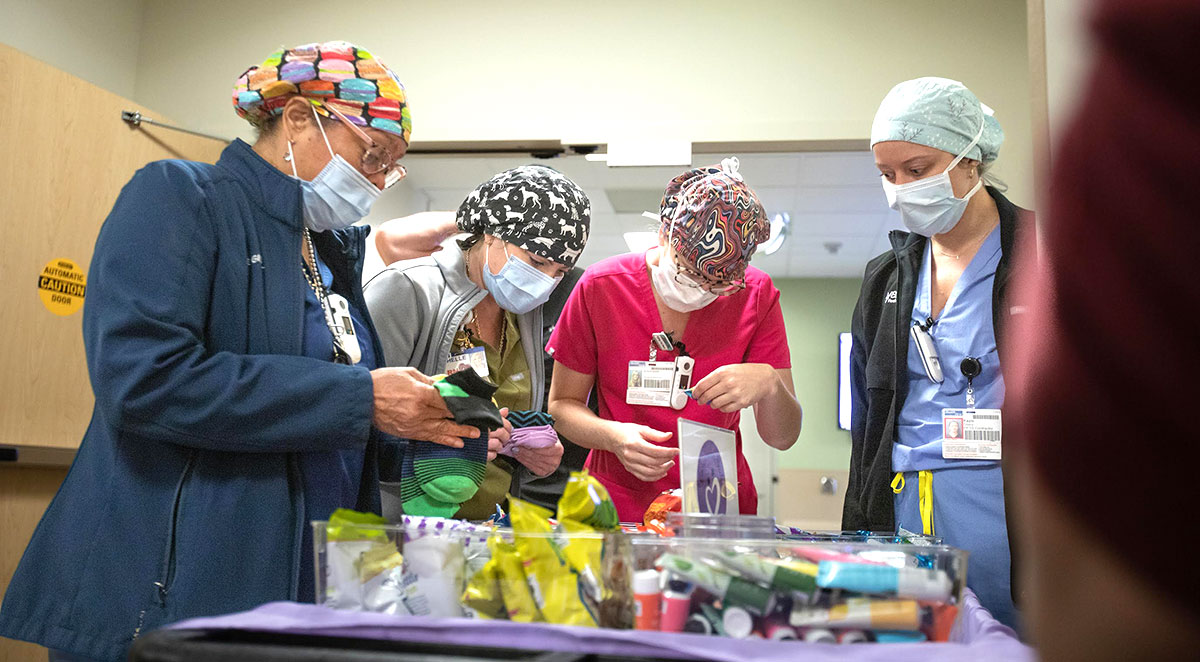
Health First associates gather around the “Tea for the Soul” cart provided by Spiritual Care Services. The cart offers caregivers small comforts and a chance to pause during demanding shifts, supporting associates and providers as they navigate the emotional challenges of caring for patients and families.
“Team Lavender is most often activated following the loss of a patient who had a strong connection with caregivers or after the passing of an associate,” Sheridan said.
Sometimes the support comes through simple gestures. A small card was left on a desk. A tea cart appears around the corner. A quiet reminder that someone sees the stress another person may be carrying.
For Chaplain Ellen Williams, PhD, BCC, difficult moments happen daily.
As manager of spiritual care services at Health First, she and her team help associates, providers, patients, and families process grief, trauma, and crisis.
Williams recalls one case that underscores how trauma can affect anyone in a hospital setting.
A Health First associate in a non-clinical role unexpectedly witnessed a traumatic medical emergency, leaving them struggling to process an experience they never anticipated encountering at work.
“She was very traumatized because she had a non-clinical role and she witnessed this,” Williams said. “She wasn’t equipped for that. That was not her role in the hospital.”
The experience reinforced something Williams sees often: trauma can affect anyone inside a hospital, regardless of title or department. “Everybody’s human,” she said. “It’s OK to be human.”
Williams explained that caregivers constantly balance emotional attachment and emotional detachment.
“We attach to a family, we help them cope with the passing or whatever traumatic event is happening, and then we have to detach and move on,” she said.
“We go in and help people decide to pull life support and accept that it is time to let a loved one go,” Williams said. “And then we walk out and go to another room, and it’s a new case.”
Even experienced emergency room and ICU teams can encounter moments that resonate deeply.
“Maybe they saw a child die, that’s the age of their child,” Williams said. “For some reason, a case resonates with them, and it does hit them harder.”
One of the chaplain team’s most important roles, she said, is helping caregivers understand that those feelings are normal.
The chaplain team also works closely with associates following emergency drills designed to prepare staff for real-life scenarios.
While the exercises are meant to strengthen preparedness, they can sometimes trigger unexpected emotional responses, and the team is there to help associates process those experiences and provide support.
To continue supporting others, chaplains also rely on support systems of their own.
“You can’t minister from an empty cup,” Williams said.
Sometimes healing arrives on four legs with a wagging tail.
Health First’s therapy and facility dogs have become a source of comfort for associates and providers throughout the organization, especially after emotionally difficult situations.
Joelle Boccabella, manager of volunteer services, who coordinates the canine visits, said requests often come through Team Lavender or directly from leadership after difficult events.
“When we have situations like that, we get them out immediately,” she said.
The dogs provide something simple but powerful: a moment to pause.
“Our job is to bring the dogs there and give them respite to pull away and just decompress,” she said.
She has watched caregivers break down in tears as the dogs approach them.
“Literally, nurses will just start crying, ‘Thank you, thank you, I needed this,’” she said. “These nurses take it to heart as they live and breathe their patients.”
Sometimes the dogs seem to instinctively know exactly who needs comfort most.
“They’ll identify out of a huge group of folks who need them first,” Boccabella said. “They’ll go right to that person.”
For Dr. Kelly Gassie, a neurosurgeon at Health First’s Holmes Regional Medical Center, the therapy and facility dogs provide a rare moment of lightness during difficult days.
“I feel like these dogs to me are some of the most joyful creatures,” Gassie said. “Seeing something like that amidst so much heartache and trouble here, it just brings a lot of happiness.”
When she sees them walking down the hallway, her reaction is immediate. “Everything bad in my mind goes away.”
In healthcare, caregivers are trained to care for everyone else first. But at Health First, programs like EAP, Team Lavender, chaplain services, and therapy dogs exist for one reason: to remind associates and providers that their own well-being matters too.
Because the people helping others through life’s hardest moments should never have to carry those moments alone.