Brevard County Scouts Learn Lifesaving Skills During Hands-On Visit With Health First’s First Flight
By Space Coast Daily // May 15, 2026
Scouting America troops earned Stop the Bleed certificates during a special training day in Titusville
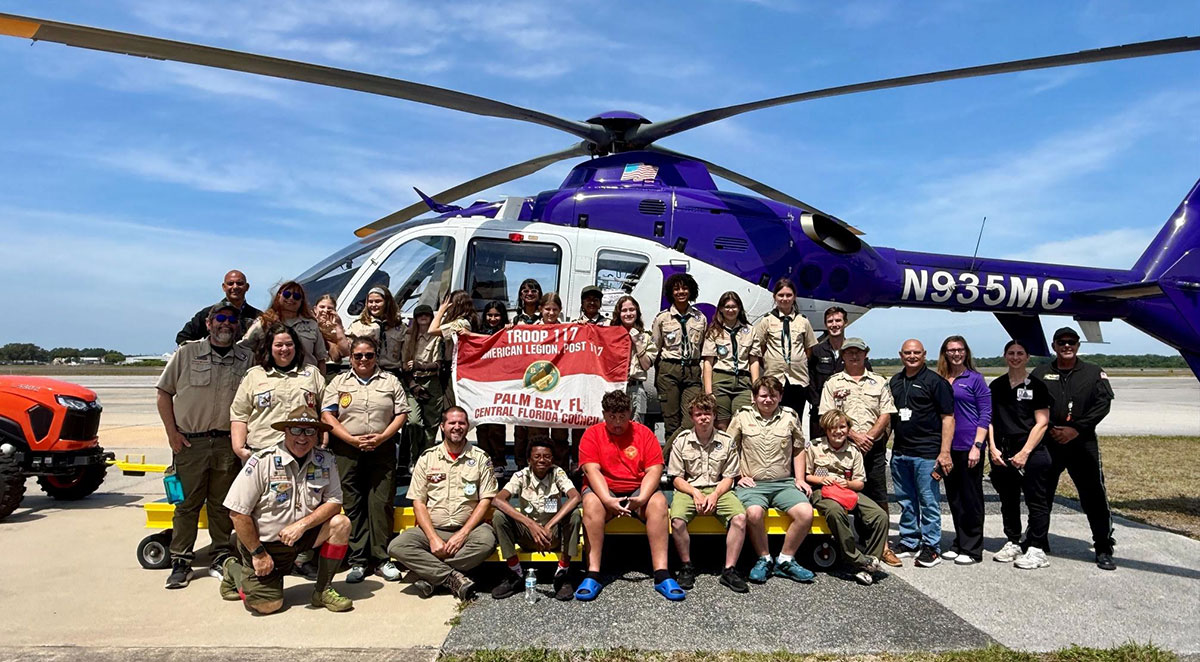
BREVARD COUNTY, FLORIDA – The loudest sound of the day inside Health First’s First Flight hangar was not the roar of the helicopter blades cutting through the air. It was the excited voices of 17 Scouts shouting the same answer all at once.
“The helicopter!”
That response came quickly when boys and girls from Scouting America Troops 525 and 117 were asked about their favorite part of a special visit to Health First’s First Flight hangar in Titusville.
While the air ambulance became the undeniable star of the day, Scouts also walked away with something far more valuable: lifesaving skills they may one day use during a real emergency.
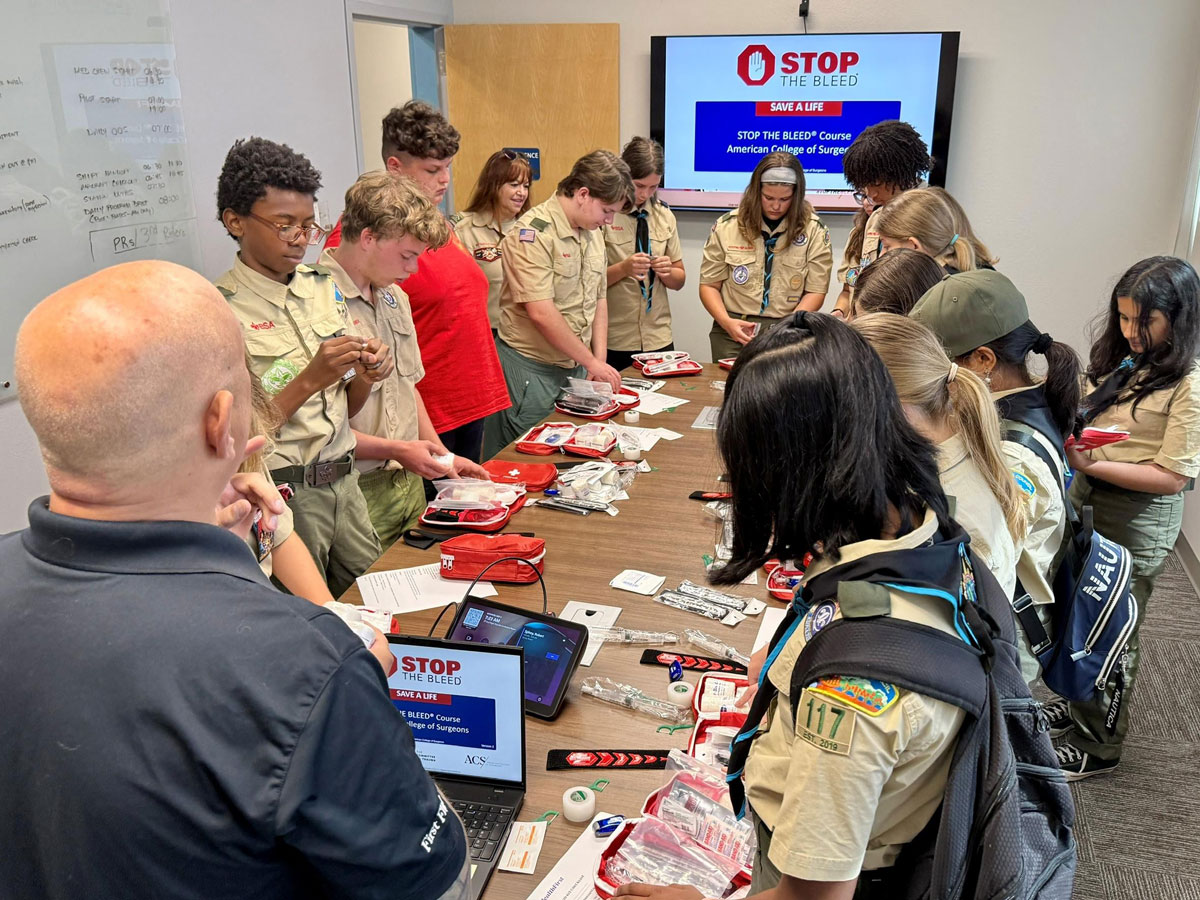
The Scouts, ages 11 to 16, participated in a hands-on Stop the Bleed course hosted by Health First team members.
Throughout the day, they learned basic CPR, how to identify life-threatening bleeding, apply pressure to wounds, properly bandage injuries, and build practical first-aid kits.
The visit blended education with excitement, keeping the Scouts engaged from start to finish.
“As healthcare providers, it’s our responsibility to teach people how to manage emergencies,” said Rob Spivey, Nurse Program Manager for Health First’s First Flight.
“We start early enough, where children have an opportunity to grow and develop confidence in managing emergencies without fear. They learn leadership, lifesaving skills, and the idea of ‘teach one, do one,’ so they can pass that knowledge on to others.”
At one station, Scouts assembled first-aid kits stocked with supplies commonly used to treat cuts, scrapes, sprains, and minor injuries.
Spivey explained how simple tools can make a major difference while waiting for professional medical help to arrive.

“The kits have the necessities to manage small wounds, scrapes, and cuts, and the ability to manage sprains and strains,” Spivey said.
One of the most surprising items inside the kits was not medical-looking at all. It was a simple dental floss pick.
“The floss tool was a big surprise to them,” Spivey said. “It actually works really well for removing ticks because it’s easier on your skin than sharp tweezers.”
Scouts also learned about saline flushes for cleaning wounds and safely rinsing eyes.
“What really surprises them is learning how to use those tools in real-life situations,” Spivey said. “Once they start practicing techniques for treating injuries, it all starts to click.”

Jessica Henwood, Health First’s Trauma Clinical Outreach Coordinator for Injury Prevention, led Scouts through Stop the Bleed training, teaching them how to recognize dangerous bleeding and respond quickly.
“Any particular situation can happen anywhere, anytime,” Henwood said. “Quick recognition of a lifesaving technique is best. Giving them three simple steps on how to stop the bleed can save a life, and that is important at a very young age.”
Henwood taught Scouts how to identify severe bleeding, apply direct pressure, and pack wounds with gauze if necessary. They also learned when and how to use a tourniquet to stop life-threatening blood loss.
For many of the Scouts, it was their first experience practicing emergency response techniques in a realistic setting.
Tina Vajanyi, Vice-Chair for Riverside District in the Scouting America program, said the training directly supports advancement requirements for Scouts while providing practical skills they can use throughout their lives.
“Every rank from Tenderfoot all the way to First Class includes first aid and stopping bleeding as part of advancement,” Vajanyi said.
Vajanyi said the Scouts were especially excited to receive official Stop the Bleed certificates at the conclusion of the course.
“Anytime Scouts get recognized, that instant recognition is important,” she said. “This program is spot on for us.”
Then came the moment that brought the entire hangar to life.