Health First, Palm Bay Teach Lifesaving Swim Skills During World’s Largest Swimming Lesson
By Space Coast Daily // June 29, 2026
Health First, City of Palm Bay partner to teach children water safety through global initiative

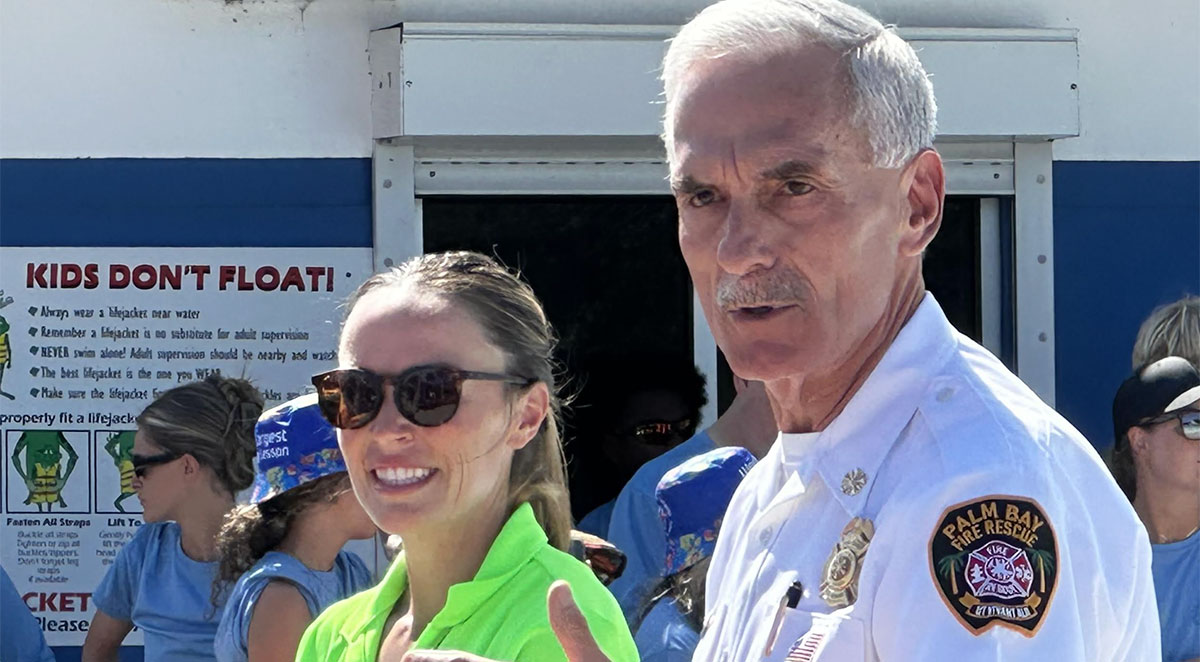
BREVARD COUNTY • PALM BAY, FLORIDA — Palm Bay Fire-Rescue Chief Richard Stover has responded to far too many drowning calls during his career.
“They’re the calls you can’t get rid of,” Stover said. “They constantly stick with you.”
One call, in particular, remains burned into his memory.
Emergency crews responded to a report of a child found face down in a swimming pool. When firefighters arrived, they found the child’s caregiver standing nearby in waist-deep water.
“Come to find out, she couldn’t swim,” Stover recalled. “So, she was watching the baby flail and was unable to get to her.”
Stories like these are the reason behind the World’s Largest Swimming Lesson, held June 25 at the Palm Bay Aquatic Center on the campus of Eastern Florida State College.
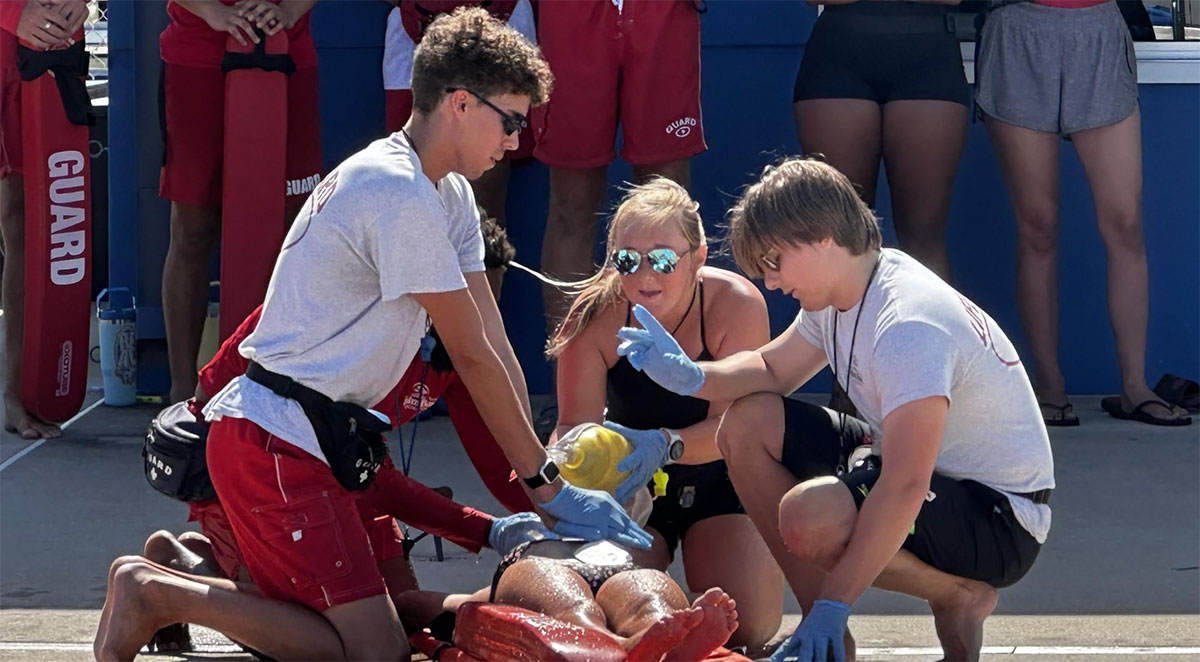
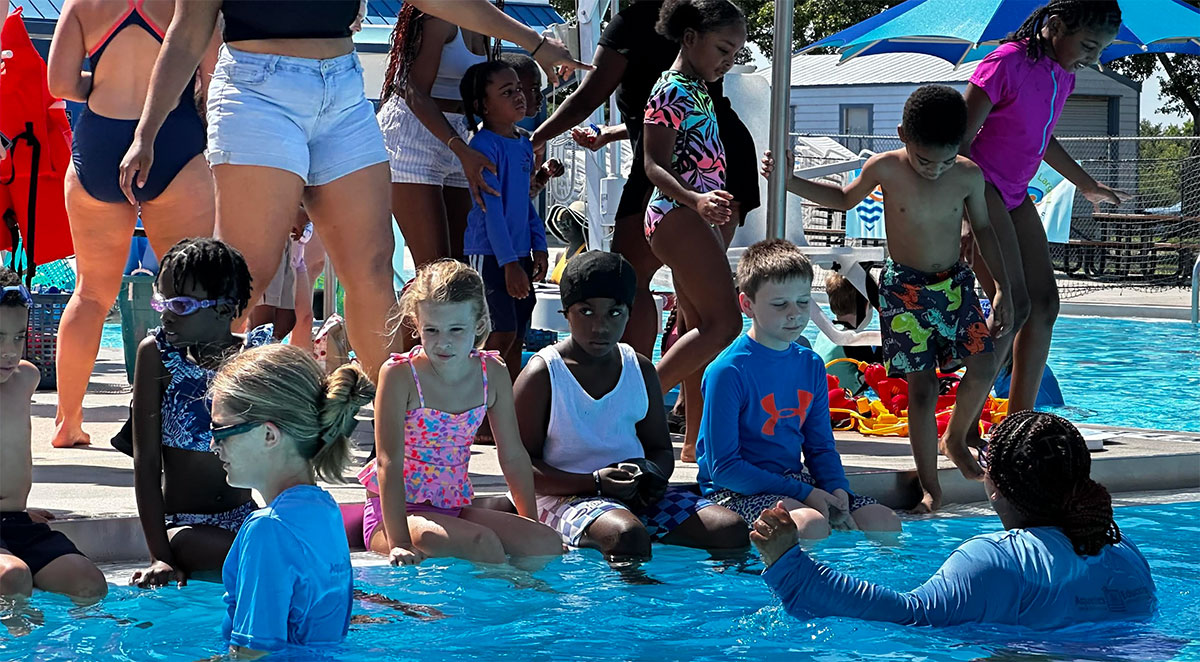
Approximately 100 children participated in hands-on swim instruction, water safety education and emergency response demonstrations alongside community partners, including Health First and Palm Bay Fire-Rescue.
A Global Mission to Save Lives
The World’s Largest Swimming Lesson is part of an international initiative aimed at raising awareness about the importance of formal swim instruction and drowning prevention.
According to the World Waterpark Association, formal swimming lessons for children ages 1 to 4 can reduce the risk of drowning by 88 percent. Yet, an estimated 56 percent of Americans lack basic swimming skills.
On the Space Coast, where residents are surrounded by oceans, rivers, lagoons and swimming pools, water safety education is especially important.
“Kids are just exposed to so many situations where, if they are not prepared and knowledgeable about swimming and water safety, the drowning risks are unfortunately very, very prevalent,” said Dr. Larissa Dudley, EMS medical director for Health First’s First Flight program.
Health First’s air ambulance was also on display during the event, allowing participants and their families to see emergency medical response up close.
Building a Ripple Effect in the Community
Brooke Bothun, owner and head instructor of Aquatics & Education, said Brevard County and many Florida communities continue to face challenges that increase drowning risks, including a shortage of lifeguards.
That’s why swimming lessons, CPR instruction and emergency response drills are so critical.
“The big thing is that this is a ripple effect on the community,” Bothun said. “It’s really to show the parents that this is the chain that happens. It’s educating and showing what happens if there is an emergency and how first responders react.”
Health First partnered with community organizations because prevention and education can save lives before a medical emergency ever occurs.
“Not only are we demonstrating medical care, we’re demonstrating how the emergency response system works,” Dudley said.
She added that teaching children to swim is an extension of healthcare itself.
“We’re also placing value in actually teaching these kids how to swim,” Dudley said.
A Realistic Rescue Demonstration
Before the swimming lessons began, families watched a realistic water rescue simulation.
A mock drowning victim was pulled from the water by a lifeguard, who immediately shouted for someone to call 9-1-1 while initiating lifesaving measures.
The demonstration continued as CPR began and emergency crews responded. Health First’s First Flight helicopter also landed nearby, giving families a firsthand look at what happens during a real emergency.
In an actual drowning incident, a patient could be transported to Health First’s Holmes Regional Medical Center in Melbourne, Brevard County’s only Level II Trauma Center.