NASA, SpaceX Prepares for Northrop Grumman’s 21st Station Resupply Launch on August 3
By NASA inforamtion center // July 31, 2024
target launch time is 11:28 a.m. EDT
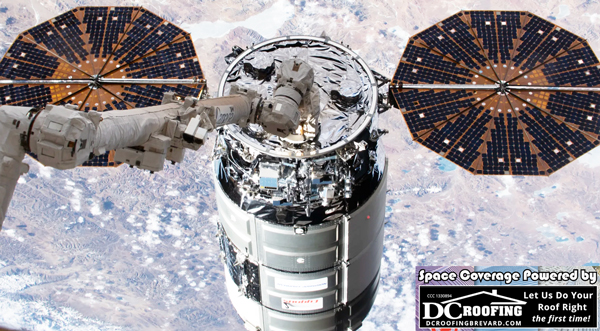

BREVARD COUNTY • CAPE CANAVERAL, FLORIDA – NASA, Northrop Grumman, and SpaceX are targeting 11:28 a.m. EDT on Saturday, August 3, for the next launch to deliver science investigations, supplies, and equipment to the International Space Station.
This launch is the 21st Northrop Grumman commercial resupply services mission to the orbital laboratory for the agency.
NASA’s live launch coverage will begin at 11:10 a.m. on NASA+, NASA Television, the NASA app, YouTube, and the agency’s website. Learn how to stream NASA TV through a variety of platforms, including social media.
Filled with nearly 8,200 pounds of supplies, the Northrop Grumman Cygnus spacecraft, carried on the SpaceX Falcon 9 rocket, will launch from Space Launch Complex 40 at Cape Canaveral Space Force Station in Florida.
NASA coverage of arrival will begin at 2:30 a.m. Monday, Aug. 5 on NASA+, NASA Television, the NASA app, YouTube, and the agency’s website. NASA astronaut Matthew Dominick will capture Cygnus using the station’s robotic arm, and NASA astronaut Jeanette Epps will act as backup to Dominick. After capture, the spacecraft will be installed on the Unity module’s Earth-facing port.
Highlights of space station research facilitated by delivery aboard this Cygnus are:
■ Test articles to evaluate liquid and gas flow through porous media found in space station life support systems.
■ A balloon, penny, and hexnut for a new STEMonstration on centripetal force.
■ Microorganisms known as Rotifers to examine the effects of spaceflight on DNA repair mechanisms.
■ A bioreactor to demonstrate the production of many high-quality blood and immune stem cells.
■ Vascularized liver tissue to analyze the development of blood vessels in engineered tissue flown to the space station.
NASA’s CubeSat Launch Initiative also is sending two CubeSats to deploy from the orbiting laboratory, CySat-1 from Iowa State University and DORA (Deployable Optical Receiver Aperture) from Arizona State University, making up ELaNa 52 (Educational Launch of Nanosatellites).
The Cygnus spacecraft is scheduled to remain at the space station until January when it will depart the orbiting laboratory at which point it will burn up in the Earth’s atmosphere. This spacecraft is named the S.S. Richard “Dick” Scobee after the former NASA astronaut.
NASA’s mission coverage is as follows (all times Eastern and subject to change based on real-time operations):
Friday, August 2
3 p.m. – Prelaunch media teleconference (no earlier than one hour after completion of the Launch Readiness Review) with the following participants:
■ Bill Spetch, operations integration manager, NASA’s International Space Station Program
■ Meghan Everett, deputy chief scientist, NASA’s International Space Station Program
■ Ryan Tintner, vice president, civil space systems, Northrop Grumman
■ Jared Metter, director, flight reliability, SpaceX
■ Melody Lovin, launch weather officer, Cape Canaveral Space Force Station’s 45th Weather Squadron
Saturday, August 3:
11:10 a.m. – Launch coverage begins on NASA+, NASA Television, the NASA app, YouTube, and the agency’s website.
11:28 a.m. – Launch
 Related Story:
WATCH: ULA Launches 100th Mission Dedicated to US National Security Tuesday Morning from Cape Canaveral
CLICK HERE FOR BREVARD COUNTY NEWS