Astronauts Will Wake Up at 12:35 p.m. to Begin Their Day, Crew Activities Include Preparation for Lunar Targets
By Space Coast Daily // April 4, 2026
Artemis 2 crew reports burning smell from Orion's space toilet, Mission Control will continue to evaluate it
FLIGHT DAY 4: Artemis 2 crew reports burning smell from Orion’s space toilet. Flight controllers in Mission Control initially suspected that the smell might be coming from orange insulation on the toilet’s hygiene bay door and weren’t concerned about it.
NASA – The Artemis 2 crew reported a burning smell from their Orion spacecraft’s toilet.
“Regarding the smell, I just wanted to make sure you all were tracking the EGS notes of the kind of burning heater smell that was coming from the toilet several times,” Artemis 2 mission specialist Christina Koch radioed to Mission Control.
“It was never identified as the source, what exactly it was, but it was identified as an unknown smell.”
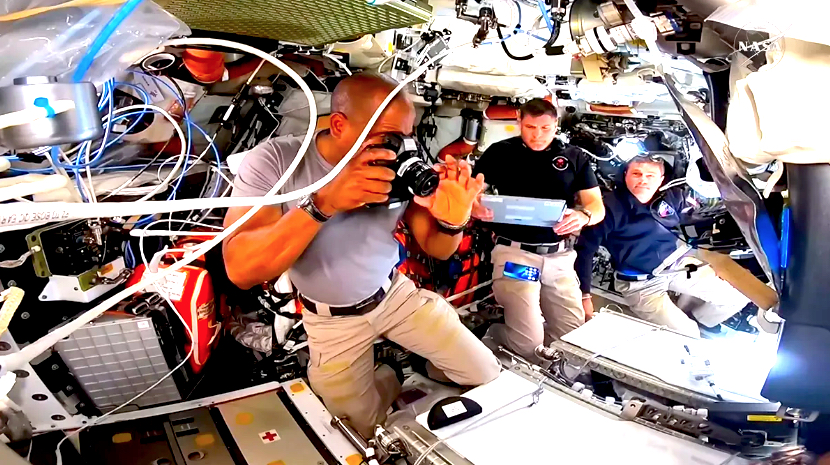
Flight controllers in Mission Control initially suspected that the smell might be coming from orange insulation on the toilet’s hygiene bay door and weren’t concerned about it.
“Overall, we don’t have any major concerns,” Mission Control radioed the crew.
The astronauts radioed back that it didn’t seem to be the source, but smelled similar to starting up an old electric heater that has not been used in a while.
Mission Control will continue to evaluate it, but the crew did receive clearance to continue using the toilet.
It is Saturday at NASA’s Mission Control, home to the Artemis 2 mission to the moon.
The four astronauts on the mission will wake up at 12:35 p.m. EDT to begin their day, which will include some final studying to prepare for the lunar targets they will try to photograph and observe during their lunar flyby on Monday, April 6.
 Related Story:
Spurred by American Ingenuity, NASA Astronauts Are in Flight, Preparing for the First Crewed Lunar Flyby in 50 years
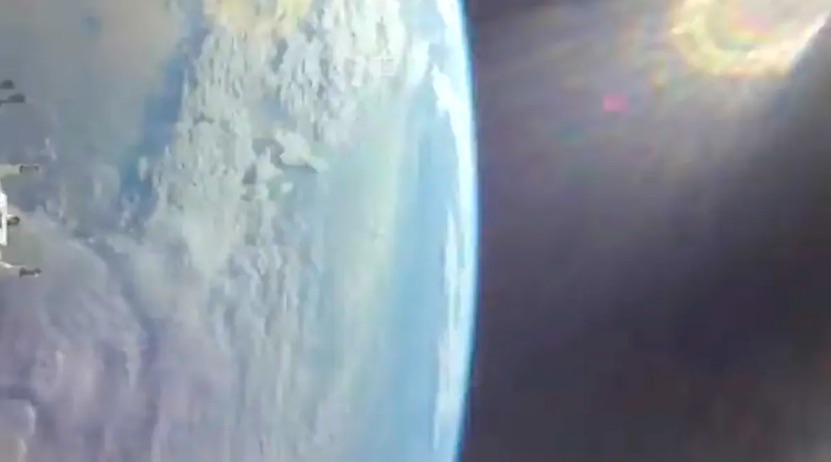
NASA’s Artemis II crew is on the way to the Moon and released an image showing the view from inside the Orion spacecraft during the Artemis II mission — the first crewed lunar flight in over 50 years.
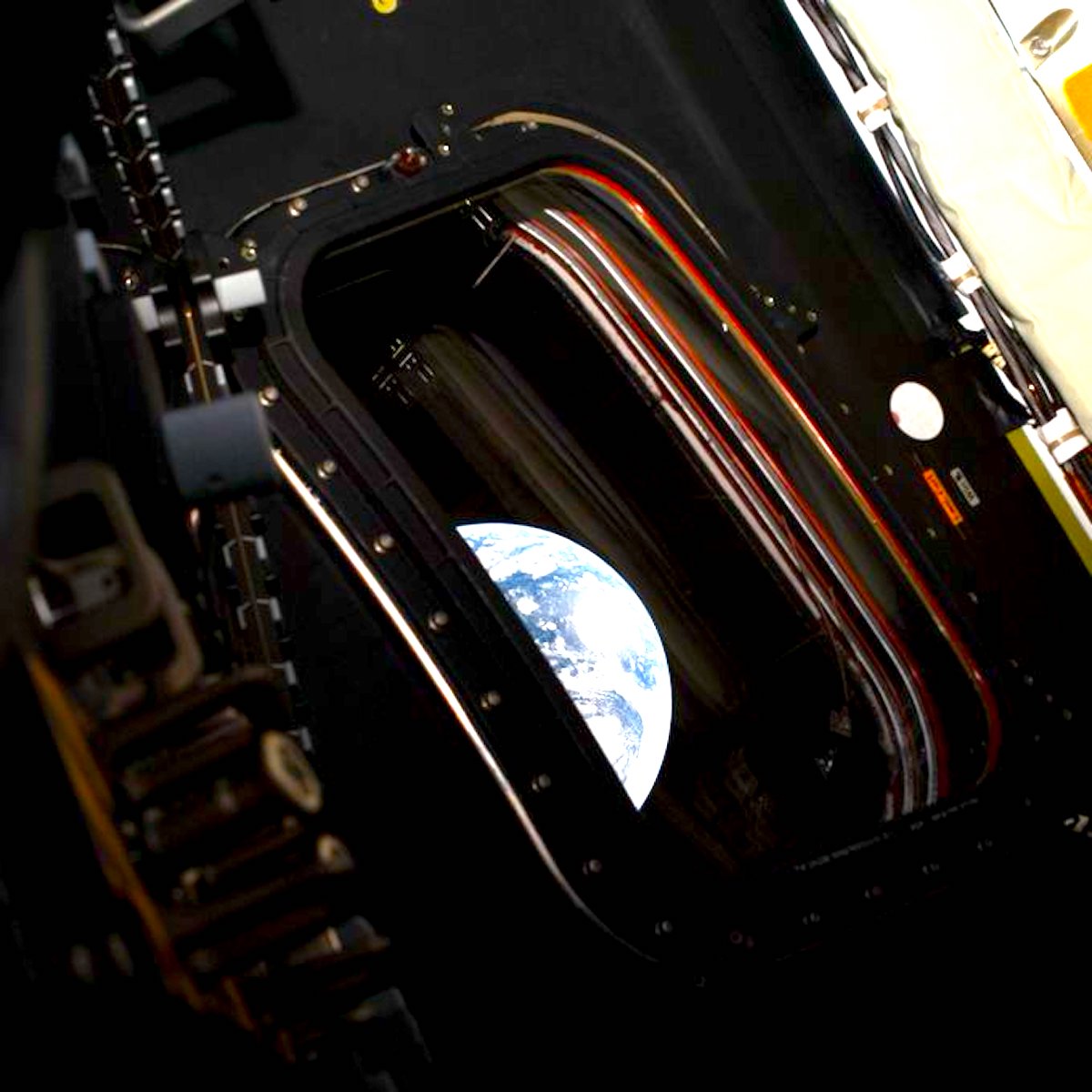
Astronauts aboard the capsule shared stunning visuals as Earth receded behind them while they headed toward the Moon.
The Artemis II mission lifted off from NASA’s Kennedy Space Center in Brevard County and successfully completed a key engine burn that sent the spacecraft out of Earth’s orbit and on a trajectory around the Moon.
Crew members described the journey so far as “an amazing ride” as they continue their historic voyage.
After a successful launch from Brevard County on April 1, the Artemis II mission is now more than 70,000 miles away from Earth as of Friday morning.
After the mission management team polled “Go” on Thursday, NASA’s Orion spacecraft fired its main engine for five minutes and 50 seconds beginning at 7:49 p.m. EDT, to successfully complete the translunar injection (TLI) burn, sending the crew in Orion out of Earth orbit and on a trajectory toward the Moon.
Orion’s main engine provides up to 6,000 pounds of thrust, enough to accelerate a car from 0 to 60 mph in about 2.7 seconds.
At the time of the burn, Orion’s mass was 58,000 pounds and burned approximately 1,000 pounds of fuel during the firing.
Crew members are also spending time exercising on the spacecraft’s flywheel exercise device. During exercise, teams on the ground monitored the spacecraft’s air revitalization system, which maintains a breathable, comfortable cabin environment for the crew, and assessed how exercise affects the spacecraft’s movement.
The flywheel uses a simple cable‑based mechanism that supports both aerobic exercises, like rowing, and resistive movements, such as squats and deadlifts.
Operating much like a yo‑yo, the device provides resistance proportional to the applied force, supporting loads up to 400 pounds. This capability is especially important in deep space, where astronauts lack access to the extensive exercise equipment aboard the International Space Station.
On the station, crews rely on more than 4,000 pounds of exercise hardware spread across roughly 850 cubic feet. In contrast, Orion’s flywheel weighs just 30 pounds and is about the size of a carry‑on suitcase—meeting the strict mass and volume constraints of deep‑space missions while still supporting crew health and reentry readiness.
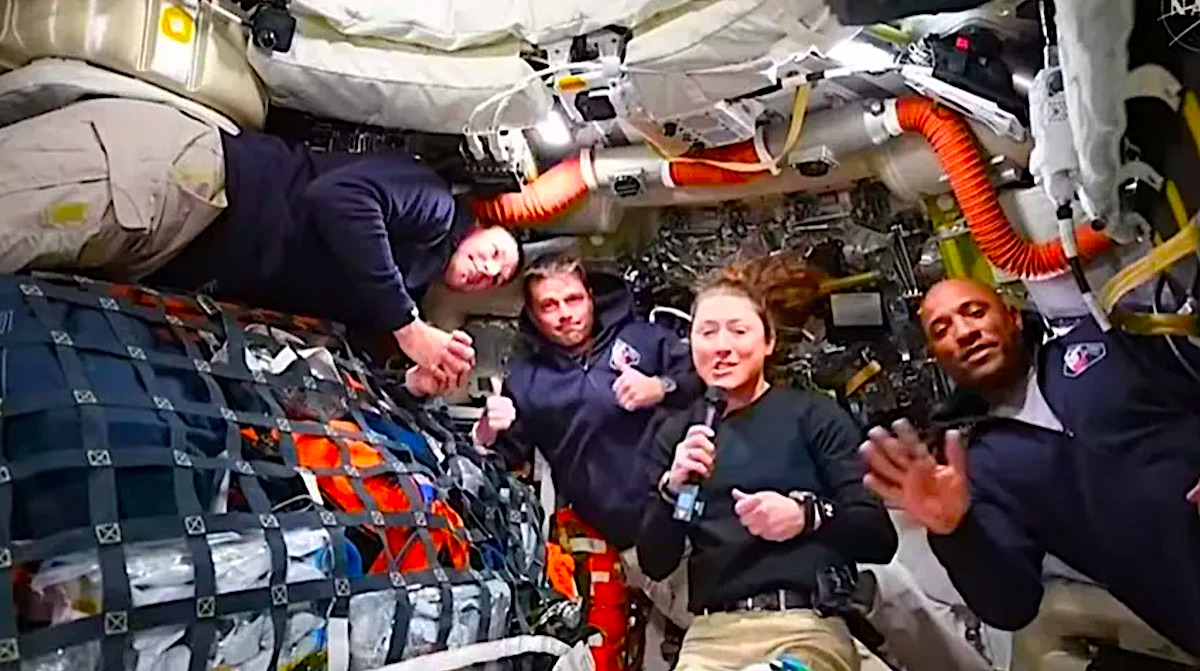
The crew members – NASA astronauts Reid Wiseman, Victor Glover, Christina Koch, and CSA (Canadian Space Agency) astronaut Jeremy Hansen – have successfully checked out the AVATAR scientific payload.
Engineers also determined that a brief loss of two-way communications between the ground and the crew, which occurred shortly after the crew reached orbit, was due to a ground configuration issue involving the Tracking and Data Relay Satellite system.
The issue was rectified quickly with no impact on mission operations.