
Gainesville Coins on Why Asymmetric Risk Is the Real Investment Case
By Space Coast Daily // April 23, 2026
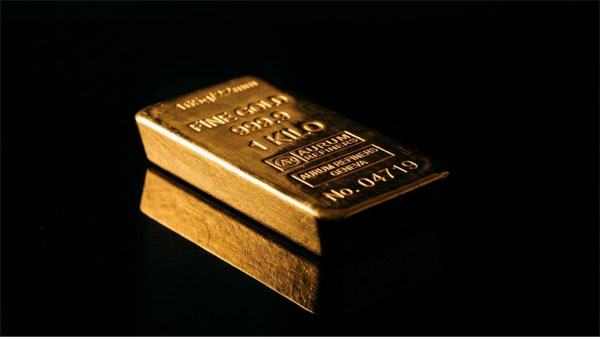
Most investment conversations about gold begin and end with price. Gold is up, gold is down, gold is at a record, gold is overdue for a correction. What gets less attention is the more fundamental question of how gold’s risk profile compares to the other things investors own — and whether the terms of the trade are actually favorable even when the price goes nowhere.
Everett Millman, precious metals specialist at Gainesville Coins, made this case plainly in April 2025, months before gold hit its all-time high of $5,589.38 on Jan. 28, 2026. The way he described it, the risk math on gold is lopsided in the investor’s favor — and that asymmetry has only become more pronounced as the conditions driving it have worsened.
The Bell Curve Nobody Talks About
“The risks are very asymmetrical,” Millman said. “Yes, there is a risk that you buy gold and the price goes nowhere, or the price even goes down. And so you lose a little bit on your investment. That’s the downside. That’s like I was saying before — it can’t go to zero.”
That last point is the key one. Unlike equities, which can and do go to zero when companies fail, gold carries no counterparty liability. It is not a promise from any issuer. There is no balance sheet behind it that can collapse, no earnings miss that can erase its value overnight. The floor is not zero — it is the floor of global demand for a metal that has functioned as a store of value across every major civilization for thousands of years.
“The other side of the tail risks are at this point basically unknowable,” Millman continued, “because there is so much uncertainty and there are a lot of unprecedented things going on in the global system. So I think everyone, myself included, could stand to own more gold and silver — just in that break-the-glass scenario.”
Gainesville Coins on Why the Trade Makes Sense at Any Price
The asymmetric framing matters especially in a period when the scenarios that would drive gold dramatically higher — dollar debasement, geopolitical fracture, a loss of confidence in financial institutions — are no longer tail risks in the traditional sense. They are active, ongoing discussions in mainstream financial media and among central bank policymakers.
J.P. Morgan raised its gold price target to $6,300 per ounce in February 2026, citing sustained central bank demand and what it called an “unexhausted trend of reserve diversification.” Goldman Sachs forecasts central banks will average 60 tonnes of gold purchases per month through 2026. These are not the postures of institutions hedging against improbable catastrophe. They are institutional acknowledgments that the environment Millman described — unprecedented, uncertain, carrying risks that skew toward the upside for gold — has become the base case.
Less than 0.5% of investment portfolios have any exposure to gold, Millman pointed out in 2023 — a figure he called “baffling.” That allocation gap hasn’t closed dramatically since, which means the upside Millman described remains largely uncaptured by the average investor even after gold’s historic run.
What the Asymmetry Actually Requires
None of this requires believing gold will reach $8,000 or $10,000, or that the dollar will collapse, or that any specific crisis is imminent. The asymmetric case is simpler: if the worst that happens is a modest loss, and the best that happens is a substantial gain in a scenario that is genuinely hard to put an upper bound on, the expected value of holding some gold is positive even at current prices.
Millman framed it as insurance rather than speculation. The premium is the spread between purchase price and resale value. The coverage is protection against outcomes that, by their nature, are difficult to predict in advance but would matter enormously if they arrived. That framing doesn’t require a forecast. It requires only an honest accounting of what is and isn’t known — and a recognition that the list of things that fall into the latter category has grown considerably in recent years.














