Josh Woods is a rare exception. Nine out of 10 people who suffer cardiac arrest outside a hospital setting don’t survive
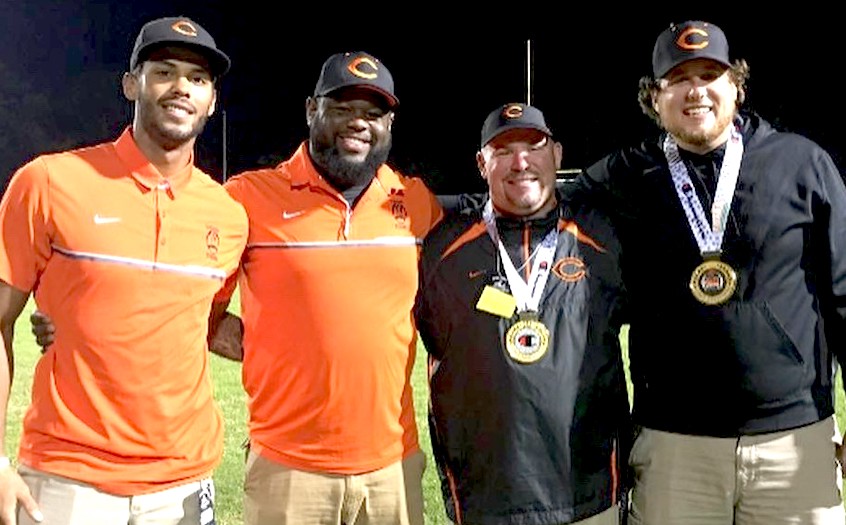
Josh Woods, 33, suffered cardiac arrest during football practice at Cocoa High in 2017. CPR and an AED saved his life. Only later did Woods learn he had suffered cardiac arrest – and flatlined for 12 to 18 minutes before being resuscitated. The April 25 AHA Heart Walk at Viera High School aims to be a family-friendly, activity-boosting event to raise awareness and funds for research and bring life-saving CPR kits into Brevard Public Schools.
Health First is teaming up with the American Heart Association to train people in CPR, raise money for school training kits, and boost wellness with a family-friendly event.
BREVARD COUNTY • VIERA, FLORIDA – Josh Woods was sitting on the bench during football practice at Cocoa High when he stood up, walked toward his players, and suddenly felt lightheaded.
“I reached out to grab one of our players for balance,” Coach Woods, 33, recalled. “And the next thing I know, I’m out.”
Woods collapsed to the ground, stunning other coaches and players. Another coach immediately began CPR and directed others to sprint for the school’s automated external defibrillator (AED).
Only later did Woods learn he had suffered cardiac arrest – and flatlined for 12 to 18 minutes before being resuscitated.
“If they would have waited any longer, if they would have had a freak‑out moment, I don’t think I’d be talking to you right now,” Woods explained. “It happened to me. It can happen to anyone.”
Woods is a rare exception. Nine out of 10 people who suffer cardiac arrest outside a hospital setting don’t survive, often because no bystander CPR was performed.
Heart Walk: The American Heart Association’s Heart Walk is set for Saturday, April 25, at Viera High School. It’s free to register – and helps raise funds for getting 29 CPR kits in Brevard high and middle schools.
Through this event’s fundraising, every walker – and every dollar donated – leads to more research, more people trained in CPR, and a chance for families and the community to get active and make a difference in their communities.
Heart disease is the nation’s No. 1 killer, said Kelley Harrell, AHA Development Director for Volusia, Flagler, and Brevard counties. According to the U.S. Centers for Disease Control & Prevention (CDC), on average, one person in the U.S. dies from cardiovascular disease every 34 seconds.
Matt Younger, A.J. Joiner, John Wilkinson, and Josh Woods have experienced the power of CPR. At practice in 2017, Woods suffered cardiac arrest and flatlined for 12 to 18 minutes. He was revived with CPR and the use of an AED.
“We are working to create a nation of lifesavers, not bystanders,” Harrell said. “So often, when a cardiac emergency happens, it’s outside of a hospital — it’s in someone’s home or in a business. We want everyone to be prepared.”
The event starts at 8 a.m., with the 3-mile walk slated to start at 8:45 a.m.
AHA expects over 600 participants in the April 25 event to join millions across the country in receiving lifesaving training and supporting the American Heart Association this year.
Participants will be taught how to react when witnessing a cardiac emergency – and celebrate survivors and the healthcare workers who care for cardiac patients every day.
It’s free to register (you can sign up at www2.heart.org). People can walk alone, join a team, or start one themselves.
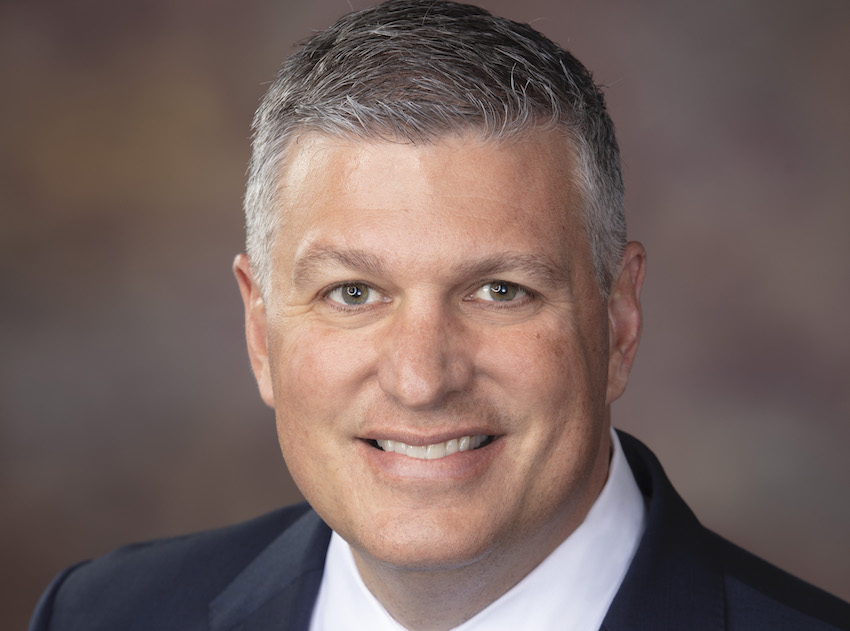
Mike Mullowney, Health First’s Hospital Division President, serves as this year’s American Heart Association Heart Walk Chair. Health First is the title sponsor for 2026. Mullowney said the event – and the funded CPR kits – will educate more people in the community about hands-free CPR, “that will save lives in our community.”
Mike Mullowney, Health First’s Hospital Division President, is really excited to serve as this year’s Heart Walk Chair and be part of the team of local executives bringing the Heart Walk back to Brevard.
“We view the Heart Walk as an important local event that will support our local community,” Mullowney said. “Our goal is to raise funds to purchase CPR In-School Training Kits for all 29 of our middle and high schools in Brevard County.”
The kits teach hands-only CPR, how to use an AED, and basic first aid in the school environment. While students won’t be formally certified in CPR training, they’ll know the basics that could save lives – not just in schools, but anywhere, said Danielle O’Reilly, Brevard Public Schools’ Content Specialist, PE/Health K-12.
“A cardiac event could happen at any time, and it could happen with anyone. Everyone thinks it’s older people, but it can happen with students,” O’Reilly said.
Quick response time – those first four to six minutes after a cardiac event – until paramedics arrive “is going to save lives,” O’Reilly said.
O’Reilly, who previously served as a PE teacher at Cocoa High, said students get CPR training in both middle and high school.
“Since they’re getting that instruction at least twice during their career in school, they’re learning that muscle memory,” she added.
O’Reilly knows how critical that is. She was at Cocoa High when Woods’ cardiac event occurred.
The incident stresses the importance of CPR training in schools for both staff and students, while providing reassurance for loved ones.
“You know they’re going to be prepared to act,” O’Reilly said, who said, as a PE teacher, spending so much time with students made her feel “almost like they become your kids…The mentality I had always was, ‘What am I going to do to keep these kids safe?’ ”
The AHA has tremendous educational materials and resources on how to best prevent heart disease and stroke, which is largely preventable, Mullowney said.
“If you come to the Heart Walk, I hope you leave feeling invigorated,” Mullowney said.
“You’ll be participating in a community event that will directly support our Brevard Public Schools’ teachers in critically important education – education that will save lives in our community.”
For those on the fence? Think about Woods, a former Eastern Michigan University offensive lineman and now-coach at Warner University in Lake Wales.
He didn’t suffer long-term damage from those minutes his brain was oxygen-deprived. He considers himself incredibly lucky — and hopes his story underscores just how important CPR training is for all.
“You’d rather be certified and know how to save someone’s life than be a bystander, wishing you knew,” Woods said. “You want to be prepared — because it might be life or death.”
To register for the Heart Walk and for other information on how you can give back to the cause, visit www2.heart.org. Learn more about Health First’s giving back to the community at hf.org/givingback.