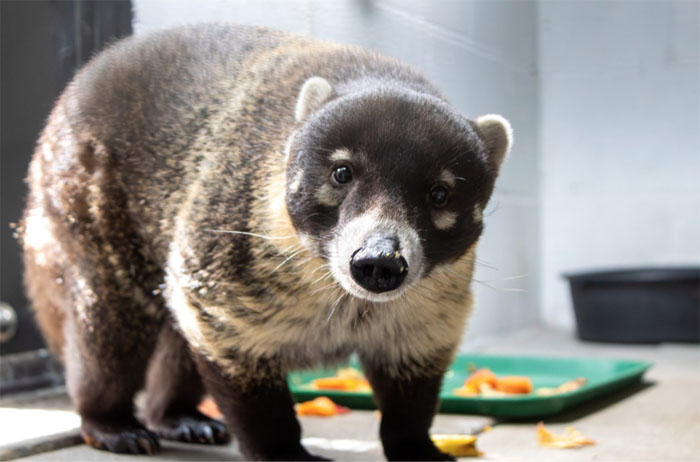
Brevard Zoo Welcomes New White-Nosed Coati Kits in Conservation Milestone
By Space Coast Daily // May 6, 2026
Each birth is carefully planned and coordinated with Brevard Zoo, SSP coordinator and studbook keeper

BREVARD COUNTY, FLORIDA – There’s exciting news behind the scenes at Brevard Zoo as several white-nosed coati kits have recently been born as part of an ongoing conservation effort.
Female coatis Romi and Rita have each welcomed their own litters of kits, while another coati, Sky, also gave birth, though her kit was unfortunately stillborn.
Despite the loss, zoo officials emphasize that each successful birth plays a critical role in protecting the species’ future.
These births are part of the Association of Zoos and Aquariums Species Survival Plan, a program designed to maintain healthy, genetically diverse populations of animals in accredited facilities to help safeguard species in the wild.
White-nosed coatis, native to Central and South America, face increasing threats from hunting and deforestation, leading to declining populations.
According to zoo staff, every new kit represents an important step forward in preserving the species while also providing valuable insight into coati behavior, breeding, and social dynamics.
Each birth is carefully planned and coordinated between Brevard Zoo’s animal programs team and the SSP coordinator and studbook keeper, Lauren Hinson, along with other accredited institutions.
This level of collaboration ensures the long-term health and sustainability of coatis in managed care.
Staff Veterinarian Dr. Garrett Crooks recently examined the week-old kits, which are currently being cared for in a behind-the-scenes habitat alongside their mothers.
Zoo officials shared that Romi was gradually acclimated to her birthing space in advance to help ensure a calm and successful first birth experience.