
How to Choose an Affordable Sleeping Bag for Comfortable Camping Nights
By Space Coast Daily // May 16, 2026
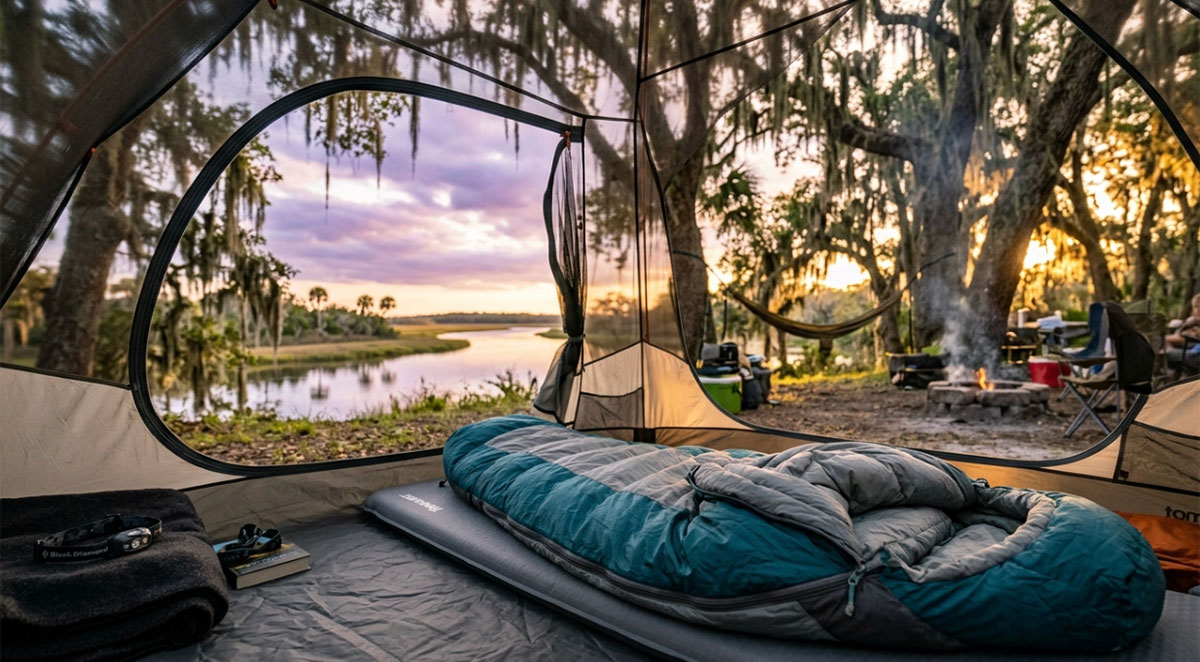
Selecting the right gear for the Space Coast is different than prepping for the mountains because our local environment is dominated by high humidity of between 67% and 79% on average, and salty sea breezes. Finding affordable sleeping bags for camping means balancing price with the technical ability to handle moisture without losing warmth.
Most campers assume a heavy bag is better, but in Florida, excessive weight often just leads to a damp, sweaty night. You need a solution that breathes well while still providing a buffer against the 60-degree drops we see during winter nights.
Choosing a budget-friendly option does not mean you have to settle for a bulky, uncomfortable rectangular bag from a big box store. Modern materials have advanced to the point that entry-level gear can match high-end performance if you know which specs to prioritize.
Image Source: Google Gemini
Synthetic Versus Down In Humid Coastal Climates
When you are camping at a top site in Florida, moisture is your primary enemy because it infiltrates everything from your tent walls to your bedding. Traditional down insulation is prized for being lightweight, but it loses almost all its insulating properties the moment it gets damp.
Synthetic fills are the clear winner for Space Coast families because they continue to trap heat even when the air is thick with humidity. These polyester fibers are designed to resist water absorption and dry significantly faster than natural feathers. While down is great for dry alpine environments, it often becomes a clumped, useless mess in a Florida summer or a rainy spring weekend.
For those watching their budgets, synthetic bags are almost always more affordable than down-alternative bags. You can find high quality affordable sleeping bags for camping that offer the loft and comfort of expensive gear without the risk of water damage. This makes them much more practical for families who might be camping near the beach or in marshy state parks where the dew point is always a factor.
Recent testing shows that synthetic insulation remains the superior choice for any environment where moisture is a constant threat. This is a critical distinction because a cheap synthetic bag will actually outperform an expensive down bag once the coastal fog rolls in.
Decoding Temperature Ratings For Local Lows
Temperature ratings can be incredibly misleading if you do not understand the difference between a “survival” rating and a “comfort” rating. Most manufacturers list the lower limit on the bag’s stuff sack, which refers to the temperature at which a person can survive without hypothermia, not the temperature at which they will sleep soundly.
Over 175 standardized ISO/EN tests are performed each year to ensure these ratings are consistent across brands. For a typical Florida winter, a bag rated for 40 degrees Fahrenheit is usually the “sweet spot” for total comfort.
If you buy a bag rated exactly for the temperature you expect to encounter, you will likely spend the night shivering. Always aim for a bag rated about 10 to 15 degrees lower than the lowest predicted temperature of your trip. This extra buffer accounts for the fact that humidity makes the air feel colder than the thermometer suggests.
Space Coast families should consider these specific features when evaluating a new bag:
- Draft collars that prevent cold air from sneaking in around your shoulders
- Two way zippers that allow for foot ventilation on warmer nights
- Anti snag sliders that prevent the delicate liner fabric from tearing
By focusing on these mechanical details, you ensure that a budget-friendly purchase lasts for several seasons.
Finding The Right Shape For Every Family Member
The shape of your sleeping bag dictates how efficiently it conducts heat away from your body. While the classic “mummy” bag is the most efficient at retaining warmth, many people find it too restrictive and claustrophobic for casual camping.
Rectangular bags are the traditional choice for families because they provide plenty of room to kick your legs out. This is especially helpful for kids who tend to move around a lot in their sleep. However, the extra dead space inside a rectangular bag takes longer for your body to heat up, which can be a downside on a rare chilly night in Titusville.
A growing trend in 2026 is the semi-rectangular or spoon-shaped bag, which offers a compromise between comfort and thermal efficiency. These are wider at the elbows and knees, allowing side sleepers to get comfortable without the bulk of a full rectangle.
For couples, many affordable bags are designed to zip together to create a double-sized sleeping space. Just make sure you check the zipper compatibility before buying two separate bags, as the zippers must be on opposite sides and use the same tooth size to link up properly.
Space Coast Nightly Comfort Strategies
Preparing for a camping trip in Florida involves more than just picking a bag; it is about creating a sleep system. Even the best sleeping bag won’t keep you warm if you are lying directly on the cold ground, which acts like a giant heat sink.
Always pair your bag with a sleeping pad with a decent R-value (insulation rating). For our local climate, an R-value between 1 and 3 is usually sufficient to provide a barrier against the damp earth. This combination ensures that you stay dry and warm regardless of the coastal weather patterns.
If you want to dive deeper into local tips, our other articles offer great insights for year-round Florida living.















