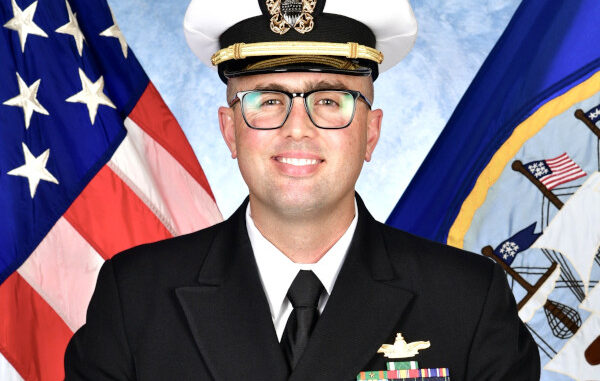
National Day of Prayer – A Message of Faith, Hope and Patriotism from U.S. Navy Chaplain Lt. Zack Parker
By Lt. Zack Parker, Chaplain, U.S. Navy // May 3, 2026
SPECIAL MESSAGE FROM U.S. Navy Chaplain Lt. Zack Parker TO THE SPACE COAST

Once a year, on the first Thursday of May, we’re invited into a mission. One that is not driven by technology or timelines, but by humility. It’s the National Day of Prayer, a moment when Americans across the country pause, reflect, and turn their hearts toward God.

BREVARD COUNTY, FLORIDA – Once a year, on the first Thursday of May, we’re invited into a mission. One that is not driven by technology or timelines, but by humility.
It’s the National Day of Prayer, a moment when Americans across the country pause, reflect, and turn their hearts toward God.
Established in 1952 and signed into law by President Harry Truman, the National Day of Prayer is more than a tradition; it is a reminder. A reminder that in times of uncertainty and challenge, this nation has long recognized the need to seek wisdom beyond itself.
Even as I write this article, I’m reminded of my first National Day of Prayer at Merritt Island High School in 2006-2007.
We were led by one of my favorite people in the world, Eric Swank. He had been the youth pastor at Georgianna United Methodist Church. Eric showed all of us that we could still be cool and be a Christian.
Amazing to think about, but Eric was in his mid-20s and led us young high schoolers in faith formation, not just in the confines of the church building but by living it out publicly in our school.
He was kind, funny, and bold, and instrumental in helping so many of us navigate adolescence.
We used the National Day of Prayer to springboard a consistent prayer time by beginning our next school year praying around the flagpole every Wednesday morning.
Rain or shine, we held hands around Old Glory in the middle of the commons at MIHS. It was amazing how our circle grew almost every week, with new students I would never have imagined joining us.
One Wednesday morning, we experienced a torrential downpour. I remember glancing up at my fellow prayer warriors, trying to get a sense of whether we were going to endure the rain. Eric stood firm with a grin on his face, and none of us budged.
I remember walking into my first period psychology class a soggy, wet mess.
Long before that law was written, leaders like Abraham Lincoln called the nation to prayer in its darkest hours. Even earlier, in 1775, the Continental Congress urged the colonies to seek divine guidance as they stood on the brink of independence.
In other words, before we were a nation of strength, we were a people who prayed. Are we still today?
We live in a time marked by rapid change, deep division, and persistent uncertainty. The challenges we face both globally and nationally are complex and often overwhelming.
It can be tempting to believe that the answers lie solely in policy, artificial intelligence, or elected officials.
Those things matter. But they are not enough on their own.
Prayer reorients us. It reminds us that we are not self-sufficient. It calls us to surrender, to seek wisdom, and prompts us to a posture of dependence on God.
Scripture speaks directly to this moment: 2 Chronicles 7:14, “If my people, who are called by my name, will humble themselves and pray and seek my face and turn from their wicked ways, then I will hear from heaven, and I will forgive their sin and will heal their land.”
This is not just a verse for ancient Israel; it is a principle that transcends time. Humility precedes healing. Prayer precedes renewal.
The National Day of Prayer also challenges us to be intentional. It’s not simply about a general sense of spirituality, but focused intercession for the key areas that shape our society, our leaders in government, the men and women who serve in uniform, our families, schools, churches, businesses, and the voices that shape our culture through media. Maybe even consider praying for our enemies.
Let’s pray from Micco to Mims. From the lakes of Minnesota to the hills of Tennessee. Across the plains of Texas, from sea to shining sea!
On the Space Coast or in Washington, D.C., this call to prayer carries unique weight.
Service members who defend our nation, engineers and innovators pushing the boundaries of exploration, and families who quietly carry the responsibilities of daily life.
From Patrick Space Force Base to Cape Canaveral, from local classrooms to neighborhood churches, the Space Coast community plays a vital role in the broader American story.
And every part of it can be covered in prayer.
Prayer establishes the pillars of our spiritual life, and each one needs wisdom, integrity, and strength.
We don’t need a stage or a microphone to participate. We don’t need a title or a position. Prayer begins in the quiet places.
In living rooms, at kitchen tables, during morning commutes, or in moments of stillness before the day begins. It can be as simple as asking God for strength to get through a meeting.
Comfort during a time of grief. Peace amidst a dispute. Or joy in a drought.
In my years of military chaplaincy, I’ve seen firsthand that prayer is not a last resort; it is a first response. It steadies the anxious, comforts the weary, and brings clarity in moments of confusion.
It has a way of shaping not only circumstances but also our hearts.
And that may be where the greatest impact lies.
Because when people are changed, communities are changed. And when communities are changed, a nation begins to look different.
On Thursday, the National Day of Prayer, whether you gather with others or take a few moments alone, I encourage you to participate.
Not out of obligation, but out of conviction. Not as a ritual, but as a response to the reality that we need God’s guidance now as much as ever.
The future of our nation will not be shaped only in boardrooms, classrooms, or halls of government. It will also be shaped in quiet moments of faith, when prayers are offered in trust.
Before we look to Washington for answers, let’s look to the Creator of the heavens and the earth.
And perhaps, as we do, we’ll find that the answers we’re seeking have been available all along.
ABOUT THE AUTHOR: