From the Apollo Era to 2026: How Florida’s Space Coast Has Reinvented Itself
By Space Coast Daily // September 19, 2026
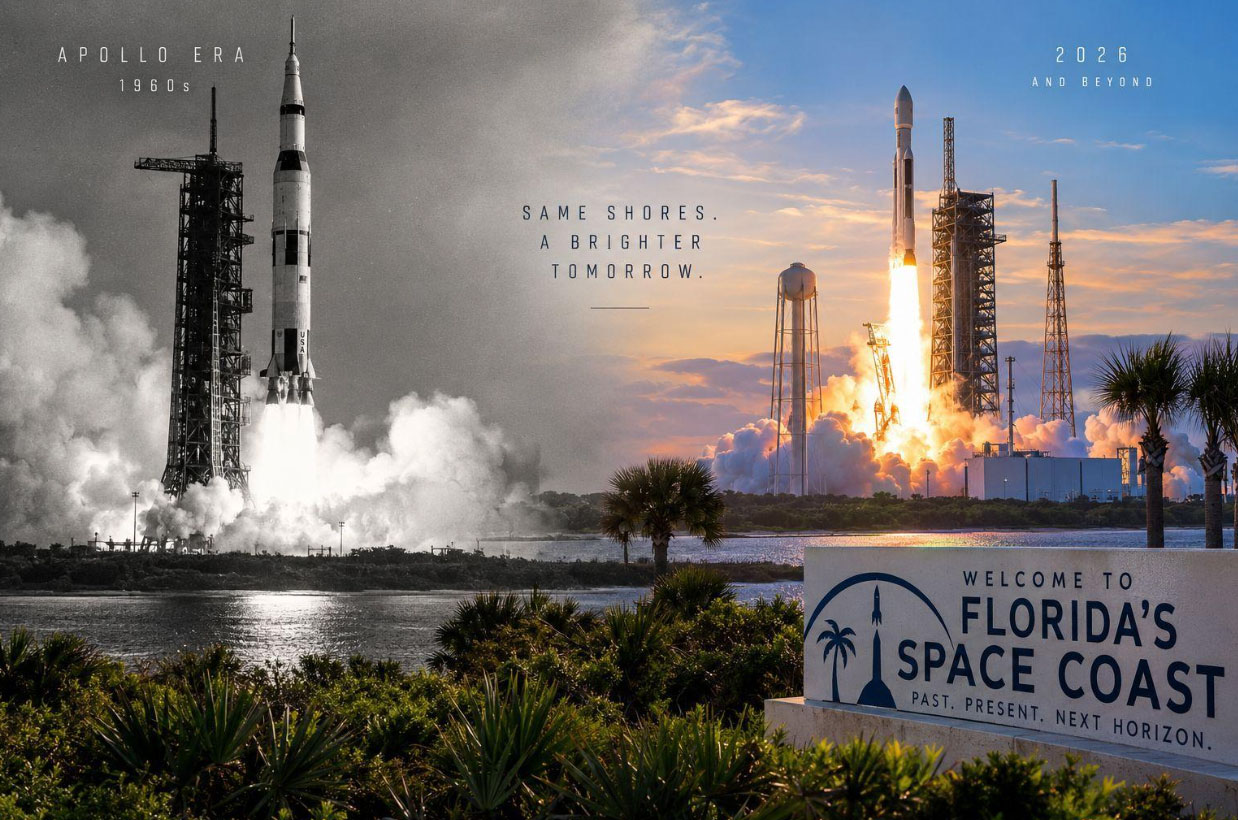
Florida’s Space Coast has spent more than six decades closely connected to American spaceflight. The region around Cape Canaveral and Merritt Island supported the race to the Moon, the Space Shuttle program, scientific missions, military launches and a new period of frequent orbital flights. Each phase changed local infrastructure, employment and the way residents viewed their place in the national space program.
By 2026, the region operates very differently from the Space Coast of the Apollo years. Government missions still play a major role, but several types of space activity now share launch facilities and supporting infrastructure. Digital habits have changed alongside the region itself, as residents and visitors use mobile devices to follow launch schedules, read local updates, stream entertainment or access online services such as ringospin casino while waiting for the next event. Launch frequency has also increased sharply, turning rocket activity into a much more regular feature of life along Florida’s Atlantic coast.
The change did not happen through one project or one policy decision. The Space Coast moved through several distinct periods, and each one left physical and economic traces that still shape the region.
Apollo Created the Foundations
Cape Canaveral already served as a military rocket test site before the Apollo program began. The federal government started launching rockets from the area in 1950. NASA then required a much larger launch center when the United States committed to sending astronauts to the Moon.
In September 1961, NASA requested funding to acquire land on Merritt Island. The agency established the Launch Operations Center there in 1962, next to the existing facilities at Cape Canaveral. The center received the Kennedy Space Center name in 1963.
Apollo required infrastructure on a scale that Florida had never hosted before. Construction crews built launch pads, roads, processing areas and support buildings. Work on the Vehicle Assembly Building began during the 1960s, while Launch Complex 39 took shape near the Atlantic coast.
These projects changed Brevard County. Engineers, technicians, construction workers and support staff moved into the area. Housing, schools, roads and local services expanded as the workforce grew.
The region also developed technical knowledge that extended beyond individual missions. Teams learned how to assemble large launch vehicles, manage hazardous materials, conduct countdowns and coordinate complex ground operations.
Apollo therefore created more than a collection of launch pads. It established the basic industrial structure that later programs could reuse.
The Space Coast After the Moon Landings
The Apollo program could not continue indefinitely at its peak level. After the lunar missions ended, Florida faced a question that would return several times during the following decades: what happens to a community when a major space program ends?
The answer involved reuse.
NASA moved from Apollo into Skylab and the Apollo-Soyuz Test Project before preparing Kennedy Space Center for the Space Shuttle. Engineers modified existing infrastructure and added facilities for the reusable spacecraft.
The shuttle first flew in 1981. Over the next 30 years, Kennedy supported all 135 Space Shuttle launches. Those missions carried satellites, scientific equipment and astronauts while also supporting construction of the International Space Station.
This period created a different operating rhythm. Apollo focused heavily on the Moon program during a relatively short historical window. Shuttle operations continued for three decades and supported a broader range of missions.
For communities around the space center, that long schedule created a degree of continuity. Families could build careers around aerospace work. Local colleges and schools had clear reasons to support science and engineering education. Businesses could serve a large technical workforce.
Still, the region remained vulnerable to major program changes.
The Shuttle Retirement Forced Another Change
The final shuttle mission ended in 2011. Kennedy Space Center suddenly held facilities that NASA no longer needed for their original purpose.
The situation created practical problems. Buildings designed for shuttle processing required maintenance. Launch infrastructure occupied valuable sites. Skilled workers faced uncertainty as shuttle employment declined.
Instead of keeping Kennedy as a government-only launch center, planners pursued a multi-user model. NASA started opening facilities and infrastructure to additional operators while preparing other areas for future exploration missions.
A 2012 development concept helped formalize that direction. It called for broader use of Kennedy assets and greater cooperation between government programs and private-sector operators. By the middle of the decade, the center had moved firmly toward a multi-user spaceport structure.
That decision changed how the Space Coast functioned.
Old facilities could gain new purposes. Launch pads could support different vehicles. Former shuttle infrastructure could serve spacecraft processing or manufacturing work. New construction could take place beside structures that dated back decades.
The region started moving away from dependence on one large human-spaceflight program.
A Spaceport With Several Roles
The modern Space Coast supports several categories of activity at the same time.
They include:
• human spaceflight and lunar exploration;
• national security missions;
• satellite deployment;
• scientific spacecraft;
• cargo and crew transportation;
• spacecraft and launch-vehicle processing;
• testing, research and ground-support operations.
This mix affects how the region responds to changes in individual programs. One delayed mission no longer defines all activity at the Cape.
The infrastructure itself demonstrates that shift. Some launch complexes that once served vehicles from earlier periods now support newer systems after extensive reconstruction. Engineers have also changed processing buildings and support areas to meet current technical requirements.
Kennedy has followed the same broader pattern. Government programs now operate alongside a much larger network of outside partners, contractors and research groups.
The physical Space Coast still carries its Apollo and shuttle history, but current operators use many parts of the region for present-day missions.
Launches Became Much More Frequent
Perhaps the clearest difference between earlier decades and 2026 involves launch cadence.
Florida now handles orbital missions at a rate that would have seemed unusual during many previous periods. Launch teams regularly manage satellite deployments, national security payloads, scientific missions and crew-related operations.
High launch frequency changes daily operations. Range teams must coordinate schedules, airspace restrictions, maritime safety, weather monitoring and ground systems repeatedly rather than preparing for only a small number of major events each year.
Residents also experience spaceflight differently. A launch once carried the character of an occasional regional event. Frequent missions now make rocket activity a routine part of life for many people who live near the coast.
The contrast becomes especially clear when viewing the Space Coast through its major eras:
| Period | Main Character of Activity | Major Regional Effect |
| 1960s–1970s | Apollo and early human spaceflight | Large-scale construction and workforce growth |
| 1981–2011 | Space Shuttle operations | Long-term aerospace employment and recurring missions |
| 2011–2020 | Post-shuttle transition | Facility reuse and multi-user development |
| 2020–2026 | High-frequency mixed operations | More launches, more mission types and wider infrastructure use |
The change in cadence affects more than launch personnel. Local authorities must account for traffic around viewing areas, while aviation and maritime operators need current information about temporary restrictions. Tourism businesses also respond to schedules that can change because of technical issues or weather.
This regular activity has altered the public relationship with spaceflight. People can still gather along beaches and causeways for major missions, but residents may also see rocket exhaust trails during an ordinary morning or evening.
Human Spaceflight Returned in a Different Form
Human spaceflight remains closely connected to Florida, but its organizational structure has changed.
During Apollo and the shuttle era, NASA controlled most major elements of its crew transportation systems. Current operations divide responsibilities across government programs, contractors and transportation services.
Kennedy still contributes extensive expertise in spacecraft operations, crew systems, testing, safety and launch preparation. The center also supports research related to life-support technology, including air, water and food systems for future exploration.
Lunar exploration has also returned to the region’s long-term schedule. Engineers and launch personnel use Kennedy infrastructure to prepare missions intended to send astronauts beyond low Earth orbit.
The hardware differs from Apollo, but some physical connections remain easy to see. Kennedy still uses infrastructure with roots in earlier programs. Crawler transporters, processing areas and launch facilities have undergone extensive changes as engineers prepare them for current spacecraft.
That continuity shows how Florida has repeatedly reused expensive space infrastructure rather than starting from zero with every new program.
The Local Economy Has Changed With the Spaceport
The economic effects extend outside launch facilities.
Aerospace activity creates demand for engineering, construction, logistics, maintenance, information technology and technical services. Workers need housing, transportation, healthcare, education and everyday services. Visitors who travel to watch launches also spend money throughout Brevard County.
The employment structure has changed as well. Apollo created strong demand around a government-led lunar program. Shuttle operations supported a large workforce tied closely to one spacecraft system. The current model spreads work across more types of missions and organizations.
That shift matters for communities near Cape Canaveral and Kennedy Space Center. Aerospace employment can affect residential construction, commuting patterns and demand for technical education. Schools and colleges also have reasons to maintain programs connected to engineering, computing and other technical fields.
Tourism forms another part of the relationship. Rocket launches attract visitors who may stay in local hotels, eat at restaurants or visit beaches and museums. Some missions draw larger crowds, especially when astronauts take part or a new vehicle makes an important flight.
The connection between space activity and the local economy therefore extends well beyond the gates of launch facilities.
Education Has Become Part of the Long-Term Picture
A region with frequent aerospace activity needs people with technical skills. That requirement gives education a direct connection to the Space Coast’s future.
Students in Brevard County grow up close to active launch sites. They can watch rockets from neighborhoods, school grounds and public viewing areas. Spaceflight does not exist only in textbooks for them; it forms part of the local environment.
Schools, colleges and technical programs can connect that proximity with subjects such as mathematics, engineering, computer science and physics. Aerospace operations also require skills outside traditional engineering roles. Electricians, mechanics, safety specialists, software workers and technicians all contribute to launch and spacecraft operations.
The modern workforce therefore covers a wide range of occupations.
This differs from the public image of the Apollo period, when astronauts and mission-control engineers often dominated media coverage. Current space operations depend on large teams that handle manufacturing, testing, transportation, security, communications and infrastructure.
For the Space Coast, developing those skills locally can help communities participate directly in continued aerospace activity.
Old Infrastructure Keeps Finding New Uses
Reinvention does not always require demolition.
Kennedy and Cape Canaveral contain decades of specialized infrastructure, and planners have repeatedly found ways to modify parts of it for current needs. Former shuttle facilities have supported later spacecraft work. Apollo-era areas have supported newer lunar systems. Other launch complexes have undergone major reconstruction.
Engineers must make careful choices when they reuse older structures. Modern vehicles can have different dimensions, fuels, electrical requirements and ground-support systems. A facility that worked for one program may require extensive changes before another vehicle can use it.
Roads, utilities and safety zones can also retain value even when launch hardware changes.
This approach allows the Space Coast to preserve useful infrastructure while introducing new equipment where existing systems no longer meet technical requirements.
The result creates a visible connection between different periods of American spaceflight. Structures with roots in the first decades of the space program operate near facilities designed for current vehicles and spacecraft.
Environmental Management Remains Part of Space Operations
The Space Coast occupies an unusual physical setting. Major launch facilities sit close to beaches, wetlands, lagoons and wildlife habitat.
That geography influenced the original choice of launch sites. Rockets could travel east over the Atlantic, reducing risks to heavily populated areas during early stages of flight.
At the same time, decades of development created a continuing need to manage space operations alongside environmental protection.
Large parts of Merritt Island remain outside intensive industrial development. Wildlife habitat exists close to roads that carry spacecraft hardware and buildings where engineers prepare missions.
Modern operations must account for weather, coastal conditions and wildlife while maintaining launch schedules. Hurricanes create another challenge. Facilities require plans for strong winds, flooding and other effects from tropical systems.
Environmental management therefore forms a practical part of running a major spaceport on Florida’s Atlantic coast.
Tourism Now Extends Beyond Historic Missions
Apollo created many of the images that people still associate with Florida spaceflight, but tourism no longer depends entirely on history.
Visitors can learn about lunar missions and the shuttle period while also watching active launches. That combination gives the region two distinct attractions: historical spaceflight and current operations.
Launch schedules can influence travel plans. Some visitors choose dates around expected missions, although weather or technical problems can change those schedules at short notice.
Public interest also changes according to mission type. Crewed flights, lunar missions and first flights of new vehicles can attract substantial attention. Routine satellite launches may draw smaller crowds, yet they still give visitors a chance to see an orbital mission from the Florida coast.
Local beaches and public viewing areas play a role in that experience. They allow people to observe launches from outside the space centers, connecting aerospace operations with the region’s broader tourism activity.
2026 Shows How Far the Region Has Moved
The Space Coast of 2026 does not simply recreate the Apollo period.
Apollo concentrated enormous national resources on one primary objective: landing astronauts on the Moon. Today, Florida supports lunar exploration alongside satellite missions, national security launches, crew transportation, science and other orbital activity.
The operational tempo also looks different. In the 1960s, individual launches often represented major steps within a small number of national programs. Today, launch personnel can support numerous missions over a relatively short period.
Yet the region retains a clear connection to its origins. The federal government chose this part of Florida for early rocket work partly because its coastal location supported eastward launches over the Atlantic. Later programs expanded that initial infrastructure. Each generation inherited facilities, technical knowledge and experienced workers from the previous one.
That pattern helps explain the Space Coast’s longevity.
Florida did not preserve the Apollo era unchanged. The region moved through Apollo, shuttle operations, post-shuttle uncertainty and the growth of a multi-user spaceport. It rebuilt old sites, changed operating models and supported new mission categories.
In 2026, rockets leave Florida far more frequently than they did during much of the Space Coast’s history. Human missions remain part of the region’s work, while satellite, scientific and national security flights fill the schedule. Older facilities serve new purposes as engineers continue to develop infrastructure for future missions.
More than 60 years after construction crews prepared Merritt Island for Apollo, the Space Coast still performs the task that first shaped the region: sending spacecraft from Florida toward destinations beyond Earth. The methods, vehicles and schedules have changed substantially. The geographic role has not.