
FAA Clears SpaceX Starship for Launch Set Next Week from South Texas
By Space Coast Daily // May 23, 2025
NASA & SPACE NEWS

While SpaceX has yet to officially confirm the launch date for Flight 9, FAA-issued temporary flight restrictions suggest the company is targeting a launch as early as May 27.
WASHINGTON, DC—The Federal Aviation Administration (FAA) has officially cleared SpaceX for its next Starship launch, which is now tentatively set for next week at the earliest.
On May 22, the FAA confirmed that it had given the go-ahead for Starship to return to flight. Although the FAA had updated SpaceX’s launch license on May 15—allowing, among other things, for a higher launch frequency from the Starbase site in South Texas—it withheld launch approval pending the conclusion of an investigation into the March launch failure or until it could make a formal decision allowing the flight to proceed.
Ultimately, the FAA opted for the latter approach.
“After thoroughly reviewing the safety aspects related to the Starship Flight 8 anomaly, we concluded that SpaceX has effectively addressed the root causes and can move forward with another launch,” the agency said in a statement.
However, the FAA did not specify what caused the mishap or what corrective actions SpaceX took.
During the March 6 Flight 8 mission, SpaceX reported that an “energetic event” occurred with the Starship’s upper stage, resulting in multiple Raptor engines failing and the vehicle losing control.
The rocket eventually reentered over the Caribbean Sea. This incident was similar to the failure experienced during Flight 7 in January.
The FAA applied the same risk-based framework for approving Flight 8 to this latest mission, Flight 9. Despite the earlier incident being investigated, the FAA determined that the new mission meets safety standards and can proceed.
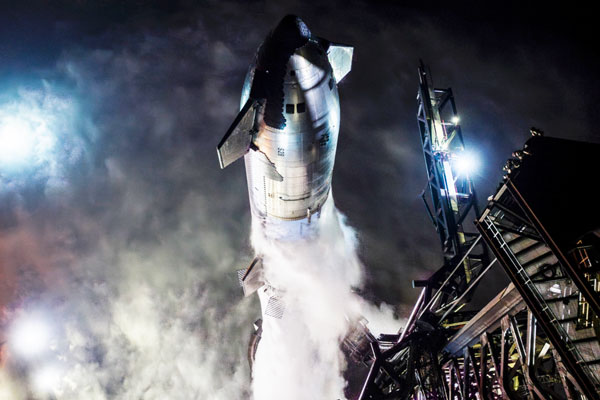
“With this return-to-flight determination, Flight 9 has been cleared for launch,” the FAA said. “SpaceX continues to comply with stringent safety, environmental, and licensing criteria.”
One notable adjustment for Flight 9 is the expansion of airspace safety zones—aircraft hazard areas. These areas are designed to prevent aircraft from entering regions where debris might fall in the event of a launch failure. An updated environmental assessment found a higher likelihood of failure based on recent launch issues, prompting the expansion.
According to the FAA, the AHA for Flight 9 stretches approximately 1,600 nautical miles eastward from Starbase, covering areas such as the Bahamas and Turks and Caicos Islands. For comparison, the Flight 8 hazard area covered 885 nautical miles.
The wider safety zone is also partly due to SpaceX’s plan to reuse a previously launched Super Heavy booster for the first time on Flight 9.
“Based on the new safety analysis and the introduction of a reused booster, the FAA is increasing hazard areas both within the United States and internationally,” the agency noted.
While SpaceX has yet to officially confirm the launch date for Flight 9, FAA-issued temporary flight restrictions suggest the company is targeting a launch as early as May 27.
 Related Story:
HOT OFF THE PRESS! May 12, 2025 Space Coast Daily News – Brevard County’s Best Newspaper













