NASA Astronauts Tom Akers, Joe Tanner Inducted Into U. S. Astronaut Hall of Fame® at Kennedy Space Center Visitor Complex
By Space Coast Daily // May 18, 2026
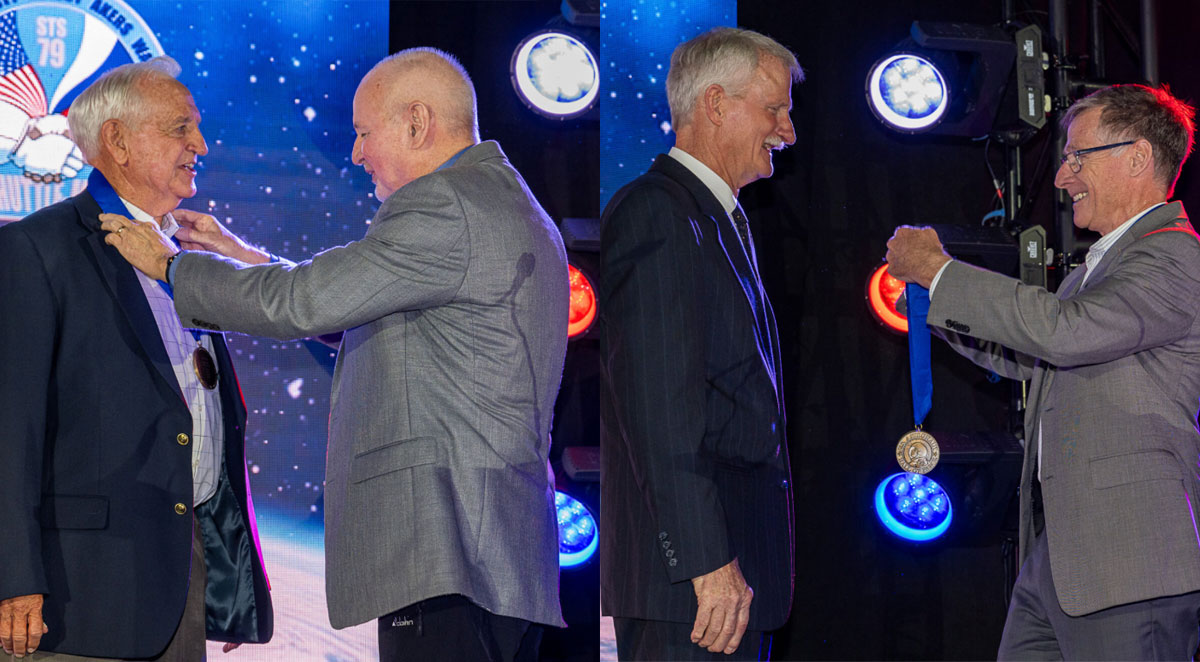
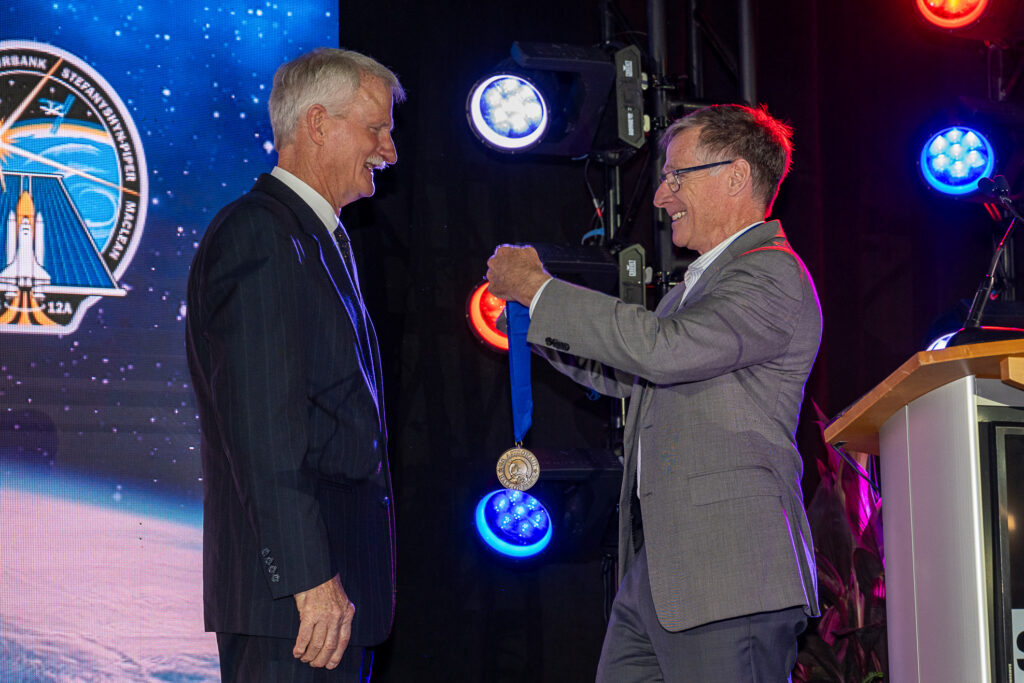
BREVARD COUNTY, FLORIDA – NASA Astronauts Tom Akers and Joe Tanner were inducted today into the prestigious U.S. Astronaut Hall of Fame, marking the 27th class of honorees to join the esteemed society.
The ceremony was held at Kennedy Space Center Visitor Complex, set against the awe-inspiring backdrop of Space Shuttle Atlantis® Akers and Tanner were honored for their outstanding accomplishments in furthering NASA’s mission of exploration and discovery.
Their induction brings the total number of astronauts in the U.S. Astronaut Hall of Fame to 113.
Delivering remarks to officially welcome the astronauts to the U.S. Astronaut Hall of Fame were Curt Brown, board chairman of the Astronaut Scholarship Foundation, which stewards the selection process each year; Therrin Protze, chief operating officer of Kennedy Space Center Visitor Complex, home of the U.S. Astronaut Hall of Fame, and Kelvin Manning, Deputy Director for Kennedy Space Center.
Distinguished guest Brian Hughes, Senior Director, Launch Operations for Kennedy Space Center and Wallops Flight Facilities in Virginia and more than 20 veteran astronauts, many of whom also have been inducted into the hall of fame, attended the ceremony.
“Today’s induction of Tom Akers and Joe Tanner honors two astronauts whose careers embody excellence, leadership, and service,” said Curt Brown, chairman of the Astronaut Scholarship Foundation.
“Their lasting contributions to NASA, and their ongoing work as educators and mentors, reflect the very best of the U.S. space program. We are proud to welcome them into the U.S. Astronaut Hall of Fame.”
Both Akers and Tanner served NASA in critical leadership and operational roles beyond their spaceflights, helping to shape astronaut training, mission success, and future exploration initiatives.
Akers served NASA for a decade as an astronaut and senior leader, supporting shuttle software development, EVA procedures, mission operations, and holding key management roles, including acting deputy director of flight crew operations and deputy director of mission operations.
Tanner worked at NASA for more than two decades, contributing as a research pilot, flight instructor, Extravehicular Activity (EVA) Branch Chief, and Mission Management Team astronaut. He later supported advanced exploration projects including the Altair Lunar Lander.
Following their NASA careers, both have remained deeply committed to education, mentorship, and STEM advocacy.
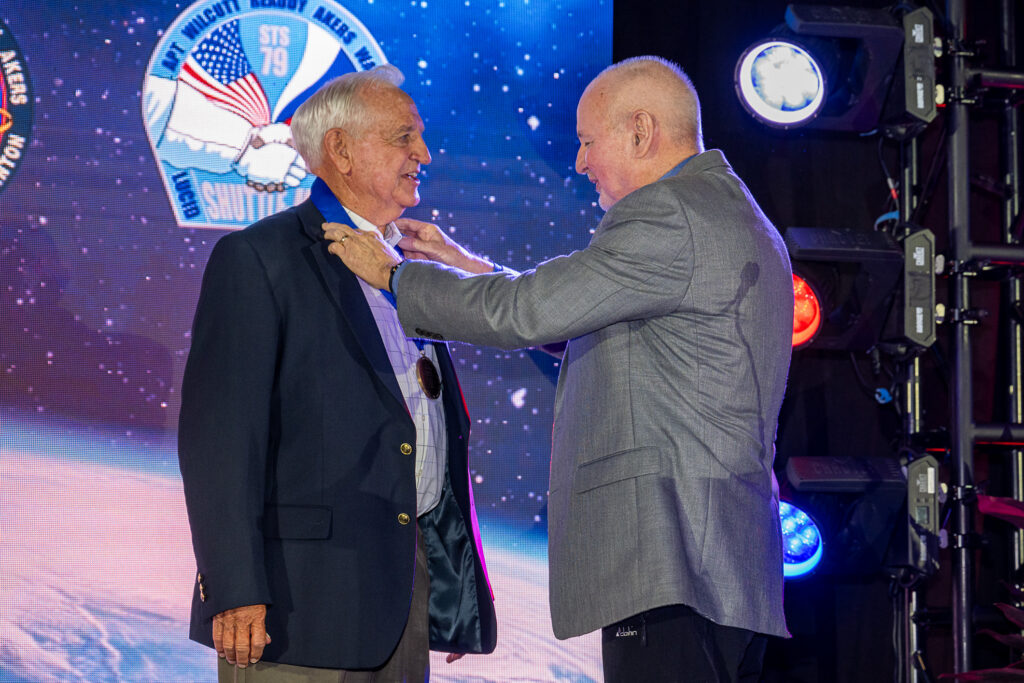
Raised in Eminence, Missouri, Tom Akers earned bachelor’s and master’s degrees in applied mathematics from the University of Missouri–Rolla.
During college, he worked summers as a national park ranger and, following graduation, served as a high school principal before joining the U.S. Air Force in 1979.
Tom served as an air-to-air missile data analyst at Eglin Air Force Base before being selected for the USAF Test Pilot School flight test engineer program.
After graduating in 1983, he spent four years as a flight test engineer on multiple weapon system development programs, flying in aircraft including the T-38, F-4, and F-15. As a private pilot, Tom accumulated more than 2,500 flight hours in 25 different aircraft.
Tom served in numerous leadership and operational roles, including shuttle software development, EVA procedures and tool development, and as a “Cape Crusader” supporting Shuttle launches at Kennedy Space Center. He also served as Acting Deputy Director of Flight Crew Operations, Deputy Director of Mission Operations, and Technical Assistant to the Johnson Space Center Director.
Selected by NASA as a mission specialist in 1987, Tom flew four Space Shuttle missions between 1990 and 1996. On STS-41 (October 1990), he was responsible for deploying the Ulysses spacecraft.
During STS-49 (May 1992), the first flight of Space Shuttle Endeavour, he participated in the historic and unplanned first-ever three-person spacewalk, successfully capturing and repairing the stranded Intelsat VI satellite and installing a new rocket motor.
On STS-61 (December 1993), the first Hubble Space Telescope repair mission, he performed two EVAs and served as the IV crewmember for three more that resulted in the successful repair of the Hubble Space Telescope.
His final mission, STS-79 (September 1996), was a resupply and crew exchange flight to the Russian space station Mir, where he served as Flight Engineer, overseeing the transfer of more than 3.5 tons of supplies.
Across his spaceflight career, Tom logged more than 800 hours in space and 29 hours of spacewalk time.
Tom left NASA in 1997 to return to the USAF as the AFROTC commander at the University of MO-Rolla (now Missouri University of Science and Technology). He retired from the Air Force in 1999 after a 20-year career with the rank of Colonel and took a position as Instructor of Mathematics at UMR, teaching and advising for the next eleven years. He retired in 2010, and he and his wife, Kaye, now live on their small farm near Eminence.
In retirement, he has stayed busy. He has served on six different NASA independent review teams for HST servicing missions and multiple NASA development programs.
He worked summers for over 20 years as a trail boss for the Cross Country Trail Ride in Eminence. He is also a member of a group that raises money for scholarships and projects for the students of his hometown, the Eminence R-1 schools. He enjoys horseback riding, hunting, fishing, land surveying, square baling hay, and spending time with his son David and daughter Jessica, and his and Kaye’s five grandchildren. Tom continues to volunteer his time speaking at schools to encourage students to continue their education, especially in the areas of science and technology.