For This Father and Daughter, Heart Care Became a Family Story at Health First’s Holmes Regional Medical Center
By Space Coast Daily // September 24, 2026
Health First gives two generations of the Knight family more reason to look forward to the moments that matter most
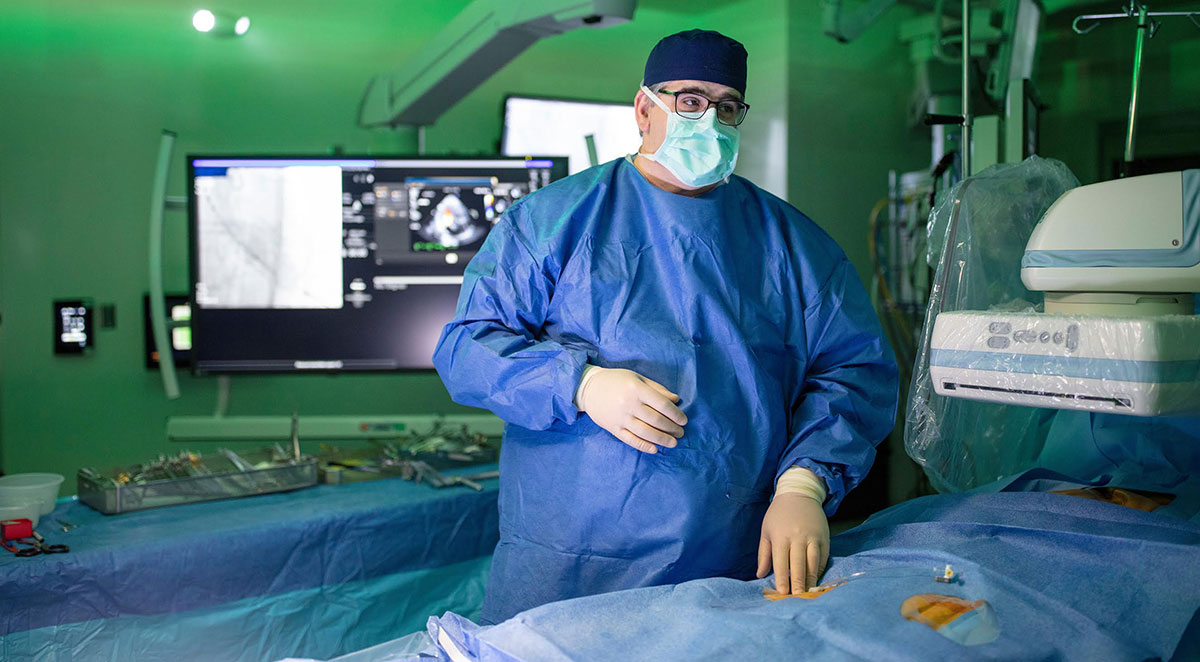
TAVR, or transcatheter aortic valve replacement, is being performed by Dr. Matthew Campbell, a cardiothoracic surgeon and medical director at Health First’s Holmes Regional Medical Center.
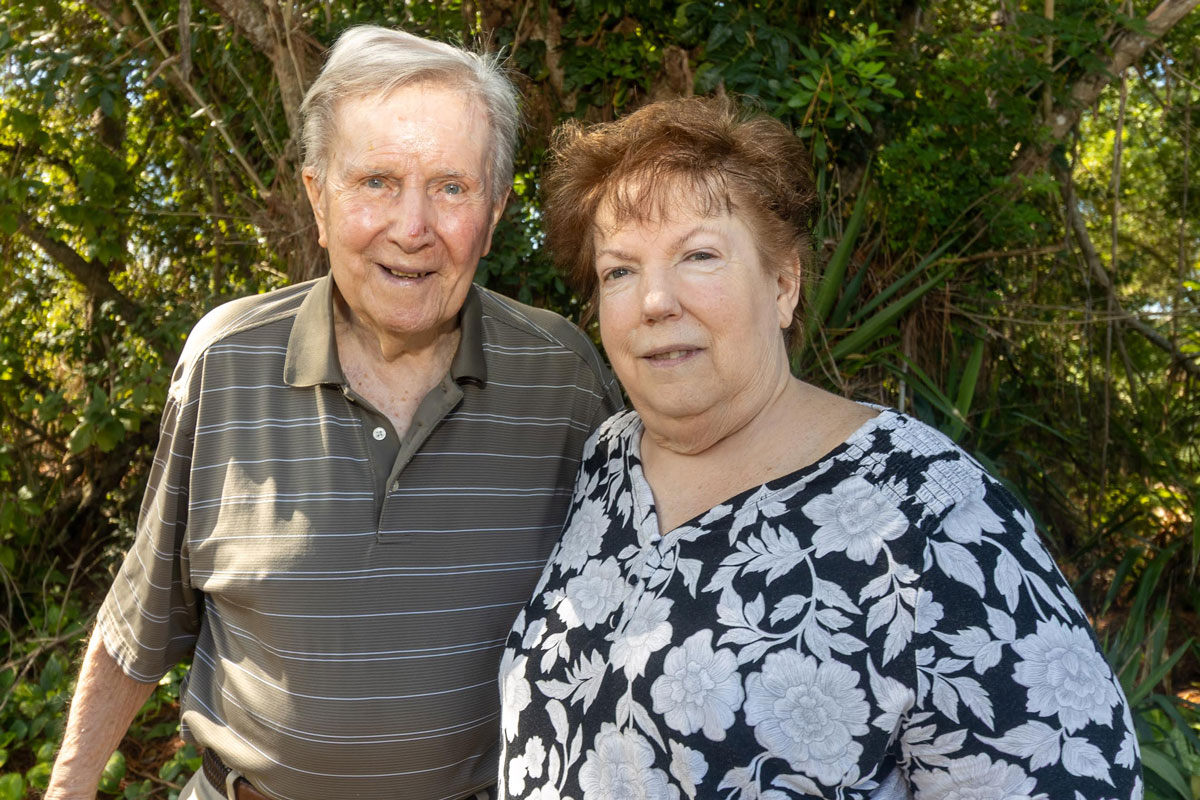
BREVARD COUNTY • ROCKLEDGE, FLORIDA — At 97 years old, Jack Knight still remembers the moment his family found out something was wrong with his heart. He did not feel sick, he didn’t feel tired, and he had no symptoms at all- the kind of quiet, hidden danger that makes heart valve disease so difficult to catch.
It was a routine test at Veterans Affairs that first flagged the problem: a leaking valve that needed to be fixed or removed.
He was 91 years old at the time, and options were limited. Many surgeons weren’t willing to consider open heart surgery for a man in his nineties.
But Knight’s daughter, Patricia Krise, and her husband had heard about a newer, less invasive option, a procedure called TAVR, or transcatheter aortic valve replacement, being performed by Dr. Matthew Campbell, a cardiothoracic surgeon and medical director at Health First’s Holmes Regional Medical Center.
“He did some testing on me, went over a lot of stuff, and he said, ‘OK, I’ll do it on you,’” Knight recalled.
The procedure went smoothly, and Knight was home within two days.
“Since that time,” he said, “I haven’t had one ache, pain, discomfort, nothing.”
That was six years ago. Today, Knight is 97 and grateful for the additional years he has been given. When he talks about Campbell, his appreciation is clear.
“He gave us a lot more time,” Knight said. “Here I am at 97 now instead of 91, hanging on. So, I appreciate that very much.”
Patricia Krise, Jack’s daughter, has lived with a congenital heart defect her entire life. She underwent open heart surgery in 2011 to replace a valve, a procedure that typically lasts ten to 15 years before needing to be revisited.
As that window began to close, and as she started losing her breath more easily, she and her doctors knew it was time to act again.
For Krise, there was little debate about who should perform the procedure. She had spent years accompanying her father to his own follow-up appointments with Campbell, watching firsthand the same steady, thorough care that had helped him thrive.
“I said, well, the only one who’s going to do it is Dr. Campbell,” she said.
Krise underwent her own TAVR procedure, a valve-in-valve replacement, more complex than a first-time repair, requiring extensive additional testing to account for the surgery she’d already had over a decade earlier.
Campbell walked her through every step beforehand; the same way he once explained the process to her father. A little over a month later, Patricia has already begun cardiac rehabilitation and is looking ahead to a full recovery.
Beyond the medicine, father and daughter share something simpler: a closeness that shows up in the small things, the shows they watch together, lunch at their favorite restaurant, the family gatherings they never miss, and now, the same doctor who has quietly given them both a second chance at time together.
For Campbell, the connection between the two cases carries real weight.
“It was humbling to know that what we did for her father years ago had such a meaningful effect, and that they are willing to trust us again to care for younger family members as well,” he said.
Campbell has watched the structural heart program at Health First grow substantially since it began.
Health First started performing TAVR in 2015, just two years after the procedure received FDA approval for use outside of study sites, and has since expanded to include catheter-based mitral and tricuspid valve interventions alongside a highly advanced, minimally invasive surgical valve repair/replacement program, with year-over-year growth.
That growth, he said, has reshaped the way the hospital cares for patients.
“It’s that teamwork approach that creates the best of both worlds care for the valvular disease patients in Brevard,” Campbell said, describing how cardiology and cardiothoracic surgery now collaborate daily, choosing the best treatment option for each patient together.
As new technology continues to be approved, he hopes to integrate it as well, so that every option is available to every patient who needs one.
That depth of experience shows up directly in cases like Knight and Krise’s. Campbell said the team’s extensive experience is one of the advantages patients can find close to home, rather than traveling to a major university medical center.
“That experience is essentially what patients travel to university settings to benefit from,” he said. “It’s the same tools of the trade, but the cumulative experience matters most in these cases,” said Campbell.
He said the TAVR procedure itself has evolved since Knight’s surgery six years ago, with the team refining its approach over time to make the procedure safer and more accurate. Those refinements, he said, are made possible through the experience gained from performing the procedure hundreds of times each year.
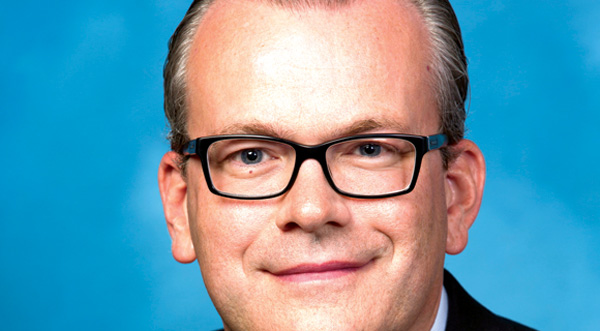
None of it would be possible, according to Health First Foundation President Michael Seeley, without the generosity of the community.
“Every day we see how donor generosity helps expand access to exceptional care in our community,” Seeley said.
“We are deeply grateful for the many individuals and families whose support makes investments in advanced technology and clinical capabilities possible. The availability of TAVR at Health First is due in large part to recent philanthropic support for the hybrid operating room at Holmes Regional Medical Center, allowing patients to receive this life-changing treatment close to home.”