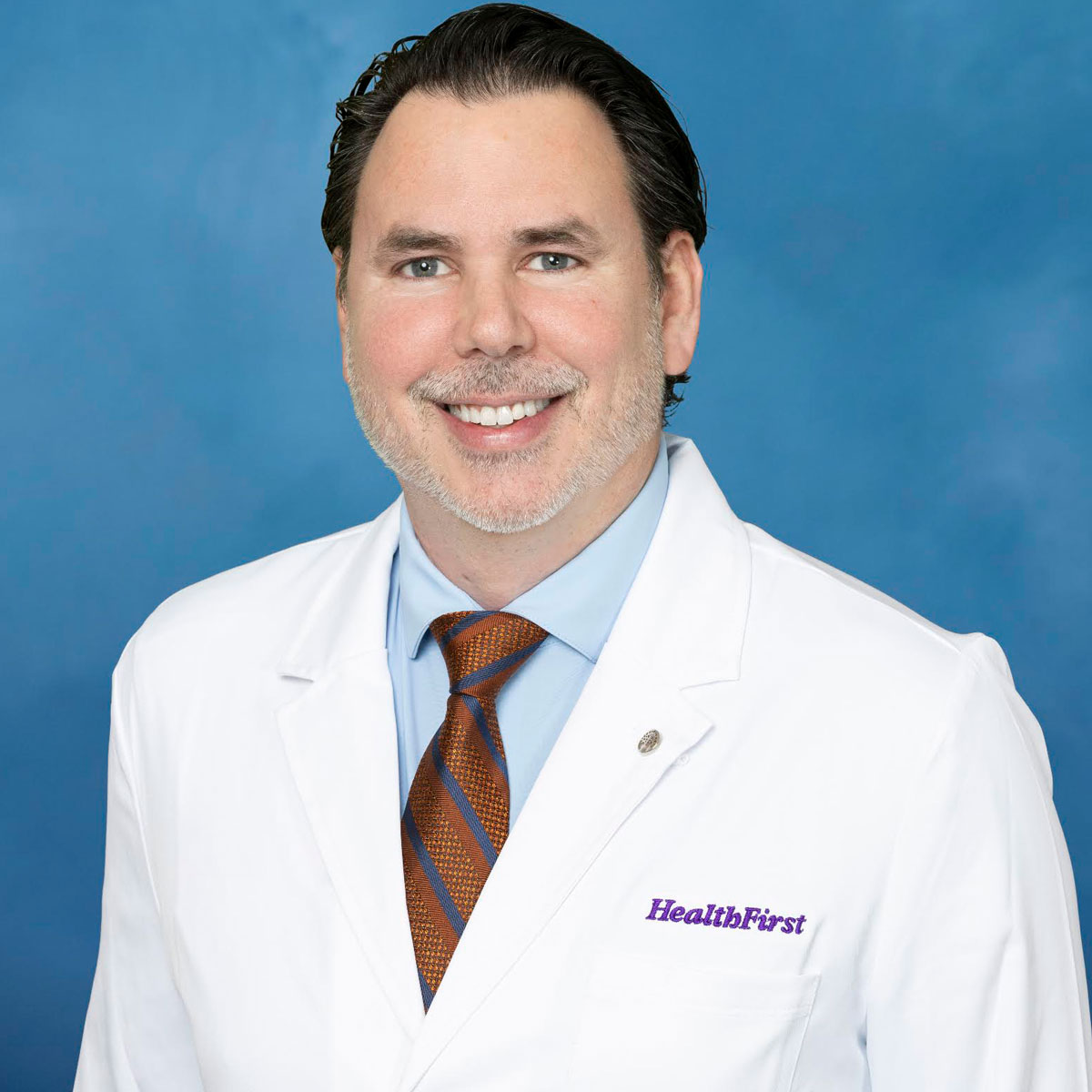
Health First Medical Group expert Dr. Jamie Sanchez discusses rising rates in younger adults and how screening saves lives.
Dr. Jaime Sanchez said, “At least 20% of colorectal cancer diagnoses are now in patients younger than 55, said Dr. Jaime Sanchez, a colon and rectal surgeon with Health First Medical Group-Gateway.”
BREVARD COUNTY • ROCKLEDGE, FLORIDA – James Van Der Beek was 48. Chadwick Boseman, only 43.
Colorectal cancer took both actors well before 50, which was long considered the standard age to begin colorectal cancer screening.
Now, the baseline recommended age for colonoscopies – screening tests for colorectal cancers – is 45.
Van Der Beek and Boseman’s early-onset diagnoses mirror a trend, said Dr. Jamie Sanchez, a colon and rectal surgeon with Health First Medical Group-Gateway.
“What we’ve been seeing is an increase in colorectal cancers in the young, Sanchez said. “At least 20% of the diagnoses that we see now are in patients less than 55 years old.”
The American Cancer Society in March reported that more cases of colorectal cancer are being diagnosed in adults under 65, especially those ages 20-49. These cancers are the most common cancer-related deaths in people under 50, as well as the second most-common cause of cancer deaths overall.
Colorectal cancer is also the leading cause of cancer death in men under 50 and the second-leading cause of death in women under 50. The distal colon and rectum make up most of the cases, but researchers don’t know what’s driving more cancer cases in younger counterparts.
Dr. Ahmedin Jemal, Senior Vice President of Surveillance, Prevention and Health Services Research, American Cancer Society, noted colorectal cancer is no longer “an old person’s disease.”
“We must double down on research to pinpoint what is driving this tsunami of cancer in generations born since 1950,” he said in a statement.
While doctors and researchers continue to seek answers to why this is happening, one thing remains clear: persistent symptoms should never be ignored.
“Colon cancer is silent until it’s not,” Sanchez said. “And when it’s not, it tends to be more advanced.”
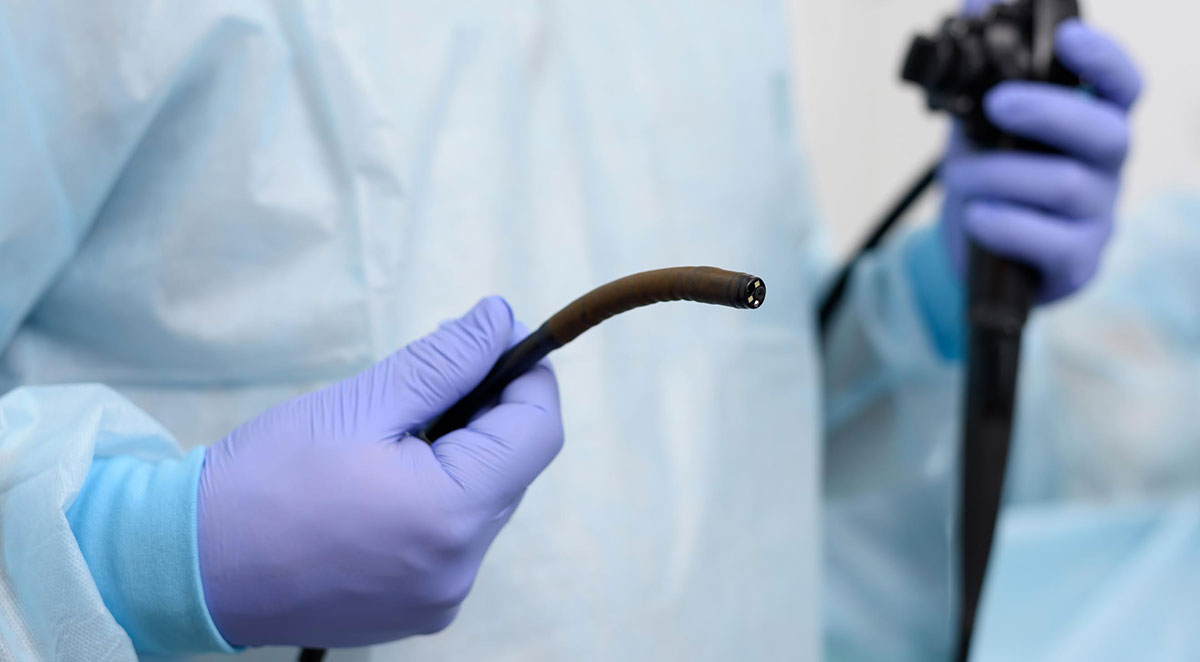
Colonoscopies can detect colorectal cancers early on and also allow surgeons an opportunity to remove precancerous polyps. Once recommended universally at age 50, newer guidelines suggest regular screenings beginning at age 45.
Here are five symptoms that should send you straight into the doctor’s office:
– Blood in stool: While occasional bleeding can have an explanation that’s completely benign, it’s nothing to ignore. Especially if it is recurring. “Certainly more than once or recurring, I would get checked out,” Sanchez advised.
– Changes in bowel habits: If you’re suffering from chronic constipation, diarrhea or have a sensation that you haven’t completely emptied your bowels, it’s time to schedule an appointment. “Symptoms that happen and then continue to progress or do not improve should raise alarm,” Sanchez said.
– Persistent abdominal pain/bloating: Short-term stomach bugs are one thing. But if you’re suffering from ongoing abdominal discomfort, tell your provider. “If abdominal pain is recurrent, if symptoms of bloating or feeling like things aren’t being digested well…basically symptoms that happen and then continue to progress or do not improve should raise alarm,” Sanchez urged.
– Unexplained weight loss: If you’ve lost weight without trying – diet and exercise aren’t the reason – you shouldn’t ignore it. “If you start to lose weight that’s unintended, virtually any healthcare provider is going to immediately think, ‘Okay, there’s at least some concern potentially for cancer,’ ” Sanchez said.
– Severe bleeding or symptoms that suddenly worsen: If you’ve experienced significant blood loss, severe abdominal pain or are unable to pass stool or gas, see a healthcare provider ASAP. “A huge loss of blood while you’re going to the bathroom is something to be concerned about,” Sanchez said.
While these symptoms don’t always point to colorectal cancer, being able to rule that out is critical – or identifying it as soon as possible for the best possible outcome.
Before, for example, seeing bright red blood in younger adults would typically be written off as hemorrhoids. Now, more doctors want to investigate further, especially after the American Cancer Society suggested adults begin their colonoscopies at 45 back in 2018, with the U.S. Preventive Services Task Force following suit in 2021.
“With the increasing rise in colon cancer in younger adults, we can’t really think that anymore,” Sanchez said. “We have to be concerned. So, perhaps something that’s associated with what we just spoke about isn’t a big deal one time, but certainly more than once or recurring, I would get checked out.”
The thing about colon cancer is sometimes symptoms don’t surface until the cancer has advanced. That’s why screening is so important. With colonoscopies, polyps that have the potential to turn into cancer are removed before they have a chance to.
“Patients will very often come to me and say, ‘I’ve been perfectly fine,’ ” he noted of the bewilderment of those diagnosed.
Health First providers are well-equipped to diagnose and treat colorectal cancers. Most surgeries are done with tiny incisions and quicker recoveries compared to years past.
“The vast majority of my patients are back to normal life feeling like the operation’s a bad memory in just about a month,” Sanchez said.
Most procedures involved minimally invasive surgery – with many of them done laparoscopically and/or robotically – with faster recoveries.
While no one enjoys the preparation for a colonoscopy, they’re a lot easier to handle than colorectal cancer treatments and surgeries.
“It is so much better to get that colonoscopy, find that polyp before it ever becomes a tumor, and us never meet than have to sit down and have that conversation of, ‘Hey, now we need to do an operation or a treatment for colon cancer,’ ” Sanchez said. “Colonoscopies prevent colon cancer, pure and simple.”
To hear more about colorectal cancer screenings and treatment, listen to the whole Putting Your Health First podcast at hf.org/podcast or visit hf.org/cancer for more information on screenings and treatments.