visit featured tour of key infrastructure at CCSFS, projects to expand capacity on the Eastern Range
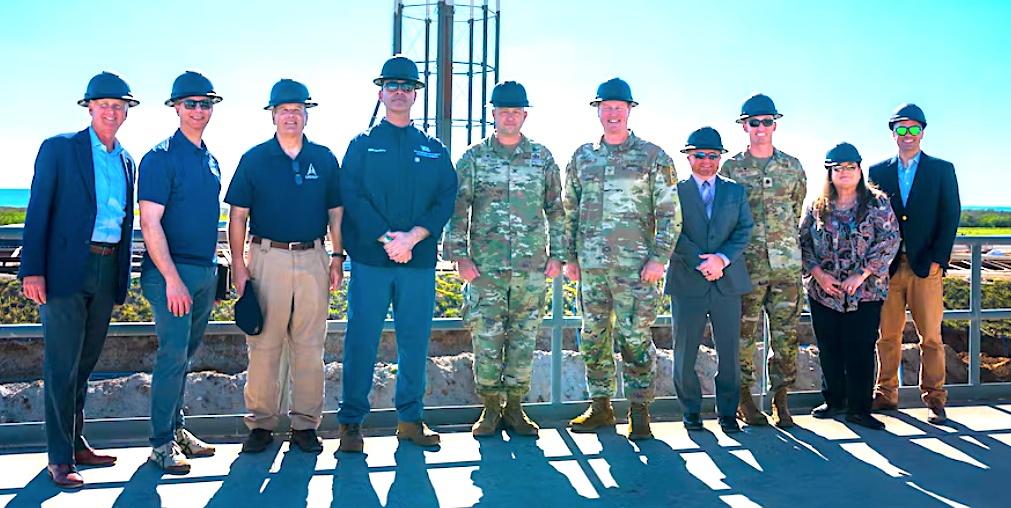
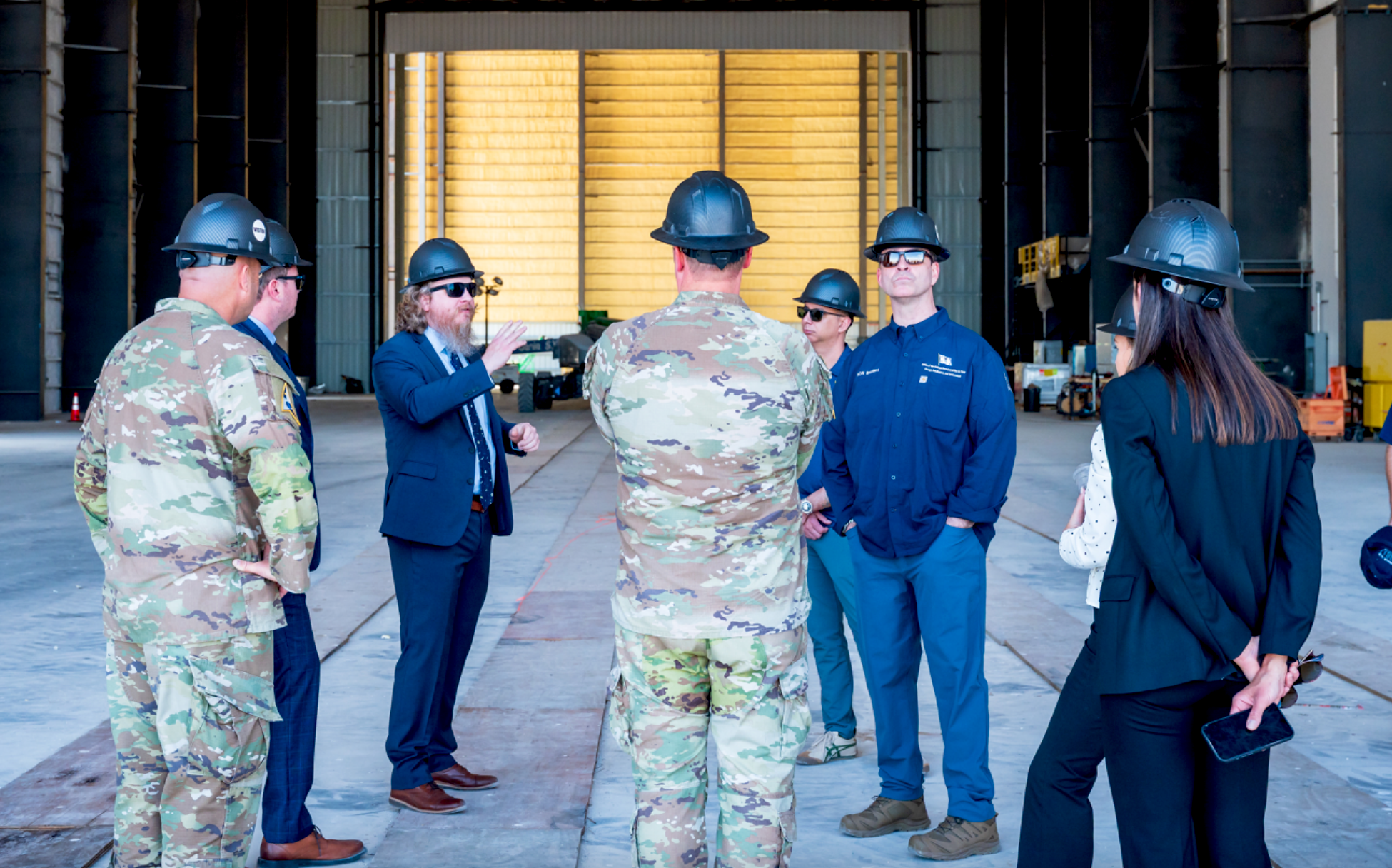
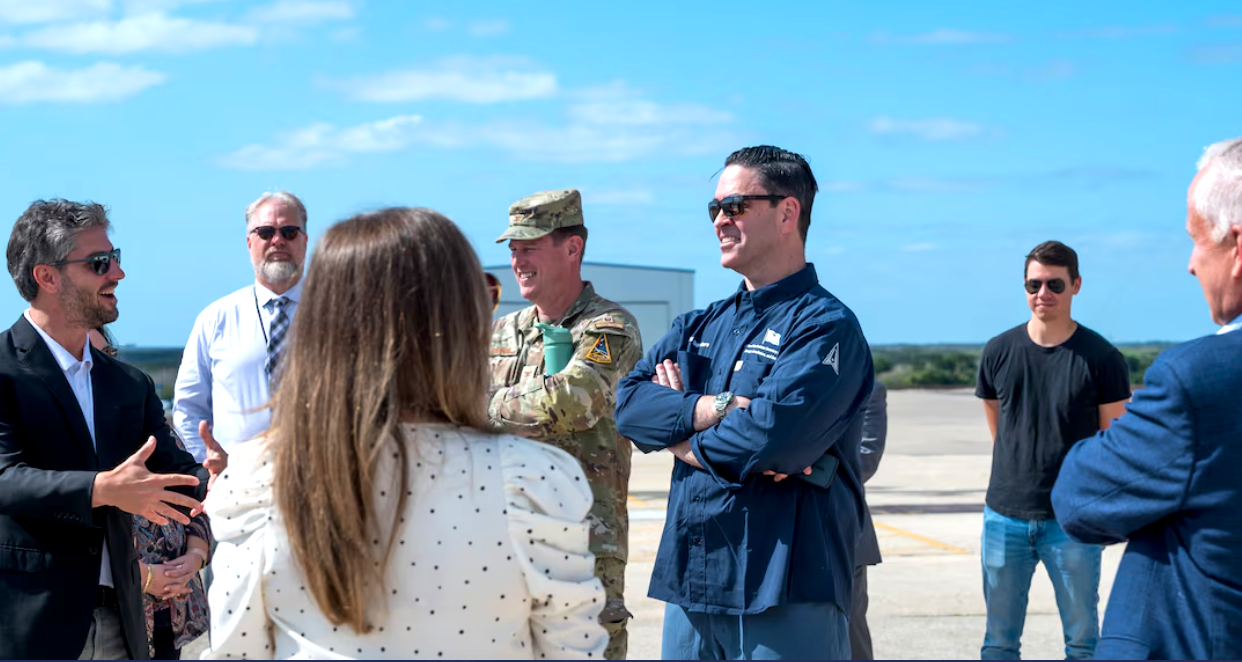
Michael J. Borders, assistant secretary of the Air Force for energy, installations, and environment, tours civilian launch service provider lease and construction sites at Cape Canaveral Space Force Station, Fla., April 16, 2026. Borders’ visit included a Space Launch Delta 45 space-access mission overview, a review of daily launch operations, and discussions on the Spaceport of the Future Infrastructure investment program. (U.S. Space Force photo by Gwendolyn Kurzen)
BREVARD COUNTY • CAPE CANAVERAL, FLORIDA – Michael J. Borders, assistant secretary of the Air Force for energy, installations, and environment, recently visited Space Launch Delta 45 and Cape Canaveral Space Force Station.
The visit featured a tour of key infrastructure at CCSFS and important projects underway to expand capacity on the Eastern Range, commonly referred to as the Eastern Spaceport.
The Eastern Spaceport combines SLD 45 range, installation, and partner commercial capabilities to guarantee space access and project lethality for the US.
Highlights of the tour included a recently reconstituted space launch complex and two under-construction launch complexes.
These projects will facilitate a wider variety of assets among the commercial launch service providers operating at CCSFS.
The focus on infrastructure improvement at CCSFS is critical because the rate of orbital launches from the U.S. Space Force’s Eastern Spaceport has increased 354 percent since 2019.
This growth pushes legacy infrastructure to its limits.
The number of annual launches from CCSFS and Kennedy Space Center rose from 24 in 2019 to 109 in 2025, with forecasted growth throughout the 2040s.
This accelerated operational tempo requires a coordinated modernization of the spaceport’s physical capacity and capabilities.
While many of these missions are referred to as commercial launches, the distinction between commercial and government operations is increasingly blurred.
Michael J. Borders, assistant secretary of the Air Force for energy, installations and environment, tours civilian launch service provider lease and construction sites at Cape Canaveral Space Force Station, Fla., April 16, 2026. Borders’ visit included a Space Launch Delta 45 space-access mission overview, a review of daily launch operations, and discussions on the Spaceport of the Future Infrastructure investment program. (U.S. Space Force photo by Gwendolyn Kurzen)
Many of the assets delivered to space by launch service providers host commodities that the government buys back directly or that provide capabilities and services essential to the American way of life while meeting key national security requirements.
“The development of our Spaceport of the Future infrastructure is critical to maintaining our strategic advantage in the space domain,” said Borders.
“Our space partners bring unprecedented value to the mission by delivering the innovation, agility, and commercial technology necessary to outpace our competitors.
“Beyond the mission, these partnerships are a tremendous catalyst for the local community,” he continued. “They drive economic growth, foster high-tech jobs, and strengthen the bond between our installations and the communities that support our airmen and guardians.”
This accelerated growth demands urgent action to modernize the Eastern Spaceport.
“To continue meeting the demand for space access into the 2040s, modernization is not just critical. It is an imminent need,” said Col. Brian L. Chatman, commander of SLD 45.
“The focus must center on expanding infrastructure and logistical throughput.”
This effort includes increasing the supply of all utilities and commodities, including power, water, wastewater, propellants, and high-pressure gases, onto the spaceport. It also means maximizing throughput across all transportation nodes, including waterways, highways, bridges and airways.
For example, constructing expanded fuel delivery infrastructure would drastically increase fueling capacity for launch service providers while reducing wear and tear on local roadways, which are currently strained by continuous truck deliveries of fuel.
In response to these increased demands levied across space launch stakeholders, a multiphase program known as the Spaceport of the Future Infrastructure, or SPotFi, is underway.
Michael J. Borders, assistant secretary of the Air Force for energy, installations, and environment, tours civilian launch service provider lease and construction sites at Cape Canaveral Space Force Station, Fla., April 16, 2026. Borders’ visit included a Space Launch Delta 45 space-access mission overview, a review of daily launch operations, and discussions on the Spaceport of the Future Infrastructure investment program. (U.S. Space Force photo by Gwendolyn Kurzen)
SPotFi advances efforts to guarantee space access and project lethality for our nation.
“SPotFi encompasses key national security requirements alongside industry capabilities,” said Andrew Duce, SLD 45’s lead for the program.
“Projecting the future needs of both and creates the flexibility required for these elements to evolve over the next several decades.”
As technology on board and supporting launch vehicles provides new capabilities and the breadth of launch vehicles expands, federal and local processes that guide expansion at CCSFS must be flexible enough to keep pace with the speed of commercial innovation.
The Space Force asked industry to provide input on relevant, redundant, and resilient space infrastructure to support the demand for secure access to space.
The U.S. Space Force launch ranges must match that requirement and rapidly adjust policies and procedures to keep pace alongside industry.
These changes enable the acceleration of acquisition cycles and construction project timelines. Empowering launch service providers to provide redundancy and reusability in their capabilities is a critical tenet of SPotFi.
A full-spectrum review of current physical capacity must be accompanied by a comprehensive overhaul of processes to maximize every available resource across the Eastern Range.
Modernization means improving commodity flows, but it also means addressing manpower needs by leveraging advances in technology-driven analysis to increase process efficiencies.
Throughout this transformation, SLD 45 leadership mandates maintaining rigorous safety standards across all range processes and decision points.
“Every square foot of new workspace at Patrick Space Force Base, every upgraded propellant line at the Cape, is a direct investment in our national security and our dedication to leading in space,” said Chatman.
“We are competing in a congested and contested environment, and we have no intention of coming in second.”
This effort represents a massive overhaul of the Eastern Spaceport. SLD 45 executes the work through a partnership between SLD 45, NASA, and commercial launch service providers.
The goal is to ensure the spaceport can accommodate the complex logistics and high launch cadence required to support both national security and commercial space objectives.
The Eastern Range encompasses SLD 45 operational locations at Patrick SFB, CCSFS, and Ascension Island, as well as 15 million square miles in the Atlantic Ocean.
The commander of SLD 45 is also the commander of the Eastern Range.
He ensures access to space, weapon-system test and evaluation support, and security for key national security infrastructure.