
How Local Sporting Events Boost Tourism and Small Business Growth
By Space Coast Daily // April 6, 2026
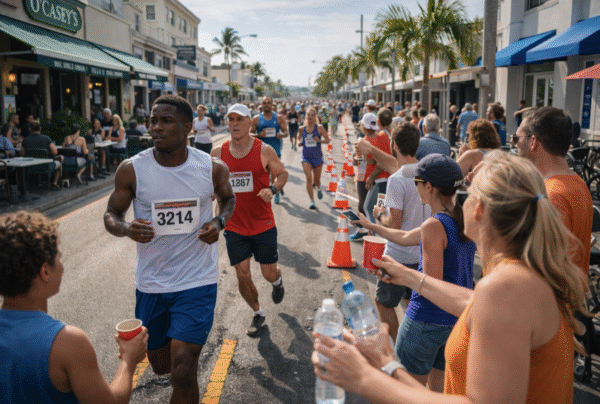
A local sporting weekend doesn’t announce itself with fireworks. It arrives the way tidewater does: quietly, then all at once. The hotel parking lot fills with coolers and folding chairs. The breakfast line grows longer and louder, sprinkled with team hoodies and race bibs. Down the street, a café that usually closes early suddenly sells out of iced coffee before noon, while a small shop moves more sunscreen and caps than it does in a typical week. That is the hidden power of local sports: not the headline moment, but the dependable surge of people who need to eat, sleep, refuel, and celebrate in real places.
What makes the boost stick isn’t luck. It’s structure: event calendars that cluster nicely, venues that keep games moving, and small businesses that learn the rhythms of visitors who plan their day around first pitch, kickoff, or a starting horn.
The “two-night town” effect
Tourism boards love big events, but small businesses often prefer the repeatable kind. A youth baseball tournament, a surf contest, or a road race tends to stretch across a weekend, which nudges visitors into that crucial second night. That second night is where the money spreads out: one more dinner, one more breakfast, one more “we earned this” ice cream run.
The smartest hosts also understand that athletes rarely travel alone. Parents, training partners, coaches, and friends turn a single registration into a small crowd. That crowd behaves predictably: they arrive with a plan, then improvise between scheduled moments. If a community can offer easy in-between options like walkable food, quick transportation, or clear signage, the spending becomes less accidental and more routine.
Facilities that keep the calendar full
Local sports tourism is often powered by infrastructure that does one unglamorous thing extremely well: it makes events easier to run. The USSSA Space Coast Complex in Viera is built for that grind, with a large footprint and all-turf fields designed for heavy use across tournament weekends. Its scale is part of the appeal to event organizers, because fewer weather and field-quality variables mean fewer delays and fewer angry families wondering why they drove hours for a schedule collapse.
This is where “small” events start acting like economic engines. A complex that can host multiple games at once doesn’t just create spectators; it creates a steady stream of time slots. Time slots turn into predictable foot traffic, and predictable foot traffic is what lets a local restaurant schedule staff confidently rather than gambling on hope.
Signature events that turn visitors into regulars
Not every community needs a mega-event. It needs one or two signature weekends that people mark on the calendar, then a few dependable tournaments that fill the gaps. A strong example is the Space Coast Marathon & Half Marathon, which has leaned into its identity as a long-running, well-organized race with a waterfront course and a community mission. Its official event information for 2026 frames it as the 55th edition and positions it as the oldest marathon in Florida.
Endurance events have a special advantage for local businesses: runners and their crews arrive early, stay hydrated, and tend to spend money in small bursts all weekend. Coffee shops win the morning, casual restaurants win the afternoon, and hotels win simply by being close enough to make race-day logistics feel calm.
When the stands meet the odds
Big crowds no longer consume sports the old way, even at the local level. Fans track shot charts, possession swings, and live win probability on their phones while standing in line for snacks, and that habit carries into legal sports betting where it’s available. The same data that tells a coach when to slow tempo also shapes how markets move in real time, because odds react to injuries, rotations, and momentum.
In practice, that means visitors use a stack of tools at once: ESPN and CBS Sports for quick context, SofaScore or Flashscore for live event flows, and sportsbooks for constantly updating prices. Fans download MelBet for Android (Arabic: تحميل melbet للاندرويد) ready on their phone, because live odds and coefficients can shift as quickly as a timeout or a substitution. For local events, this behavior can increase engagement between key moments, keeping people on-site longer instead of drifting away between games. It also rewards venues and organizers who provide strong connectivity, clear schedules, and a smooth in-person experience that matches the speed of the information fans now expect.
The quiet winners
The real small-business story isn’t only about restaurants. It’s about all the practical spending that appears when visitors settle into a weekend routine:
• Quick-service breakfasts that can handle a sudden rush at 7 a.m.
• Convenience stores that stock hydration, tape, and basic first-aid items
• Local retail that leans into weather, souvenirs, and “forgot it at home” essentials
• Service businesses that benefit indirectly, from ride shares to laundry runs
The best operators don’t overcomplicate it. They extend hours slightly, tighten menus, and make ordering faster. They also learn the event schedule the way locals learn a tide chart. When a place can anticipate the post-game rush, it doesn’t just sell more; it feels welcoming, and visitors remember that.
Grants, planning, and the compounding payoff
Sports tourism works best when a community treats it as a portfolio, not a lottery ticket. In Brevard County, the Tourism Development Council’s Sports & Event Grant Program is explicitly designed to attract and grow events that generate economic impact through participant spending, with reimbursement grants advertised up to a set cap. That’s a practical approach: help events clear operational hurdles, then measure outcomes through room nights and visitor behavior.
Local reporting around the county’s sports grants has also put concrete numbers on what these weekends can mean. One Space Coast Daily report on a grants cycle described 11 events projected to bring 7,175 room nights and nearly $21 million in visitor spending estimates. Those aren’t abstract wins; they are hotel occupancy, restaurant receipts, and staff hours that would not exist without the games.













